Budget Small Living Room Ideas: 10 Proven Tips to Transform Your Tiny Space Without Breaking the Bank

Introduction: Your Small Living Room Deserves a Big Transformation
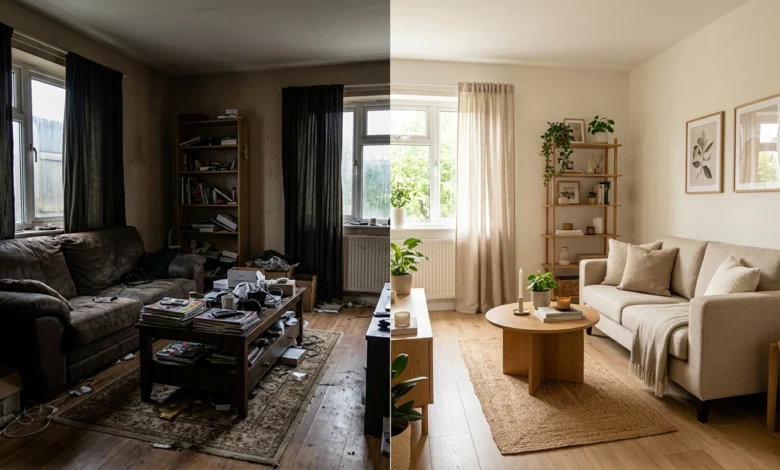
You have a small living room. Maybe it’s a 12×14 apartment living room in a city rental, or a compact den in a starter home — and every time you walk in, something feels off. It looks crowded, it feels dark, and despite owning perfectly decent furniture, the whole room just doesn’t come together.
Here’s the truth most decorating guides won’t tell you: small living rooms are not a design problem. They’re a design challenge — and challenges have specific, repeatable solutions. The real issue isn’t your square footage. It’s applying the wrong ideas for your space and your budget.
This article gives you 50 proven, budget-conscious strategies to make your small living room look bigger, feel brighter, and work better — whether you have $0 or $500 to spend. Every idea here is actionable, renter-friendly where noted, and drawn from the same principles professional interior designers use in real homes.
Pro tip: You don’t need to implement all 50 ideas. Pick 5-10 that fit your budget and your room’s biggest pain points. That alone will create a visible transformation.
1. Why Small Living Rooms Feel Cramped — and the Real Fix
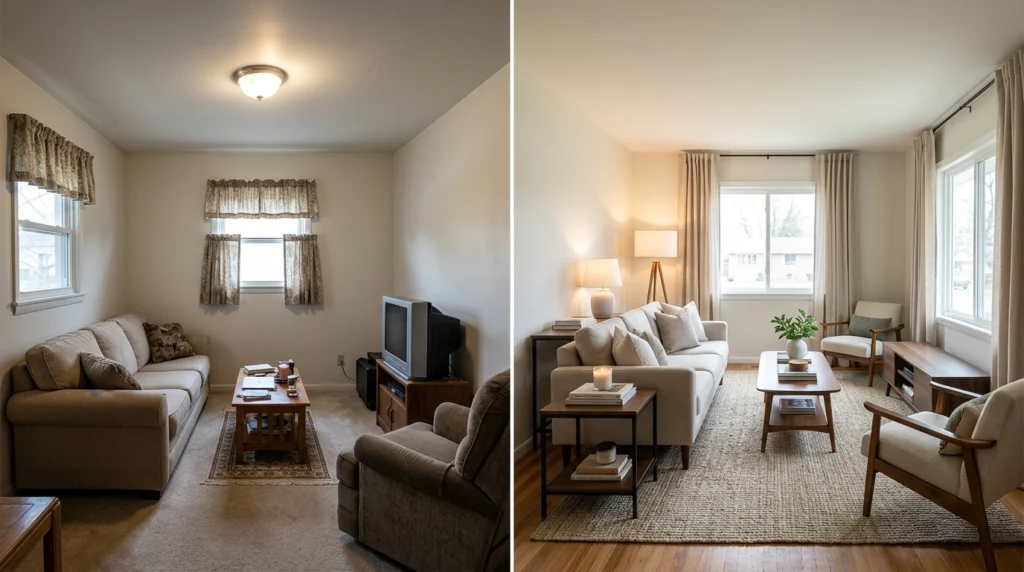
Before spending a dollar, understand why small living rooms feel wrong. The culprits are almost always the same:
- Furniture pushed against every wall, creating a ‘dentist waiting room’ effect
- A single overhead light source that flattens the room and creates shadows
- A rug that’s too small, making the space feel disjointed
- Visual clutter from too many competing colors, patterns, and objects
- Curtains hung at window height instead of ceiling height — the single biggest space-killing mistake
The fix is not to buy new furniture. It’s to rethink how your existing space is used. Floating furniture 6-12 inches from the wall, adding layered lighting, choosing the right rug size, and simplifying your color palette costs almost nothing but delivers immediate results.
According to environmental psychology research cited in the American Institute of Architecture Students (AIAS) design guidelines, visual openness — even when physical space hasn’t changed — directly reduces feelings of stress and crowding. Perception matters as much as square footage.
2. Budget Tiers: What You Can Realistically Achieve
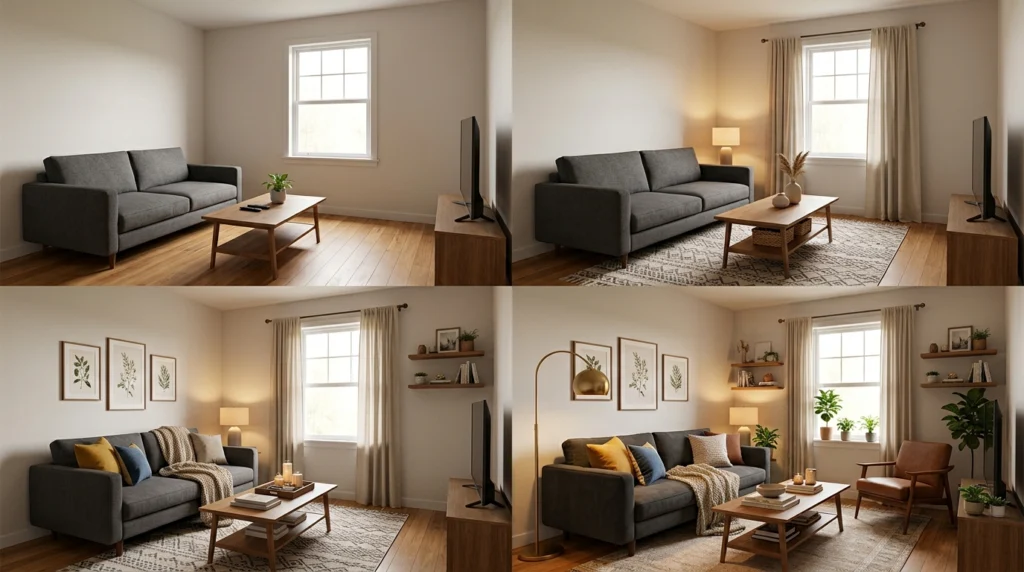
One of the biggest frustrations with decorating guides is unrealistic budgets. Here’s an honest breakdown of what each budget tier can actually accomplish in a small living room:
| Budget | What It Gets You | Best First Move |
|---|---|---|
| $0 (Free) | Rearrange furniture, declutter, style with what you own | Move sofa away from walls; clear all surfaces |
| Under $50 | New throw pillow covers, a plant, LED warm bulbs, peel-and-stick accents | Swap to 2700K warm bulbs in every lamp |
| $50–$200 | Area rug, new curtains, a floor lamp, accent shelf | Buy the right-sized rug first |
| $200–$500 | Accent wall paint, new lighting fixture, multi-functional furniture piece | Paint one wall in a deep, moody tone |
The single highest-ROI move in any small living room: hang curtains 4-6 inches below the ceiling (not at window trim height). This one change makes ceilings feel taller and costs nothing if you already own curtains.
3. Furniture Ideas for Small Living Rooms on a Budget
Choose Furniture With Legs
Sofas and chairs that sit on legs allow light to pass underneath, creating visual breathing room. A sofa with 6-inch legs makes the same room feel 15-20% more open than a floor-hugging sectional. This doesn’t mean buying new furniture — furniture risers cost $15-$25 on Amazon and can lift existing pieces instantly.
Go Vertical, Not Wide
In a small living room, vertical space is your best friend. A tall, narrow bookcase draws the eye upward and provides storage without consuming floor space. IKEA’s KALLAX and BILLY systems are budget staples for good reason — they’re affordable, configurable, and scale perfectly in tight rooms.
Multi-Functional Furniture Is Non-Negotiable
- Ottoman with hidden storage: replaces a coffee table and adds seating ($40-$120)
- Nesting tables: use one or two when needed, stack them when not ($30-$80)
- Wall-mounted fold-down desk: adds a work surface without permanent floor footprint ($60-$150)
- Sofa with built-in storage arms: often the same price as standard sofas at IKEA or Wayfair
- Floating shelves instead of a TV console: frees up 12-18 inches of floor space instantly
The ‘One Large Piece’ Rule
Counter-intuitively, one large sofa in a small living room often looks better than multiple small pieces. One anchor piece creates visual clarity. If you’re choosing between a 3-seat sofa and two small loveseats, choose the 3-seat sofa — it reads as intentional instead of cluttered.
Budget Furniture Sources That Actually Deliver
- Facebook Marketplace: often $20-$80 for solid wood pieces worth $400+ at retail
- IKEA: best for modular, scalable storage systems and leg-inclusive sofas
- Target’s Threshold and Studio McGee lines: quality pieces at mid-range prices, frequent sales
- Thrift stores: underrated for accent chairs, side tables, and lamps with great bones
- Wayfair during flash sales: area rugs and lighting up to 60% off during event weekends
4. Color and Paint Strategies That Make Small Rooms Feel Larger
The 60-30-10 Rule for Small Spaces
Use 60% of your room in a dominant color (walls and main furniture), 30% in a secondary color (rug, curtains), and 10% in an accent color (throw pillows, small decor). This prevents the visual noise that makes small rooms feel chaotic.
Contrary to Popular Belief: Dark Colors Work
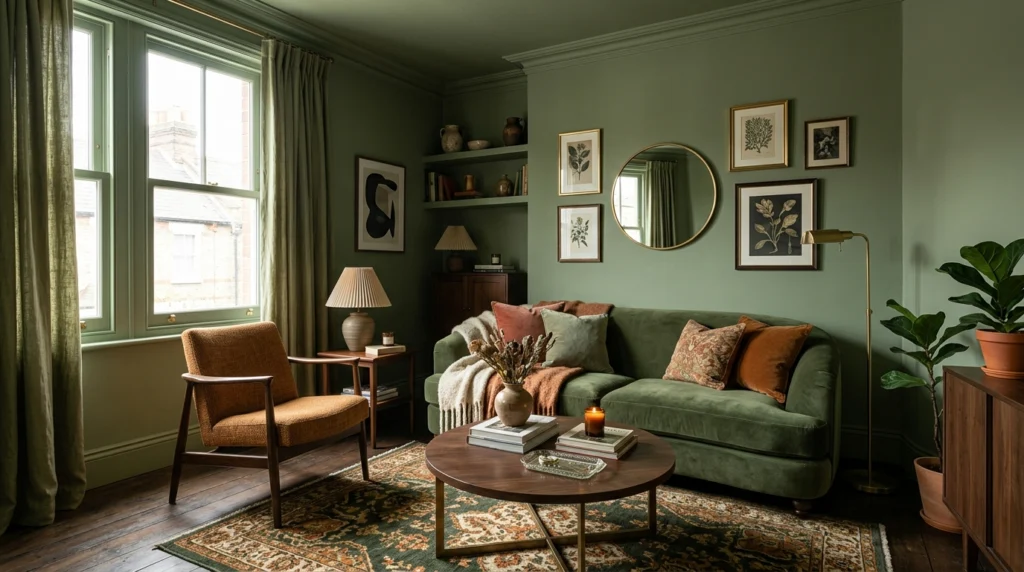
The old advice to paint small rooms white is outdated. Designers in 2026 consistently use deep, moody tones — forest green, deep navy, warm charcoal — in small rooms because they create a sense of depth and intimacy rather than making the room feel like a small white box.
The key is to go dark on all four walls and the ceiling simultaneously. Painting just one wall dark in a small room can feel unfinished. A full ‘color drenching’ technique (same color on walls, ceiling, and even trim) actually makes the room feel larger by removing the visual boundaries.
Best Paint Colors for Small Living Rooms in 2026
| Color Direction | Paint Example | Effect | Cost per Gallon |
|---|---|---|---|
| Warm White | SW Alabaster / BM White Dove | Bright, welcoming, safe choice | $65-$85 |
| Warm Sage | BM October Mist / SW Softened Green | Calming, 2026 trending, pairs with wood | $65-$85 |
| Deep Navy | BM Hale Navy / SW Anchors Aweigh | Dramatic, cozy, excellent with brass accents | $65-$85 |
| Terracotta | SW Cavern Clay / BM Adobe Dust | Warm, earthy, pairs with Modern Cottage style | $65-$85 |
| Warm Gray | SW Agreeable Gray / BM Revere Pewter | Timeless, neutral, easy to accessorize | $65-$85 |
Renter tip: Removable peel-and-stick wallpaper lets you add bold color or pattern to one wall with zero damage and full reversibility. Brands like Chasing Paper and Tempaper offer designs starting at $35 per roll.
Also Read: Living Room Color Schemes & Palettes
5. Lighting Tricks That Open Up Tight Spaces
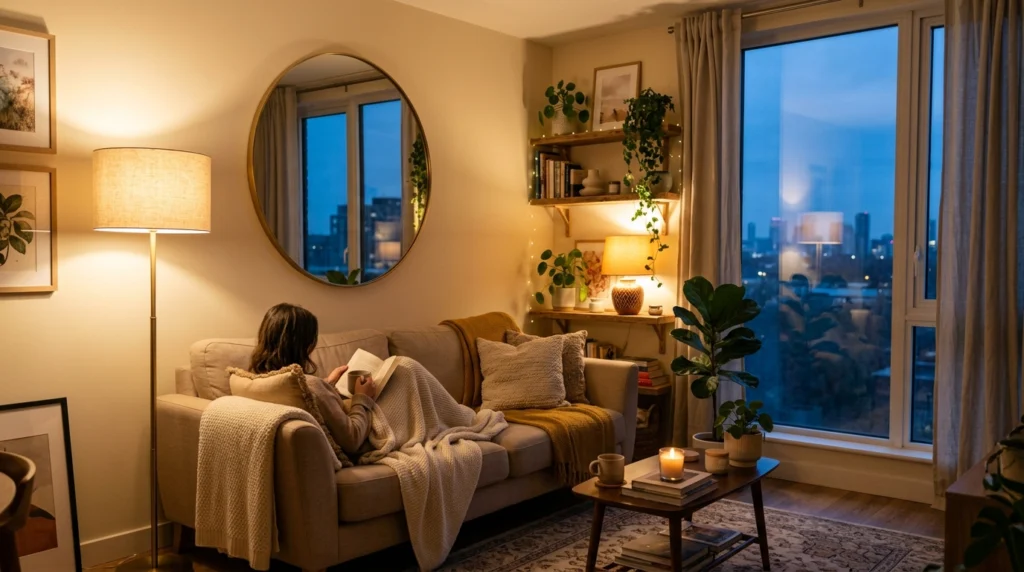
The 3-Layer Rule (Non-Negotiable)
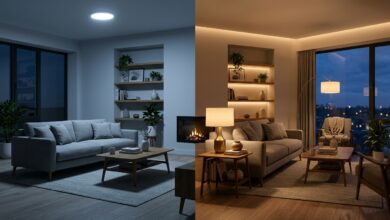
The single most impactful upgrade in any small living room isn’t furniture or paint — it’s lighting. Most small rooms rely on one ceiling fixture. That creates flat, shadowless light that makes rooms feel like a storage unit. Add these three layers instead:
- Ambient: Your ceiling light or overhead fixture (keep it dimmable)
- Task: A floor lamp beside the sofa or reading chair
- Accent: A small lamp on a shelf or table to create warm pockets of light
Smart Bulb Hack: $10 That Changes Everything
Replace your existing bulbs with smart bulbs set to 2700K (warm white). In the evening, switch from overhead to lamp-only lighting at 2700K. The difference compared to cool-white overhead light is immediate and dramatic — the room feels warmer, cozier, and significantly larger.
Strategic Mirror Placement
A large mirror placed opposite a window reflects natural light and visually doubles the space. This is the oldest interior design trick in the book because it actually works. A 36-inch or larger mirror from IKEA (under $100) or a thrift store (under $30) creates more perceived space than any furniture arrangement change.
Budget Lighting Upgrades by Price
- $10-$15: Smart bulbs (Wyze or Amazon Basics); swap all lamps to warm white
- $25-$60: A floor lamp with a warm shade; place in a dark corner
- $40-$80: Plug-in wall sconces (no electrician required); adds layering instantly
- $80-$200: A statement pendant over the main seating area; elevates the whole room
6. Storage Solutions That Double as Decor
In a small living room, every piece of storage must also be visually intentional. Ugly storage bins and random baskets create clutter even when they’re technically organizing it.
Styled Open Shelving
The rule of styled open shelving: group items in odd numbers, vary heights, and include at least one living element (plant) and one organic material (wood, rattan, stone) per shelf. Style 70% of the shelf — leave 30% as intentional breathing space. This reads as curated, not cluttered.
Under-Sofa Storage
Most sofas have 6-12 inches of clearance underneath. Low-profile rolling bins or flat storage bags for seasonal items utilize this dead space without adding visual clutter. If your sofa doesn’t have legs, furniture risers fix that.
The Storage Ottoman Triple Threat
A storage ottoman serves as: (1) a coffee table surface, (2) additional seating when guests arrive, and (3) hidden storage. For a small living room on a budget, this is the single best furniture investment you can make. Options start at $40 at Target and IKEA.
Wall-Mounted Solutions
- Floating media console: frees 12-18 inches of floor vs. a floor-standing TV stand
- Wall-mounted magazine racks: eliminates coffee table pile-up
- Pegboard panel: customizable organization that doubles as visual interest
- Over-door organizers (back side of closet door): invisible storage that adds significant capacity
Also Read: Budget Home Decor That Looks Expensive: The Complete Guide to a Luxurious Home on a Small Budget
7. Rug, Curtain, and Textile Tips for Small Living Rooms
The Right Rug Size (Most People Get This Wrong)
The most common small living room mistake is a rug that’s too small. A rug should anchor the entire seating area — at minimum, the front legs of all furniture should sit on the rug. For most small living rooms, an 8×10 rug is the correct size, not a 5×7.
If budget is an issue, a $120-$180 machine-washable rug from Ruggable or Amazon performs as well visually as a $400+ rug and is practical for everyday life.
Curtain Rules for Small Spaces
- Hang rods 4-6 inches below the ceiling, not at window frame height
- Use curtains that are floor-to-ceiling, not window-sill length
- Choose one rod width wider than the window on each side so curtains don’t block light when open
- Light-filtering sheers layered under blackout panels give you day/night flexibility
- One curtain color (ideally close to your wall color) avoids visual fragmentation
Textile Layering for Texture
A small living room benefits from rich texture contrast because it creates depth without additional furniture. Layer: a jute or sisal rug, a linen-covered sofa, a velvet or bouclé throw, and a cotton or woven throw pillow. Four different textures, all in the same color family, creates a sophisticated room that photographs as much larger than it is.
8. Budget DIY Projects That Actually Deliver Results
Renter-Safe Accent Wall: $40-$80
Peel-and-stick wallpaper on one wall creates a focal point without paint or permanent changes. Apply to the wall behind your sofa or TV. Brands like NuWallpaper, Chasing Paper, and RoomMates offer hundreds of designs. One standard wall typically requires 2-3 rolls at $15-$30 each.
Picture Rail Gallery Wall: $20-$50
A gallery wall using a $25 IKEA MOSSLANDA picture ledge (or a DIY wood rail) lets you display multiple art pieces without hammering multiple nails. Lean art against the rail, rearrange freely, and add or remove pieces without any wall damage. Perfect for renters.
Furniture Painting: $15-$30
Chalk paint ($20 per quart) adheres to almost any surface without sanding or priming. A dated thrift store side table or bookcase becomes a custom statement piece in an afternoon. Most popular 2026 colors: Forest Green, Rust Orange, Creamy White, and Aged Black.
DIY Floating Shelves: $25-$60
Floating shelves from IKEA’s LACK line cost $10-$15 each and install with a single bracket. Add three at varying heights on an empty wall and you’ve created storage and decor display space without touching the floor footprint.
Thrifted Lamp Makeover: $5-$20
A dated lamp with a new drum shade ($10-$18 at Target or HomeGoods) becomes a fresh accent piece. Spray paint the base ($6) in matte black, warm brass, or terracotta to match your room’s palette.
9. 2026 Small Living Room Trends Worth Trying
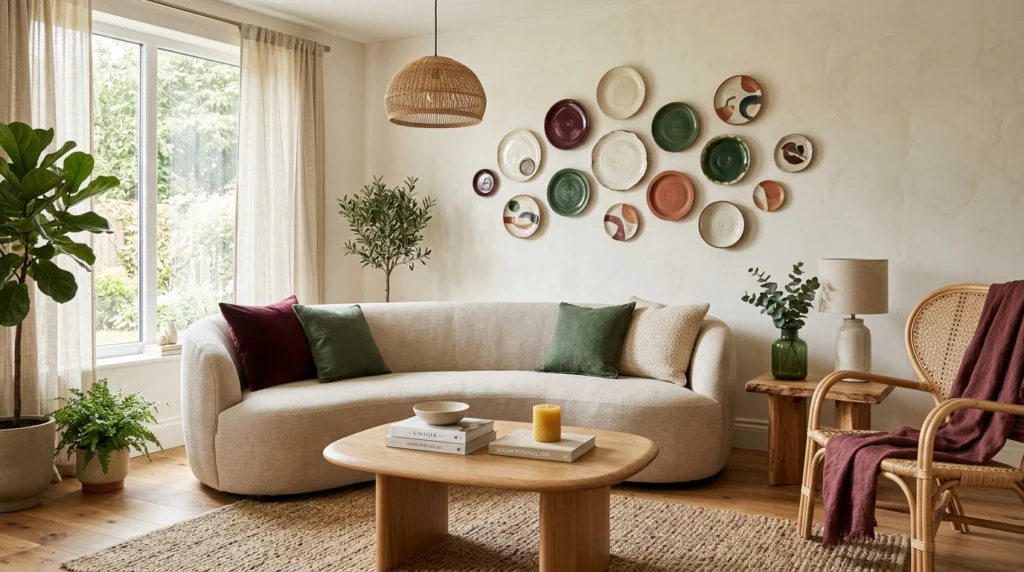
Warm Minimalism
The cold, stark minimalism of the 2010s is over. 2026’s version is warm minimalism: fewer pieces, but with natural textures, warm tones, and organic shapes. For small living rooms, this is ideal — it prioritizes breathing room without feeling sterile.
Curved Furniture
Curved sofas and rounded accent chairs are dominating 2026 interiors. In small spaces, curved forms avoid the sharp angles that make rooms feel boxy. A curved sofa with clean lines takes up the same floor space as a boxy sectional but reads as more elegant and less imposing.
Plate Wall as Focal Point
Gallery walls are giving way to curated plate displays in 2026 — and they’re ideal for small living rooms. Decorative plates create a focal point without adding shelf depth or visual weight. Plate hangers are renter-safe, and the plates themselves can be thrifted for $1-$5 each.
Nature-Inspired Materials
Rattan, jute, raw wood, stone, and linen are dominating 2026 living room design. These materials add texture and warmth without pattern, which is ideal for small spaces where visual complexity needs to be managed.
Moody Accent Colors
Deep burgundy, forest green, and warm terracotta are the accent colors of 2026. Use them on throw pillows, a single chair, a lamp shade, or an accent wall. They ground a room that might otherwise feel generic.
10. The 7 Most Common Small Living Room Mistakes (and How to Fix Them)
| Mistake | Why It Happens | The Fix |
|---|---|---|
| Rug too small | Trying to save money on a smaller size | Always go one size up; front legs of all furniture must be on the rug |
| All furniture against walls | Feels like it ‘opens’ space | Float sofa 6-12 inches from walls; create a conversation zone |
| Curtains at window height | Default installation habit | Hang rod 4-6 inches below ceiling; use floor-length panels |
| Single overhead light only | Builder-grade setup left as-is | Add a floor lamp and one accent lamp; use warm white bulbs |
| Too many small accent pieces | Gradual accumulation over time | Edit down to odd-numbered groupings; leave 30% of surfaces clear |
| Matching furniture sets | Feels ‘safe’ and easy to shop | Mix one wood tone, one upholstered piece, one metal; vary materials |
| Ignoring vertical space | Decorating only at eye level | Add floor-to-ceiling shelving or tall plants to draw the eye upward |
Also Read: Renter-Safe Decorating Tips: The Complete 2026 Guide
Frequently Asked Questions
What colors make a small living room look bigger?
Warm whites, soft sage greens, and light greiges (gray-beige blends) all make small living rooms feel more spacious. Contrary to popular belief, deep, saturated colors like navy and forest green also work when used on all four walls simultaneously — a technique called color drenching. The key is avoiding mid-tone, disconnected color schemes that create visual noise.
What is the best furniture arrangement for a small living room?
Float your sofa 6-12 inches away from the main wall and angle it toward your focal point (TV, fireplace, or accent wall). Place a single accent chair at 45 degrees on the opposite side. Use a storage ottoman as a coffee table centered in the seating zone. Keep a minimum 36-inch walking path through the room. Avoid pushing furniture against every wall.
How do I make my small living room look expensive on a budget?
Five moves that read as expensive but cost very little: (1) Hang curtains close to the ceiling, not at window height. (2) Use a large mirror opposite a light source. (3) Add matching white or cream throw pillows in groups of two or three. (4) Style shelves with odd-numbered groupings at varied heights. (5) Use one large plant instead of multiple small ones.
What size rug should I use in a small living room?
For most small living rooms, an 8×10 rug is the minimum recommended size. In very tight spaces, a 6×9 works if the front legs of all seating pieces can sit on the rug. Avoid 5×7 or smaller rugs in living rooms — they shrink the visual footprint of the room rather than anchoring it.
How do I decorate a small living room on a $200 budget?
Prioritize in this order: (1) A large area rug ($120-$180 from Ruggable or Amazon). (2) New curtains hung at ceiling height ($30-$60 from IKEA or Target). (3) Smart warm white bulbs for existing lamps ($15-$20). That trio alone — rug, curtains, lighting — transforms the room more than any furniture purchase at that budget.
Can a small living room have a sectional sofa?
Yes, but choose carefully. A small L-shaped sectional (under 100 inches in total length) can work in a 12×14 room if the chaise section faces the shorter wall. Avoid large U-shaped sectionals and choose a model with legs rather than a floor-hugging base. Measure your walking paths (36 inches minimum) before purchasing.
What plants work best in a small living room?
One large statement plant — a fiddle leaf fig, monstera, or bird of paradise — works better than multiple small plants in a compact space. Large plants draw the eye upward, add a living focal point, and don’t create the visual clutter of a collection of small pots. If light is limited, pothos and snake plants thrive in low-light conditions.
Conclusion: Small Space, Big Potential
A small living room isn’t a limitation — it’s an invitation to be intentional. The best small living rooms in the world aren’t the ones with the most square footage or the biggest budgets. They’re the ones where every decision was made on purpose: the right rug size, the right lighting layers, the right color palette, and the right edit of what stays and what goes.
Start with the free changes. Rearrange your furniture, declutter your surfaces, and move your curtain rods up to the ceiling. Those three moves alone will show you how much visual potential your space already has. Then layer in the budget upgrades — a warm rug, better lighting, a statement plant — and watch the room transform.
You don’t need a designer. You need a plan. And now you have one.
Your next step: Pick the single biggest pain point in your living room right now. Rug too small? Lighting too flat? Furniture too crowded? Start there. Fix one thing completely before moving to the next. That’s how great rooms get made.
Also raed: Complete Home Decor Guide: Styles, Tips, and Budget-Friendly Ideas for Every Room