Why Your Decor Style Is Costing You Money (And How to Fix It)
Here’s the uncomfortable truth: most people don’t have a decor style. They have a room full of impulse buys — a boho rug, a farmhouse light fixture, a mid-century chair — that never quite work together. The result feels expensive but looks unplanned.
That gap between spending and satisfaction is the single biggest complaint interior designers hear. A 2025 National Association of Realtors survey found that homeowners who defined a clear design direction before shopping reported significantly higher satisfaction with renovation outcomes than those who bought piece by piece without a plan.
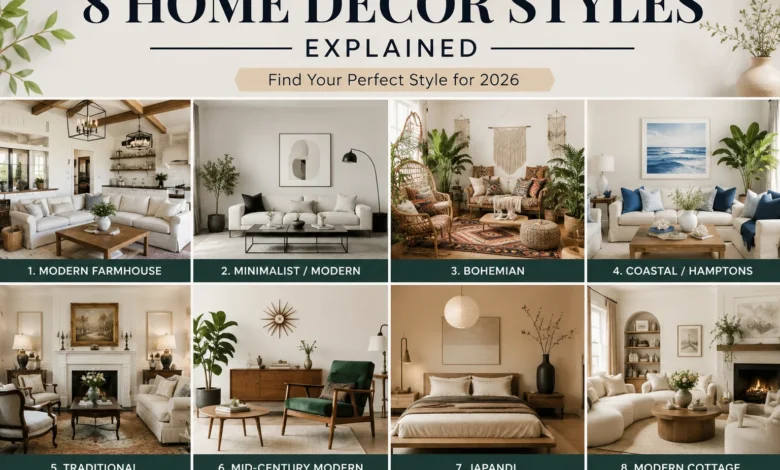
This guide fixes that. Below, you’ll find all 8 major home decor styles for 2026 — Modern Farmhouse, Minimalist, Bohemian, Coastal, Traditional, Mid-Century Modern, Japandi, and the breakout 2026 style, Modern Cottage — broken down by budget, best-suited rooms, signature elements, and how difficult each is to pull off. You’ll also get a self-assessment to identify your style in under two minutes, real mixing strategies, and the mistakes that make a themed room look like a costume instead of a home.
Quick Answer: The 8 Home Decor Styles
If you’re short on time, here’s the quick-reference comparison. Full breakdowns for each style follow below.
| Style | Budget | Best Room | Key Elements | 2026 Trend? | Difficulty |
|---|---|---|---|---|---|
| Modern Farmhouse | Medium | Living Room, Kitchen | Shiplap, neutrals, black fixtures, barn doors | Evolving → Modern Cottage | Beginner-friendly |
| Minimalist / Modern | Low–High | Bedroom, Studio | Clean lines, neutral tones, hidden storage | Yes — warm minimalism | Intermediate |
| Bohemian | Low | Bedroom, Living Room | Layered textiles, plants, rattan, global patterns | Yes — curated boho | Beginner-friendly |
| Coastal / Hamptons | Medium–High | Living Room, Bath | Blues + whites, linen, driftwood accents | Mild | Intermediate |
| Traditional | High | Formal Living, Dining | Symmetry, rich fabrics, antiques, detailed trim | Evolving → Art Deco | Advanced |
| Mid-Century Modern | Medium | Living Room, Office | Tapered legs, walnut wood, retro accents | Steady evergreen | Intermediate |
| Japandi | Medium | Bedroom, Bathroom | Wabi-sabi textures, muted palette, natural materials | Yes — growing fast | Intermediate |
| Modern Cottage | Medium | Any Room | Curved furniture, warm neutrals, vintage + modern mix | YES — 2026 breakout ★ | Beginner-friendly |
How to Identify Your Home Decor Style in 2 Minutes
Before you buy anything, answer these three questions honestly:
- What’s your ideal Saturday morning? A quiet reading nook (Minimalist/Japandi), a sunlit kitchen with coffee and cooking (Modern Farmhouse/Cottage), a beach walk (Coastal), or an antique market (Traditional/Bohemian).
- What colors are already in your closet? People’s wardrobe palettes are a shockingly accurate predictor of the home palette they’ll actually maintain long-term — designers use this trick constantly.
- What frustrates you about your current space? “Too cluttered” points toward Minimalist or Japandi. “Too cold” points toward Modern Cottage or Bohemian. “Too boring” points toward Traditional or Bohemian.
Keep your answers in mind — they’ll map directly onto one or two of the eight styles below.
1. Modern Farmhouse
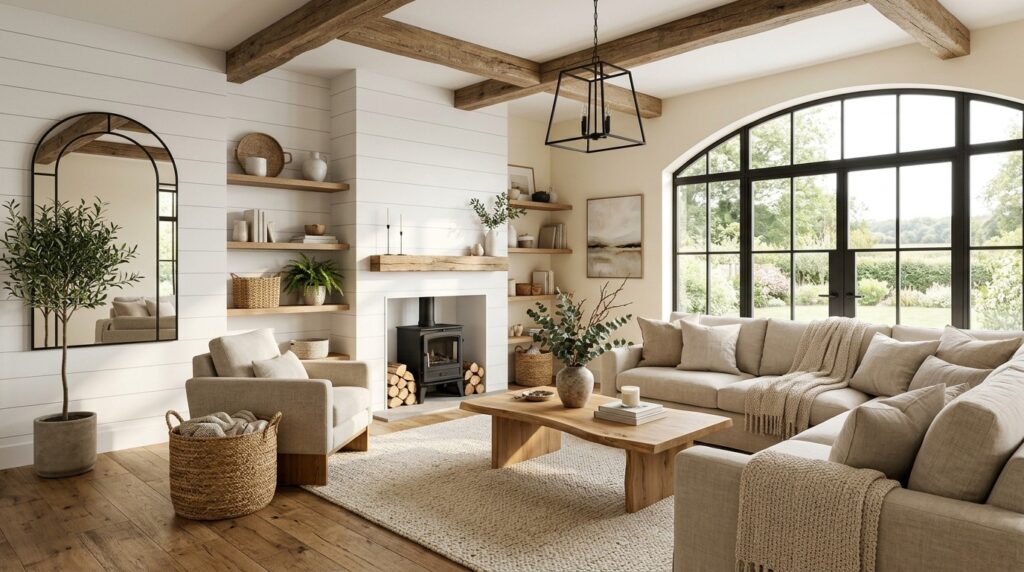
Budget: Medium | Best Rooms: Living Room, Kitchen | Difficulty: Beginner-friendly
Modern Farmhouse dominated the 2016–2023 design landscape, largely thanks to shiplap-heavy renovation shows. It pairs rustic textures — reclaimed wood, barn doors, exposed beams — with clean, modern-white backdrops and matte black fixtures.
Key Elements
- Shiplap or board-and-batten walls
- Neutral palette: white, cream, warm grey
- Matte black hardware and lighting
- Barn doors and open shelving
- Apron-front (farmhouse) sinks
2026 Status: Evolving, Not Dying
Modern Farmhouse isn’t disappearing — it’s softening. Designers describe the shift as farmhouse’s more soulful cousin: curved furniture, arched mirrors, and warmer neutrals layered over the same bones, a hybrid widely called Modern Cottage. If you already own farmhouse pieces, you don’t need to start over.
Expert Tip
Swap one hard-edged farmhouse piece (a boxy coffee table, a squared mirror) for a curved or arched equivalent. That single substitution instantly modernizes the whole room without a full remodel.
2. Minimalist / Modern
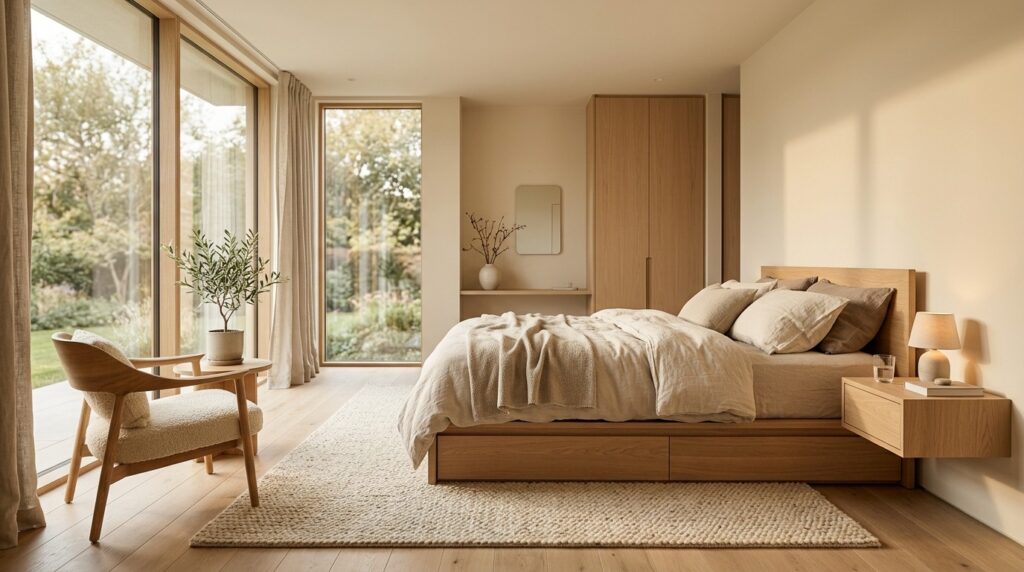
Budget: Low–High | Best Rooms: Bedroom, Studio Apartments | Difficulty: Intermediate
Minimalism strips a room down to what’s functional and beautiful — nothing more. It’s the easiest style to get wrong by accident, because “empty” and “minimal” are not the same thing; minimalism still requires intentional texture and warmth.
Key Elements
- Clean, unbroken lines in furniture silhouettes
- A restrained neutral or monochrome palette
- Hidden or built-in storage to reduce visual clutter
- One or two statement pieces instead of many small objects
2026 Status: Warm Minimalism
Stark, all-white minimalism has given way to “warm minimalism” — the same restrained approach, but built from creamy tones, raw wood, and tactile textiles instead of glossy white and steel. Designers note interiors are moving away from the cold, light-and-airy look that dominated the last decade.
Common Mistake
Buying furniture that’s simply cheap instead of simple. Minimalism only works when every remaining piece is high quality — fewer items means each one is doing more visual work.
3. Bohemian
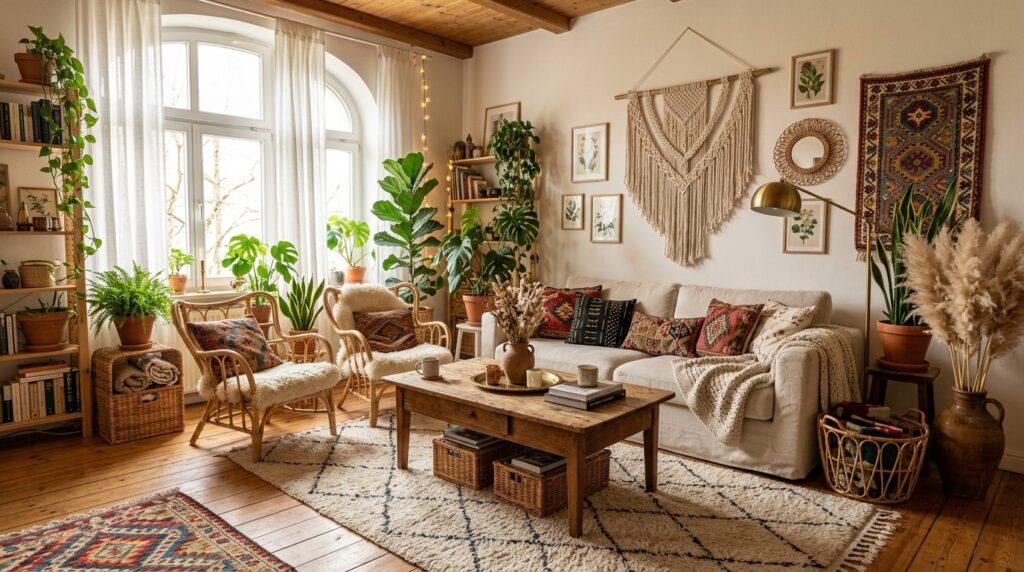
Budget: Low | Best Rooms: Bedroom, Living Room | Difficulty: Beginner-friendly
Bohemian (boho) decor is built on collected, well-traveled character: layered rugs, macramé, rattan furniture, and global textile patterns. It’s one of the most forgiving styles for renters and budget decorators because it thrives on secondhand and vintage finds.
Key Elements
- Layered textiles: rugs on rugs, patterned throws
- Abundant live plants and natural fiber baskets
- Rattan, wicker, and reclaimed wood furniture
- Global-inspired patterns: Moroccan, Turkish, ikat
2026 Status: Curated Boho
Boho isn’t going anywhere, but the “more is more” version is fading in favor of curated boho — the same warmth and texture, edited down so it reads intentional rather than cluttered. This tracks with the broader 2026 shift designers describe: homes should feel lived-in and personal, not stagnant, but every piece should earn its place.
Expert Tip
Apply the “would I miss it?” test to every boho accessory in a room. If removing an item wouldn’t change how the space feels, it’s clutter, not character.
4. Coastal / Hamptons
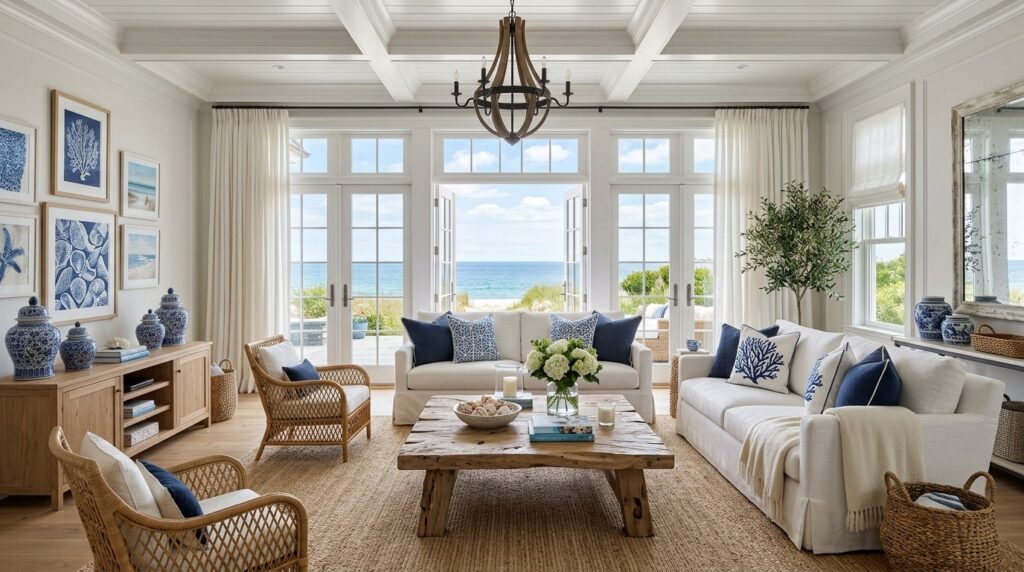
Budget: Medium–High | Best Rooms: Living Room, Bathroom | Difficulty: Intermediate
Coastal style translates beach-house calm into everyday living: blues and whites, linen upholstery, and driftwood or rope accents. Hamptons is its more polished East Coast cousin, adding crisp millwork and navy accents to the same palette.
Key Elements
- Blue and white color story with sandy neutrals
- Natural linen and cotton upholstery
- Driftwood, rope, and rattan accents
- Light, airy window treatments
2026 Status: Mild Trend Momentum
Coastal is stable rather than surging. It benefits indirectly from 2026’s biophilic and organic-luxe movements, which favor natural materials and nature-driven palettes, but it isn’t one of the year’s breakout looks.
Common Mistake
Going too literal — anchors, ship wheels, and shell collections read as “beach gift shop” rather than coastal design. Keep nautical references to color and material, not literal props.
5. Traditional
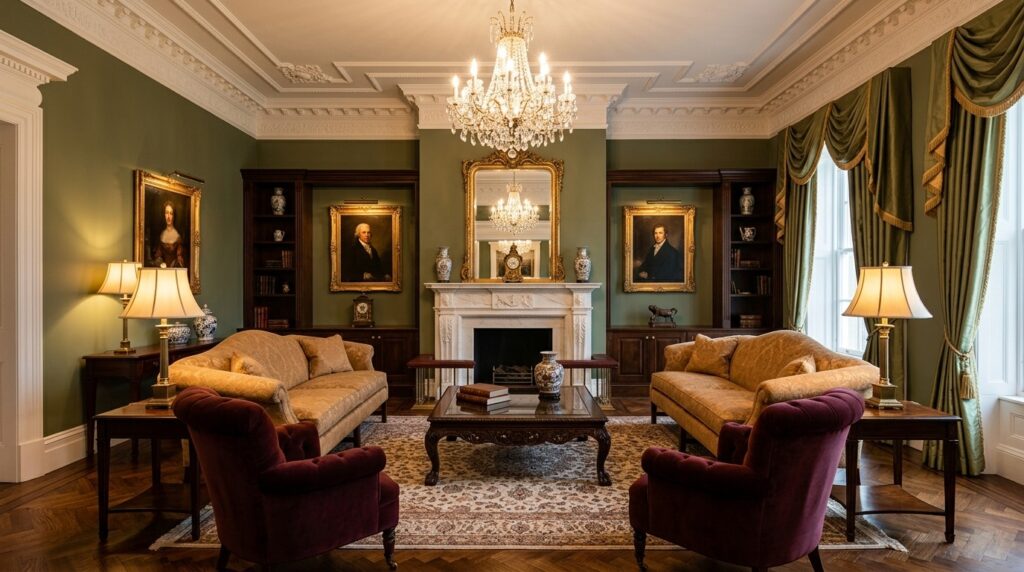
Budget: High | Best Rooms: Formal Living, Dining | Difficulty: Advanced
Traditional decor is built on symmetry, rich fabrics, antiques, and detailed millwork. It’s the most investment-heavy style on this list because it depends on quality materials and proportion — mistakes are far more visible than in casual styles.
Key Elements
- Symmetrical furniture arrangement
- Rich fabrics: velvet, damask, silk
- Antique or antique-style furniture
- Detailed crown molding and trim work
2026 Status: Evolving Toward Art Deco
Classic Traditional is shifting toward richer color saturation, vintage and heirloom pieces, and Art Deco-influenced detailing. Designers report a renewed appreciation for craftsmanship, quality materials, and pieces with personal history rather than mass-produced reproductions.
Expert Tip
Start with one investment antique — a dining table or a mirror — and build the room’s proportions around it. Traditional rooms fail when every piece is new and matched; the antique should look collected, not staged.
6. Mid-Century Modern
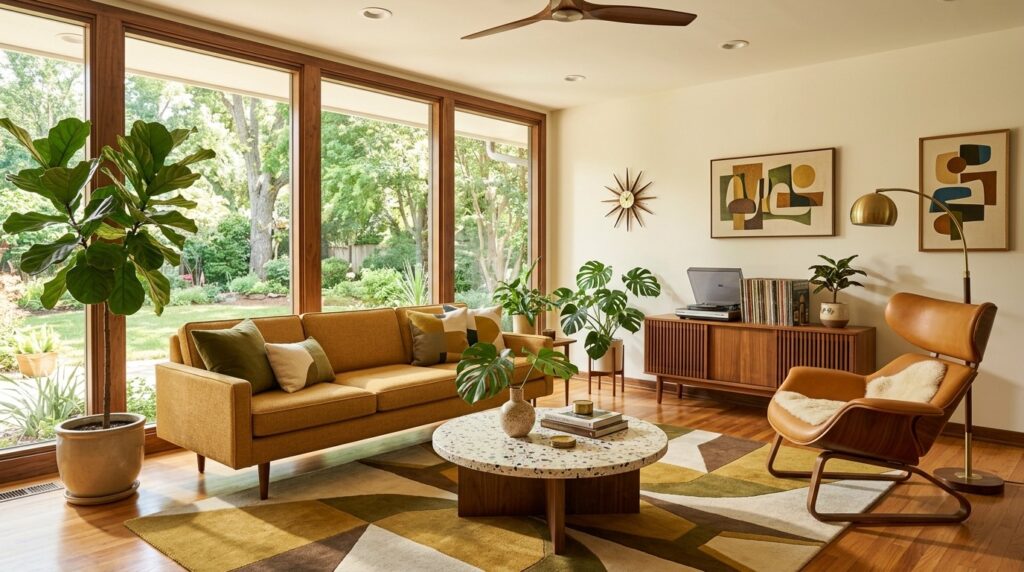
Budget: Medium | Best Rooms: Living Room, Home Office | Difficulty: Intermediate
Mid-Century Modern (MCM) has stayed in steady demand for over a decade because its core forms — tapered wooden legs, warm walnut tones, and clean geometric silhouettes — pair easily with almost any other style.
Key Elements
- Tapered, angled furniture legs
- Warm walnut and teak wood tones
- Retro-inspired color accents: mustard, burnt orange, olive
- Organic, gently curved silhouettes
2026 Status: Steady Evergreen
Unlike trend-driven styles, MCM doesn’t spike and crash — it holds. Its wood tones and sculptural, curved forms directly overlap with 2026’s organic-luxe and craftsmanship-driven movements, keeping it relevant without needing reinvention.
Common Mistake
Buying an entire matching MCM furniture set. Authentic mid-century rooms mix eras — an MCM chair next to a contemporary sofa reads as curated; an all-MCM room can look like a furniture showroom.
7. Japandi
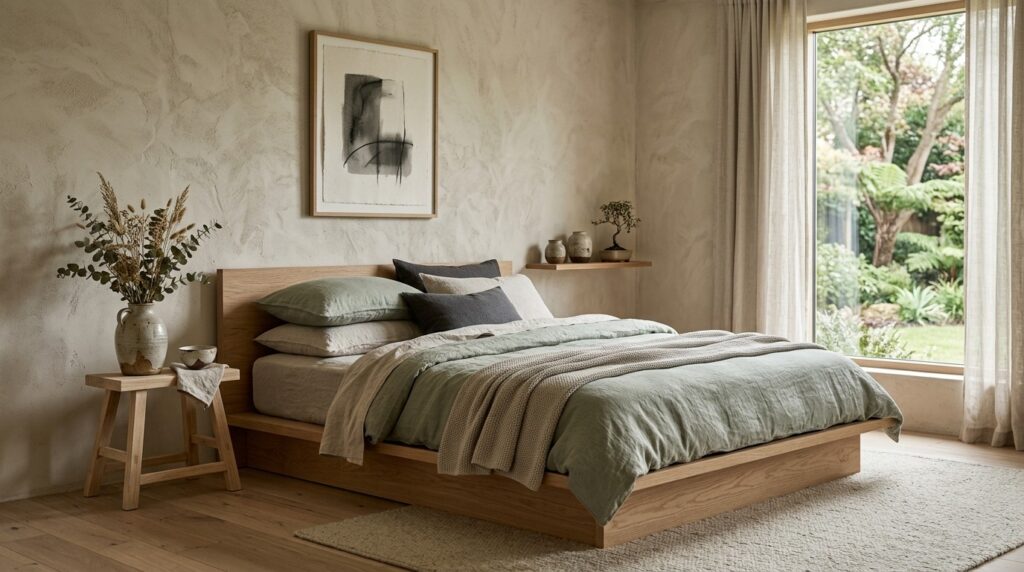
Budget: Medium | Best Rooms: Bedroom, Bathroom | Difficulty: Intermediate
Japandi fuses Japanese wabi-sabi philosophy — beauty in imperfection and simplicity — with Scandinavian hygge warmth. The result is a muted, natural-material palette that feels calm without feeling empty.
Key Elements
- Wabi-sabi textures: raw ceramics, unfinished wood, linen
- Muted, earthy palette: oatmeal, sage, charcoal
- Natural materials over synthetic ones
- Low furniture profiles and uncluttered surfaces
2026 Status: Growing Fast
Japandi is one of the strongest-momentum styles heading into 2026. It sits at the intersection of two major forces designers are tracking: the move toward tactile, handcrafted materials and the biophilic push toward nature-driven, restorative interiors.
Expert Tip
Japandi lives or dies on texture, not color. If your room already has a neutral palette but still feels flat, the fix is almost always adding raw materials — a stoneware vase, an unfinished wood stool — not adding more color.
8. Modern Cottage — The 2026 Breakout Style ★
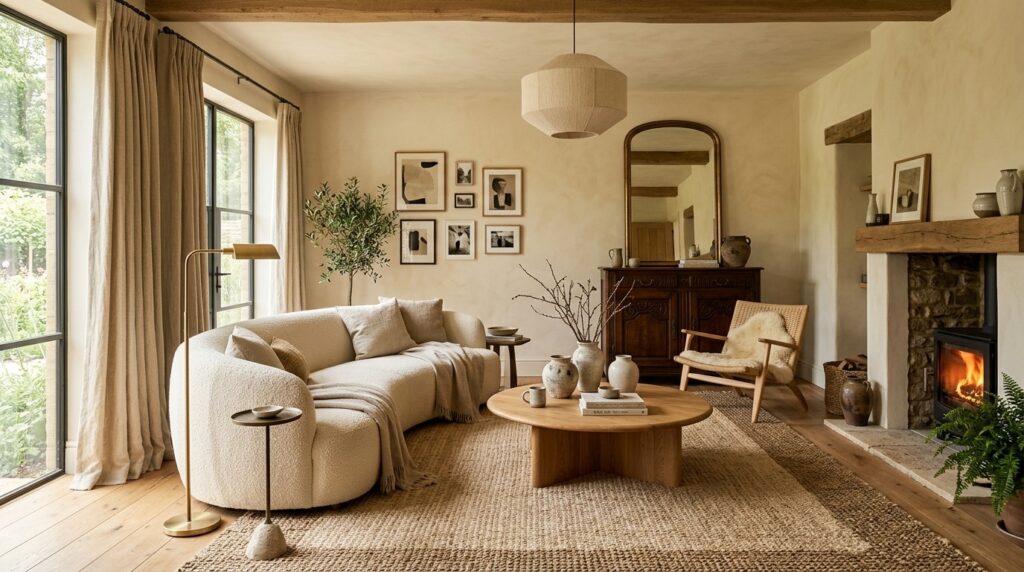
Budget: Medium | Best Rooms: Any Room | Difficulty: Beginner-friendly
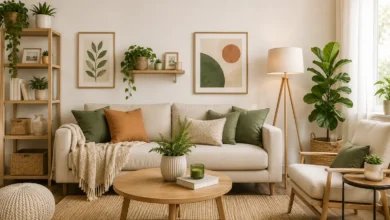
If one style defines 2026, it’s Modern Cottage. Described by designers as what you get if Modern Farmhouse had a softer, more soulful cousin, it blends clean lines with comfort, character, and a sense of lived-in history.
Key Elements
- Curved furniture: rounded coffee tables, arched mirrors, scalloped edges
- Warm, layered neutrals instead of one flat neutral tone
- A mix of vintage finds and modern pieces in the same room
- Zones defined by rugs and lighting rather than walls
Why It’s Breaking Out in 2026
Three forces are converging behind Modern Cottage. First, 2026 color trends lean into rich, moody, grounded hues layered with warm neutrals rather than one flat shade. Second, homeowners are moving away from stark, overly curated interiors toward rooms that feel authentic and personal. Third, it gives Modern Farmhouse owners an easy upgrade path — soften existing boxy pieces with curves rather than replacing them entirely.
Expert Tip
Mix at least three warm neutrals in a single room using textiles, finishes, and furniture rather than relying on one flat wall color — this layering is the defining technique behind the look.
Also Read: Modern Farmhouse Bedroom Decor Ideas:The Complete Guide to Cozy, Stylish Sleep Spaces (2026)
How to Mix Two Styles Without It Looking Like a Mistake
Almost nobody decorates in a single pure style, and top designers don’t either. The skill is in the ratio, not the mixing itself. Use this checklist:
| Combination | Ratio That Works | Anchor Piece |
|---|---|---|
| Farmhouse + Modern Cottage | 70/30 toward Cottage | Curved coffee table |
| Minimalist + Japandi | 50/50 | Low-profile natural wood bed frame |
| Traditional + Mid-Century | 60/40 toward Traditional | One antique dining table |
| Bohemian + Coastal | 50/50 | Rattan furniture in a blue/white palette |
| Coastal + Modern Cottage | 60/40 toward Coastal | Linen sofa with curved arms |
Table 2: Proven style-mixing ratios and the single anchor piece that makes each combination read as intentional.
The rule that holds across every combination: pick one dominant style (60–70%) and let the second style show up only in accents — textiles, lighting, and small furniture. Two styles at 50/50 with no clear lead almost always looks unplanned.
Common Mistakes to Avoid
- Shopping before deciding on a style. Impulse pieces are the #1 reason rooms feel disjointed. Decide your style first, then shop with a list.
- Matching everything too perfectly. A room where every piece is the same era or finish reads as staged, not designed. Even Traditional rooms need one imperfect, collected piece.
- Ignoring scale. A small apartment can absolutely do Traditional or Bohemian — the mistake is using furniture sized for a showroom instead of your actual square footage.
- Chasing every 2026 trend at once. Curved furniture, wallpaper, and bold color-blocking are all trending simultaneously — pick one or two, not all of them, or the room loses its point of view.
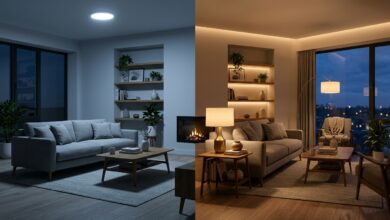
- Forgetting lighting. The same furniture photographs completely differently under warm versus cool lighting. Match your bulb temperature (2700K–3000K for warm styles) to your style before blaming the furniture.
Frequently Asked Questions
What is the most popular home decor style right now?
Modern Cottage is the fastest-growing style heading into 2026, but Mid-Century Modern remains the most consistently popular style over the long term because its forms mix easily with other looks.
What is the easiest decor style for beginners?
Bohemian, Modern Farmhouse, and Modern Cottage are the most beginner-friendly. All three tolerate imperfection and mixed-era furniture, so early mistakes are much less visible than in Traditional or highly curated Minimalist rooms.
Is farmhouse decor outdated in 2026?
No, but it’s evolving. Straight, boxy Modern Farmhouse is softening into Modern Cottage through curved furniture and warmer, layered neutrals. Existing farmhouse pieces don’t need to be replaced — they need to be softened.
What’s the difference between Japandi and Minimalist style?
Minimalism prioritizes clean lines and restraint above all else, and can be monochrome or glossy. Japandi shares that restraint but requires natural, imperfect textures — raw wood, linen, unglazed ceramics — as its defining feature.
How much does it cost to decorate a room in each style?
Bohemian and Minimalist can be done cheaply using secondhand and vintage sourcing. Coastal and Modern Farmhouse sit in the medium range due to quality textiles and fixtures. Traditional is the most expensive because it depends on antiques and high-end fabric.
Can I mix two decor styles in the same house?
Yes — most real homes mix styles by room. A common 2026 approach is Modern Cottage in shared living spaces with Japandi in the bedroom, since both share a warm, natural-material palette that transitions smoothly between rooms.
What decor style works best for small apartments?
Minimalist and Japandi typically work best in small footprints because they rely on hidden storage and low-profile furniture. Bohemian also works well if kept curated rather than densely layered.
Final Thoughts: Pick a Direction, Then Commit
You don’t need to master all 8 styles — you need to correctly identify the one (or two) that already match how you live, then shop with that filter on every purchase. Whether that’s the soft, curved warmth of Modern Cottage, the quiet material honesty of Japandi, or the collected richness of Traditional, the styles that succeed long-term are the ones chosen deliberately, not assembled piece by piece.
Start with the self-assessment above, pick your primary style at a 60–70% ratio, and let every future purchase answer one question: does this belong in the room I’m actually building?”.
Also Read: Complete Home Decor Guide: Styles, Tips, and Budget-Friendly Ideas for Every Room