
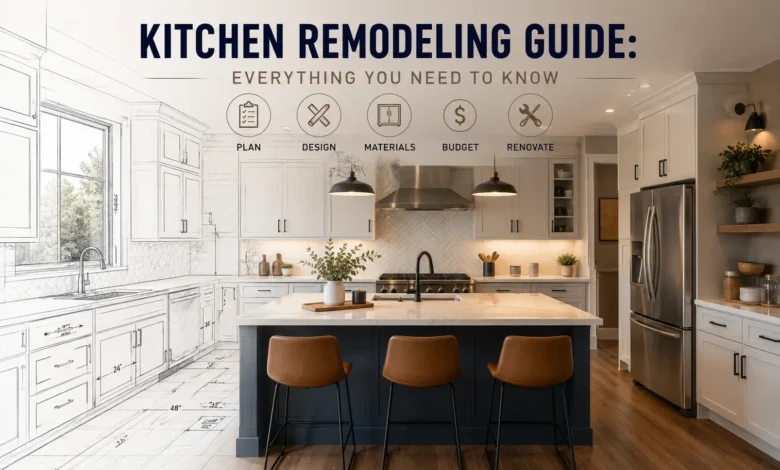
The kitchen is often called the heart of the home, and it’s also usually the most complex and expensive room to remodel. Between layout decisions, cabinetry, countertops, appliances, and finishes, the number of choices can feel endless. This guide breaks the process into manageable steps, helping you plan a kitchen remodel that fits your budget, lifestyle, and home’s overall value. It’s part of our broader Home Improvement Guide, where we cover planning and budgeting principles that apply across every room.
Types of Kitchen Remodels
Cosmetic refresh: This is the lightest-touch option, involving new paint, updated hardware, a new backsplash, and possibly new countertops, all without changing the existing layout or cabinet boxes. It’s the most budget-friendly way to meaningfully update a kitchen’s look.
Cabinet refacing or repainting: Rather than replacing cabinets entirely, refacing involves adding new doors, drawer fronts, and veneer to existing cabinet boxes, while repainting simply updates the existing doors. Both options offer a dramatically different look at a fraction of full replacement cost.
Minor remodel: This typically includes new cabinets, countertops, appliances, and flooring, but keeps the existing layout and plumbing/electrical locations largely intact, which keeps costs more contained than a full gut renovation.
Major remodel: This involves changing the layout — moving plumbing, electrical, or even removing walls to open the space — along with all new finishes, cabinets, and appliances. This is the most expensive category but offers the most flexibility to solve functional problems with the existing floor plan.
Kitchen Layout Basics
Good kitchen layouts are built around efficient movement between the three most-used zones: the refrigerator, sink, and stove — often referred to as the “kitchen work triangle.” While modern kitchen design has evolved beyond a strict triangle rule, especially in open-concept homes with multiple cooks, the underlying principle still matters: minimizing unnecessary walking distance between your most-used areas makes a kitchen genuinely easier to use daily.
Common layout types include the galley kitchen (two parallel counters, efficient for smaller spaces), the L-shaped kitchen (counters along two adjoining walls, popular for its open flow), the U-shaped kitchen (counters along three walls, offering maximum storage and counter space), and the island kitchen (a central island adding both workspace and often seating, popular in open-concept homes).
When planning a layout change, consider not just how the space looks in a rendering, but how you’ll actually move through it while cooking, especially if multiple people use the kitchen simultaneously.
Also Read: Bathroom Renovation Guide: Planning, Costs, and Design Tips
Choosing Cabinets, Countertops, and Materials
Cabinets typically represent the single largest cost in a kitchen remodel, often 30–40% of the total budget. Stock cabinets offer the most budget-friendly option with limited customization, semi-custom cabinets allow some size and finish adjustments at a moderate price increase, and fully custom cabinets offer complete flexibility at the highest cost. Material matters too — solid wood offers durability and a premium look at a higher price, while wood veneer over engineered wood cores offers a similar appearance at a lower cost with good durability.
Countertops range widely in cost and durability. Laminate is the most budget-friendly option and has improved significantly in appearance in recent years. Quartz offers excellent durability, low maintenance, and consistent patterning at a mid-to-high price point, making it one of the most popular choices for busy kitchens. Granite provides natural stone beauty with good durability but requires periodic sealing. Butcher block offers warmth and a lower cost but requires more maintenance and isn’t as heat or water-resistant as stone options.
Flooring should balance durability with the kitchen’s high-traffic, spill-prone nature. Luxury vinyl plank has become extremely popular for kitchens due to its water resistance, durability, and lower cost compared to hardwood, while still offering a realistic wood-look appearance. Tile remains a durable, classic choice, though grout lines require maintenance. Hardwood offers timeless appeal but needs proper sealing and care to handle kitchen conditions well.
Kitchen Remodel Costs at a Glance
| Remodel Type | Typical Cost Range | What’s Included |
|---|---|---|
| Cosmetic refresh | $3,000–$10,000 | Paint, hardware, backsplash, possibly countertops |
| Cabinet refacing | $5,000–$15,000 | New doors/fronts on existing cabinet boxes |
| Minor remodel | $15,000–$35,000 | New cabinets, countertops, appliances, flooring |
| Major remodel | $35,000–$75,000+ | Layout changes, new plumbing/electrical, full finishes |
Kitchen Appliances: What’s Worth Upgrading
Not every appliance needs replacing during a remodel. If your current appliances are functioning well and reasonably current in style, it’s often smarter to allocate budget elsewhere. That said, a mismatched or clearly dated appliance suite can undercut an otherwise beautiful renovation, so many homeowners choose to replace at least the most visible pieces — typically the range and refrigerator — even when other appliances are kept.
When budgeting for new appliances, consider energy efficiency ratings, since more efficient models often cost more upfront but reduce utility bills over their lifespan. Also consider your actual cooking habits rather than upgrading purely for trend appeal — a large, professional-style range makes sense for someone who cooks extensively, but may be an unnecessary expense for a household that cooks simply and infrequently.
Common Kitchen Remodeling Mistakes to Avoid
Underestimating the budget for hidden issues. Older kitchens often reveal outdated wiring, plumbing, or subfloor damage once cabinets and flooring come out. Build in the 15–20% contingency covered in our main Home Improvement Guide.
Prioritizing trends over function. Trendy finishes can look dated within a few years, while functional layout improvements — more counter space, better storage, improved workflow — remain valuable regardless of style trends.
Skimping on ventilation. A powerful, properly vented range hood matters more than many homeowners realize, both for air quality and preventing grease buildup throughout the kitchen over time.
Choosing countertops without considering maintenance. A beautiful natural stone countertop that requires regular sealing might not suit a busy household that won’t keep up with maintenance. Match material choice to your realistic lifestyle.
Ignoring lighting layers. Many kitchens rely on a single overhead light, which creates shadows during food prep. A well-lit kitchen typically layers ambient, task (under-cabinet), and accent lighting for both function and atmosphere.
Planning Your Kitchen Remodel Timeline
A cosmetic refresh can often be completed in one to two weeks, while a minor remodel typically takes four to eight weeks depending on cabinet lead times, which can be a significant factor since custom and semi-custom cabinets often require several weeks for manufacturing and delivery. A major remodel involving layout changes can take three to six months or longer, particularly if structural or permit-related delays arise.
Plan for reduced kitchen access throughout most of this timeline, and consider setting up a temporary cooking space — even a simple setup with a microwave, hot plate, and mini fridge — to make daily life more manageable during a longer renovation.
Frequently Asked Questions
How much does a kitchen remodel typically cost?
Costs range widely based on scope, from around $3,000 for a cosmetic refresh to $75,000 or more for a major remodel involving layout changes. Cabinets typically represent the largest single cost category, often 30–40% of the total budget.
Is it worth replacing kitchen cabinets or just refacing them?
If your existing cabinet boxes are structurally sound and you’re happy with the layout, refacing offers a dramatically updated look at a fraction of full replacement cost. Full replacement makes more sense if you’re changing the layout or the boxes show significant wear.
What countertop material is most durable for a busy kitchen?
Quartz is widely considered one of the most durable, low-maintenance options, resisting stains and scratches well without requiring periodic sealing like natural stone options such as granite.
How long does a kitchen remodel take?
Timelines vary by scope: a cosmetic refresh might take one to two weeks, a minor remodel four to eight weeks, and a major remodel involving layout changes three to six months or longer.
Should I upgrade my appliances during a kitchen remodel?
It depends on your current appliances’ condition and style consistency with the rest of the renovation. If they’re functioning well and don’t clash visually with the new design, it’s often smarter to allocate that budget elsewhere in the project.
Also Read: Complete Home Decor Guide: Styles, Tips, and Budget-Friendly Ideas for Every Room