Getting started with DIY home improvement can feel intimidating, especially if you’ve never tackled a project beyond hanging a picture frame. The good news is that many of the most impactful home improvements are genuinely beginner-friendly, requiring only basic tools and a willingness to follow instructions carefully. This guide walks through the best starter projects, the tools you’ll need, and how to build confidence before moving on to bigger renovations. It’s part of our broader Home Improvement Guide, where we cover the planning and decision-making principles behind every project.
Why Start Small
Before tackling any bigger renovation, beginner-friendly projects serve an important purpose beyond their immediate results — they teach you fundamental skills (measuring accurately, using tools safely, working carefully and patiently) that transfer directly to larger projects later. They also help you understand your own skill level and interest realistically, which informs smarter DIY-versus-hire decisions on future, higher-stakes projects, as covered in our main Home Improvement Guide.
Starting small also limits the financial risk of a mistake. A miscut piece of trim costs a few dollars to replace; a miscut piece of custom cabinetry costs considerably more. Building skills on lower-stakes projects protects both your budget and your confidence.
Best Beginner DIY Projects
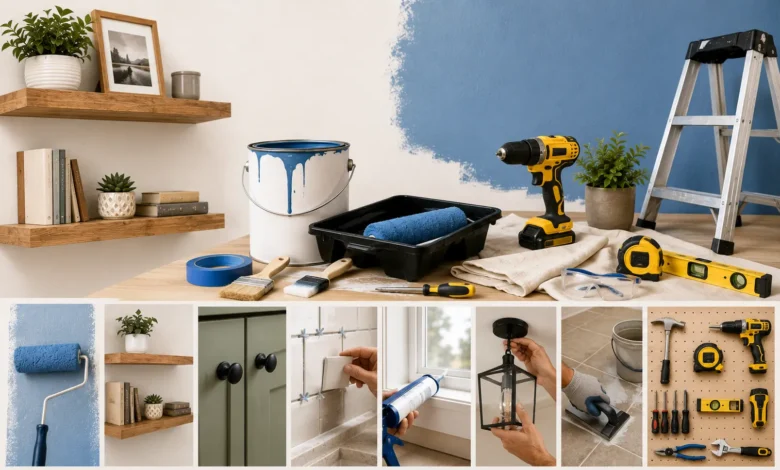
Painting a room. As covered in detail in our Painting Guide, painting is one of the most forgiving projects for beginners — mistakes are relatively easy to fix, and the visual impact is significant. Start with a smaller room like a bathroom or bedroom before tackling a large open-concept space.
Installing floating shelves. This project teaches fundamental skills like using a stud finder and a level, both essential for countless future projects. Floating shelves also offer immediate, visible storage improvement in nearly any room.
Updating cabinet and door hardware. Simply swapping outdated knobs and pulls for updated hardware is one of the lowest-effort, highest-visual-impact projects available, typically requiring only a screwdriver and a template for consistent hole placement if the new hardware doesn’t match existing holes.
Installing a tile backsplash. While tiling can be intimidating, a small backsplash area is a manageable introduction to tile work, using peel-and-stick or standard tile with adhesive, before attempting a larger, more complex tiling project like a shower surround.
Assembling and installing flat-pack furniture. Beyond simply following instructions, this builds comfort with basic tools and hardware, and teaches patience with multi-step assembly processes that mirror larger home improvement projects.
Caulking around tubs, sinks, and windows. This small maintenance task prevents water damage and drafts, and teaches a skill — achieving a clean, even bead of caulk — that’s genuinely useful across many future home maintenance tasks.
Installing a new light fixture (fixture swap only). Replacing an existing light fixture with a similar one, without adding new wiring, is a manageable beginner electrical project, though always turn off power at the breaker and confirm it’s off with a voltage tester before beginning.
Refreshing grout lines. Regrouting or simply deep-cleaning discolored grout can dramatically refresh a bathroom or kitchen’s appearance at minimal cost, and teaches patience and attention to detail that transfers to future tile projects.
Building Your Beginner Toolkit
You don’t need an extensive, expensive toolkit to start. A solid beginner set includes: a hammer, a set of screwdrivers (flathead and Phillips, various sizes), a tape measure, a level, a stud finder, a utility knife, an adjustable wrench, pliers, and a cordless drill with a basic bit set. Beyond tools, keep a small stock of consumables on hand — wood filler, caulk, sandpaper, painter’s tape, and an assortment of screws and wall anchors — since small repairs and projects come up more often than most new homeowners expect.
As you complete more projects and identify recurring needs, expand your toolkit gradually rather than buying specialized tools before you know you’ll use them regularly.
Also Read: Kitchen Remodeling Guide: Everything You Need to Know
Beginner Project Difficulty at a Glance
| Project | Time Needed | Tools Required | Difficulty |
|---|---|---|---|
| Painting a room | 1–2 days | Brushes, rollers, tape, drop cloths | Easy |
| Floating shelves | 1–2 hours | Stud finder, level, drill | Easy |
| Cabinet hardware swap | 1–3 hours | Screwdriver, template | Easy |
| Small tile backsplash | 1 weekend | Tile, adhesive, spacers, grout float | Moderate |
| Flat-pack furniture assembly | Varies | Included hardware, screwdriver | Easy to moderate |
| Caulking | 1–2 hours | Caulk gun, caulk, smoothing tool | Easy |
| Light fixture swap | 1–2 hours | Screwdriver, voltage tester | Moderate |
| Regrouting | 1 weekend | Grout saw, grout, sealant | Moderate |
Safety Basics Every Beginner Should Know
Even simple projects carry some risk, and a few safety habits should become second nature from the start. Always turn off power at the breaker before any electrical work, and confirm it’s off with a voltage tester rather than assuming the switch label is accurate. Wear safety glasses when cutting, sanding, or drilling, and use a dust mask when sanding, especially in older homes where lead paint may be present in layers beneath newer paint.
Use the right tool for the job rather than improvising with something not designed for the task, which is a common cause of both project mistakes and minor injuries. Keep your workspace reasonably tidy, especially cords and tools that could create a tripping hazard, and never rush a project simply to finish faster — most DIY injuries happen when people are moving quickly or working while fatigued.
When to Stop DIYing and Call a Professional
Part of building DIY confidence is also recognizing your limits honestly. If a project involves anything beyond a basic fixture swap electrically, any plumbing beyond replacing a showerhead or faucet aerator, structural changes, gas lines, or if you find yourself genuinely unsure how to proceed safely partway through a project, it’s a reasonable and smart decision to pause and call a professional rather than pushing forward. Our main Home Improvement Guide covers this DIY-versus-professional decision in more detail for larger projects.
There’s no shame in recognizing when a project exceeds your current skill level — in fact, this kind of honest self-assessment is exactly what separates experienced DIYers from those who end up creating costly problems by attempting projects beyond their ability.
Also Read: Bathroom Renovation Guide: Planning, Costs, and Design Tips
Common Beginner Mistakes to Avoid
Skipping instructions or research. Even simple-looking projects benefit from watching a tutorial or reading instructions fully before starting, rather than figuring it out as you go, which often leads to mistakes that require redoing work.
Buying cheap tools that don’t perform well. Poor-quality tools can make even simple tasks frustrating and produce worse results. You don’t need premium tools as a beginner, but avoid the absolute cheapest options, which often break or perform poorly.
Rushing the prep work. Just like painting, most DIY projects have a preparation phase that matters as much as the main task. Skipping measuring twice, cleaning surfaces, or reading full instructions leads to avoidable mistakes.
Not asking for help when needed. Whether it’s a knowledgeable friend, a hardware store employee, or an online forum, most beginner mistakes can be avoided simply by asking a question before starting rather than troubleshooting after something has gone wrong.
Ignoring safety precautions because a project seems simple. Even “easy” projects involving tools, ladders, or electrical components carry real risk. Building good safety habits from your very first project makes them automatic for bigger projects later.
Frequently Asked Questions
What’s the easiest home improvement project for a total beginner?
Painting a small room is often considered the most beginner-friendly project. Mistakes are relatively easy to fix, the tools required are minimal, and the visual impact is significant relative to the effort involved.
What tools should a beginner DIYer buy first?
A basic starter set — hammer, screwdrivers, tape measure, level, stud finder, and a cordless drill — covers the vast majority of beginner projects without a large upfront investment.
Is it safe for beginners to do any electrical work?
Simple fixture swaps, like replacing a light fixture with a similar one using existing wiring, are generally manageable for beginners as long as power is properly turned off and verified. Anything beyond that, including new wiring or outlet installation, typically requires a licensed electrician.
How do I know if a DIY project is too advanced for me?
If a project involves plumbing beyond basic fixture replacement, electrical work beyond a simple swap, structural changes, or if you feel genuinely unsure how to proceed safely, it’s a reasonable signal to hire a professional instead.
How can I build confidence for bigger DIY projects?
Start with smaller, lower-stakes projects that teach fundamental skills like measuring, using a level, and basic tool handling. Completing several of these successfully builds both the practical skills and the confidence needed for larger renovations.