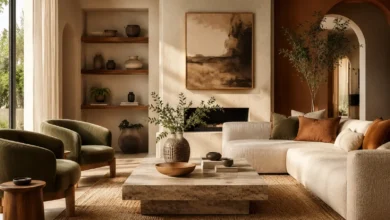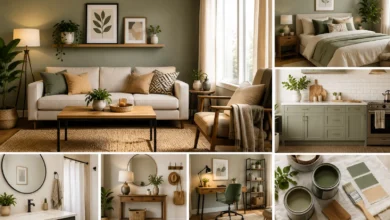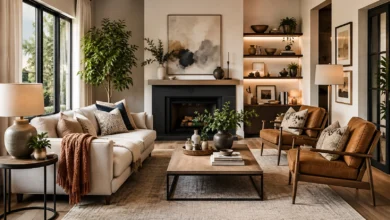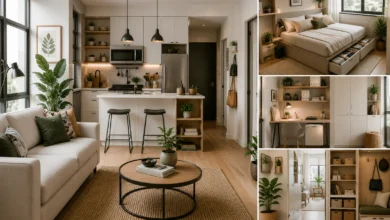
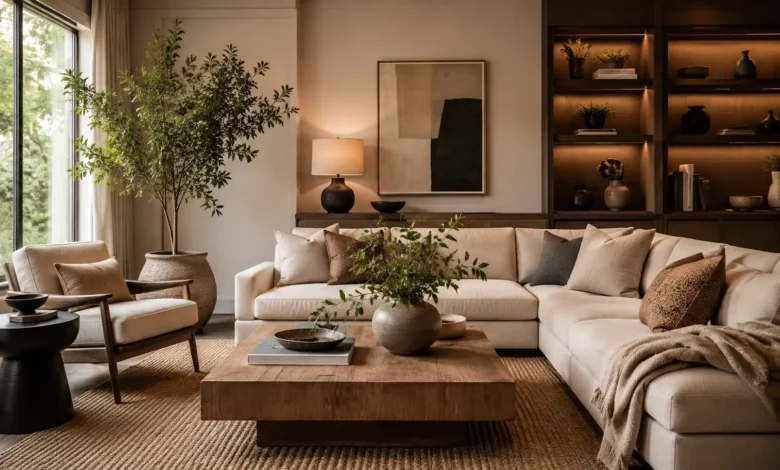
Walk into a room that feels effortlessly “right,” and you’re experiencing good interior design at work — even if you can’t quite explain why it works. Maybe it’s the way sunlight falls across a linen sofa, or how a small studio apartment somehow doesn’t feel cramped. That’s not luck. It’s the result of intentional decisions about space, color, light, and function.
Whether you’re furnishing your first apartment, planning a full home renovation, or just trying to make your living room feel less like a showroom and more like you, this guide walks through everything you need to know about interior design — from foundational principles to practical, room-by-room advice, real budget tiers, and the mistakes that quietly sabotage most spaces.
What Is Interior Design — and Why Does It Actually Matter?
Interior design is the art and science of planning and shaping the interior of a space to make it healthier, more functional, and more beautiful for the people who live in it. It blends creativity with technical knowledge — spatial planning, color theory, lighting, materials, and sometimes structural decisions like moving a wall or adding a window.
This is what separates design from decorating: design often starts before a single piece of furniture is chosen. It asks how a space should function first, and lets everything else — color, furniture, lighting — follow from that answer.
Research in environmental psychology backs this up: the spaces we live in directly affect mood, stress levels, and focus. A cluttered, poorly lit room doesn’t just look unfinished — it can genuinely make you feel worse. The good news is that you don’t need an unlimited budget or a design degree to get this right. You need the right framework, which is exactly what this guide provides.
Interior Design vs. Interior Decorating: What’s the Difference?
These terms get used interchangeably, but understanding the difference helps you figure out what kind of help your project actually needs.
Interior design typically involves space planning, structural changes (moving walls, adding windows), technical drawings, coordinating with contractors, and — in many regions — formal licensing.
Interior decorating typically involves selecting furniture, textiles, paint colors, and accessories, and arranging existing spaces for style and comfort, without structural changes.
If your kitchen renovation involves reconfiguring plumbing or electrical, you need a designer or architect. If you’re refreshing your living room with new furniture and paint, decorating — or your own good instincts — will do the job. Many professionals today do both, and the line has blurred, but it’s a useful distinction when scoping a project.
The 7 Core Principles of Interior Design
Every well-designed room, regardless of style, follows a set of underlying principles. These are the “rules” designers use — and sometimes deliberately break — to make a space feel intentional rather than accidental.
Balance. Balance doesn’t mean symmetry — it means the visual weight on one side of a room roughly equals the other. Symmetrical balance (matching nightstands, paired chairs) feels formal; asymmetrical balance (a large plant offset by a cluster of smaller objects) feels relaxed and modern, and is far more forgiving to work with.
Harmony and unity. This is achieved when every element in a room supports one cohesive idea. It doesn’t mean everything matches — it means everything belongs to the same story.
Rhythm. Rhythm comes from repetition — repeating a color, shape, or texture so the eye moves naturally through a space. A striped rug that echoes a striped throw pillow across the room is a simple example.
Emphasis (focal point). Every room needs one thing the eye lands on first — a fireplace, a bold piece of art, a statement light fixture. Without a focal point, a room feels unsettled; decide on yours before buying a single piece of furniture.
Proportion and scale. Proportion is the size relationship between objects; scale is how those objects relate to the room itself. An oversized sectional in a small living room will always feel wrong, no matter how nice the sofa is on its own.
Contrast. Pairing light with dark, smooth with rough, curved with angular adds visual interest and keeps a room from feeling flat — even an all-neutral room needs some contrast to feel finished.
Details. Hardware, trim, and finishing touches are what elevate a space from “fine” to “designed.” They’re usually the last thing chosen and the first thing people notice.
The 7 Elements of Interior Design
If principles are the rules, elements are the ingredients. Every design decision touches one or more of these seven elements: space (positive space filled with objects, negative space that lets a room breathe), line (horizontal lines feel calm, vertical lines feel elevated), form (geometric vs. organic shapes), light (arguably the single most transformative element in any room), color (the emotional backbone of a space), texture (how surfaces look and feel), and pattern (repeated motifs that add rhythm and personality).
The Most Popular Interior Design Styles
Knowing the major style categories helps you shop with purpose instead of impulse — and gives you a shared language when talking to a designer, a contractor, or just yourself while browsing furniture stores. You don’t need to commit to just one; most well-designed homes blend two.
| Style | Best For | Key Elements | Difficulty |
|---|---|---|---|
| Modern | Living rooms, offices | Clean lines, neutral palette, minimal ornament | Beginner-friendly |
| Minimalist | Bedrooms, studios | Essentials only, hidden storage, negative space | Intermediate |
| Scandinavian | Any room | Light woods, soft neutrals, cozy textiles (hygge) | Beginner-friendly |
| Bohemian | Bedrooms, living rooms | Layered textiles, plants, global patterns | Beginner-friendly |
| Industrial | Lofts, home offices | Exposed brick, metal, concrete, repurposed materials | Intermediate |
| Farmhouse | Kitchens, living rooms | Shiplap, warm woods, vintage accents | Beginner-friendly |
| Mid-Century Modern | Living rooms, offices | Tapered legs, walnut, organic curves, bold accents | Intermediate |
| Traditional | Formal living, dining | Symmetry, rich fabrics, antiques, detailed trim | Advanced |
| Coastal | Living rooms, bathrooms | Blue-and-white palette, linen, driftwood accents | Intermediate |
| Japandi | Bedrooms, bathrooms | Wabi-sabi texture, muted tones, natural materials | Intermediate |
Also Read: 10 Popular Interior Design Styles Explained (With Photos & Tips)
How to Choose a Color Palette
Color is one of the fastest ways to transform a room — and one of the most intimidating decisions for beginners.
Start with a mood, not a color. Do you want the room to feel energizing, restful, or dramatic? Let that guide your palette instead of starting with a specific paint chip.
Use the 60-30-10 rule. Sixty percent of the room should be a dominant color (walls, large furniture), 30% a secondary color (upholstery, curtains), and 10% an accent color (pillows, art, accessories). This ratio creates balance automatically.
Consider the room’s light. North-facing rooms get cooler, bluer light and often benefit from warm colors to balance it. South-facing rooms get warm light and can handle cooler tones beautifully.
Test before you commit. Paint large swatches directly on the wall — not just small cards — and observe them at different times of day.
Don’t ignore undertones. Even “white” paint carries an undertone — pink, yellow, blue, or green — that becomes obvious on a large wall. Compare swatches against each other, not in isolation.
| Decide your color palette before you buy furniture. Every purchase gets easier — and cheaper to return — once the palette is locked in. |
|---|
- Ready to go deeper on color? See our full guide: Color Theory for Interior Design: How to Choose the Perfect Palette
Lighting Design Basics
Lighting is often the most overlooked element of interior design — and the one with the biggest impact. Good lighting design layers three types of light:
- Ambient (general) lighting provides overall illumination — ceiling fixtures, recessed lights, or natural light.
- Task lighting is focused and functional — a reading lamp, under-cabinet kitchen lighting, or a desk lamp.
- Accent lighting highlights specific features — art, architectural details, plants — and adds depth and evening warmth.
A well-lit room uses all three layers rather than relying on a single overhead fixture, often called “flat lighting” and one of the most common beginner mistakes. Dimmer switches are a small investment that dramatically increases flexibility, letting one room serve multiple moods across the day.
Furniture Selection and Room Layout
Measure everything first. Before buying anything, measure your room, doorways, hallways, and stairwells to confirm furniture can actually get inside and fit comfortably.
Leave breathing room. Aim for at least 30 inches of walkway space between furniture pieces, and 14–18 inches between a coffee table and a sofa.
Anchor with a rug. A rug that’s too small is one of the most common layout mistakes — ideally, at least the front legs of all major furniture pieces should sit on the rug.
Float furniture away from walls. Pushing everything against the wall isn’t always the best use of space. Floating a sofa or creating a conversation area toward the center of a room often feels more intentional and inviting.
Design around conversation, not the TV. Arrange seating to encourage conversation first, then figure out TV placement second.
Room-by-Room Design Tips
Living room. Choose a focal point — fireplace, media wall, or a piece of art — and arrange seating around it. Layer lighting with a floor lamp, table lamps, and an overhead fixture. Mix seating heights and textures for visual interest.
Bedroom. Prioritize the bed as the visual anchor and invest in quality bedding — it makes an outsized difference. Keep nightstands with lamps for task lighting, and consider blackout curtains for better sleep. Limit clutter and screens to keep the room feeling restful.
Kitchen. Function drives design here more than anywhere else. Follow the classic sink–stove–refrigerator work triangle for efficient movement, and layer task lighting under cabinets for prep areas. Open shelving adds personality but requires more upkeep than closed cabinetry.
Bathroom. Moisture-resistant materials are non-negotiable, and good ventilation plus layered lighting around the mirror make a real functional difference. Even small updates — new hardware, a statement mirror, fresh towels — can transform the space without a full renovation.
Home office. Position your desk near natural light while avoiding direct screen glare. Invest in an ergonomic chair, since comfort directly affects productivity, and add closed storage to keep the space looking tidy on video calls.
- For a deeper, layout-by-layout breakdown, see our full guide: Living Room Interior Design Ideas: A Complete Room-by-Room Guide
Small Space Design Strategies
Small rooms and apartments come with their own rules. A few strategies consistently help: go vertical with tall shelving to free up floor space; choose multi-functional furniture like storage ottomans and extendable tables; stick to a lighter, more cohesive palette so a small room doesn’t feel visually fragmented; use mirrors strategically, placed opposite a window to increase perceived light and space; and scale furniture appropriately — an oversized sofa is the single most common small-space mistake.
- Want the full list, including layout diagrams? See: Small Space Interior Design: 15 Smart Tips to Maximize Every Room
Budget-Friendly Interior Design
Great design doesn’t require a massive budget. Some of the highest-impact, lowest-cost changes include:
- Paint — still the single best return on investment in any room
- Rearranging existing furniture — sometimes a fresh layout is all a room needs
- Swapping hardware — new cabinet pulls or light switch plates instantly modernize a space
- Shopping secondhand — vintage and thrifted furniture often has more character at a fraction of the cost
- Prioritizing spend — splurge on pieces you touch and see daily (a sofa, your mattress), and save on trend-driven accessories that are cheaper to replace later
| Order of operations: Paint → Rug → Lighting → Furniture. Furniture is the most expensive and least impactful place to start — lock in your foundation first. |
|---|
- For a full room-by-room budget breakdown, see: Budget Interior Design: How to Decorate Your Home Without Breaking the Bank
Sustainable Interior Design
Sustainable, or “green,” interior design focuses on reducing environmental impact without sacrificing style. Key practices include choosing furniture made from responsibly sourced or reclaimed materials, prioritizing durability over disposability, using low- or zero-VOC paints for better indoor air quality, incorporating energy-efficient LED lighting, shopping secondhand before buying new, and favoring natural fibers like wool, cotton, and linen over synthetics. Sustainability and style aren’t mutually exclusive — some of the most compelling modern interiors lean on vintage and reclaimed pieces precisely for the character they bring.
DIY Design vs. Hiring a Professional
Consider hiring an interior designer if your project involves structural changes, a whole-home renovation with multiple contractors to coordinate, a budget large enough that mistakes are costly, or a timeline where you don’t have the bandwidth to manage every decision yourself.
A DIY approach works well for single-room refreshes, smaller budgets where designer fees would consume a large share of spend, or projects where you already have a clear vision and just need execution. Many homeowners also opt for a hybrid — a one-time consultation for a floor plan or color direction, followed by DIY execution.
Common Interior Design Mistakes to Avoid
- Buying furniture before measuring the room — the most common and most expensive mistake
- Choosing paint color first — build your palette around a “hero” piece like a rug or sofa instead, since paint is the easiest thing to change later
- Undersized rugs — a rug that doesn’t touch any furniture usually looks smaller than intended
- Relying on a single overhead light — layered lighting, covered above, is essential
- Matching everything too perfectly — a room where every piece matches exactly can feel like a showroom rather than a home
- Ignoring scale — furniture that’s too large or small throws off the whole room’s balance
- Forgetting window treatments — curtains and blinds soften a room and frame the view, not just block light
Interior Design Trends to Watch
Trends come and go, but a few themes are shaping interior design right now: warm minimalism, where the starkness of early minimalism gives way to warmer woods and curved furniture; maximalist color, with bold, saturated walls making a comeback after years of neutral-dominated interiors; biophilic design, incorporating natural materials, plants, and organic shapes; multi-functional spaces, as home offices and guest rooms increasingly share square footage; and vintage and antique mixing, pairing modern furniture with one or two statement vintage pieces for character.
- Curious what’s in and what’s fading? See our full breakdown: Interior Design Trends 2026: What’s In and What’s Out
Frequently Asked Questions About Interior Design
Do I need a degree to be an interior designer?
Requirements vary by country and region. In many places, “interior designer” is a protected title requiring formal education and licensing, while “interior decorator” is not regulated — check local requirements if you’re pursuing this professionally.
How much does interior design cost?
Costs vary enormously by scope. A single consultation might cost a few hundred dollars, while full-service design for a whole home can run into the tens of thousands. Many designers offer hourly, flat-fee, or percentage-of-budget pricing.
What’s the easiest way to start designing a room from scratch?
Start with function: decide how the room needs to be used, then build outward — layout, then color palette, then furniture, then lighting, then final details.
How do I find my personal design style?
Save images of rooms you’re drawn to without overthinking it, then look for patterns afterward — you’ll likely notice recurring colors, materials, or moods that point to a style.
Can I mix multiple design styles in one home?
Yes — most real homes blend styles rather than sticking rigidly to one. The key is a consistent thread, like a color palette or material, that ties the mix together.
Final Thoughts
Interior design can feel overwhelming when you’re starting from scratch, but it comes down to a handful of repeatable principles: understand how you live, prioritize function before style, layer your lighting, respect scale and proportion, and build your palette around a piece or feeling you love.
You don’t need a design degree — or an unlimited budget — to create a home that feels considered and comfortable. Start with one room, apply what you’ve learned here, and build outward from there. Explore the related guides linked throughout this article for a deeper dive into styles, color, budgets, and room-specific advice.