Every January, a new wave of interior design trend predictions floods design blogs, social media, and showroom floors. Most of them fade by spring. The ones actually worth paying attention to are the ones still shaping real purchasing decisions well into the year — because by then, they’ve stopped being a passing trend and become the direction the industry is genuinely moving.
This guide breaks down the interior design trends 2026 has actually delivered on, based on what’s showing up repeatedly across design markets, showroom collections, and working designers’ projects throughout the year — along with the trends that are clearly fading. Whether you’re planning a full renovation or a single-room refresh, understanding both sides of this list will help you make choices that feel current now without looking dated in five years.
If you’re earlier in the planning process, it’s worth starting with our complete guide to interior design for the foundational principles that make any trend actually work in a real home, rather than just in a photo.
What Are Interior Design Trends, Really?
Before diving into the specifics, it’s worth answering a more basic question: what are interior design trends, and why do they matter beyond aesthetics?
Interior design trends aren’t just about which colors or shapes are currently fashionable. At their best, they’re a signal of a broader cultural shift — changes in how people are actually living, what they value, and what they’ve grown tired of. A trend toward warmer, more tactile materials, for example, often reflects a genuine reaction against a previous era that felt too sterile or impersonal, not just a random aesthetic swing.
Understanding this distinction matters because it helps separate trends worth adopting from trends worth skipping. A trend rooted in a lasting shift in how people want their homes to feel — more comfortable, more personal, more connected to nature — tends to have staying power. A trend rooted purely in a specific product or a single influencer moment tends to fade quickly, often within a single season.
The Big Picture: What’s Driving Interior Design Trends 2026
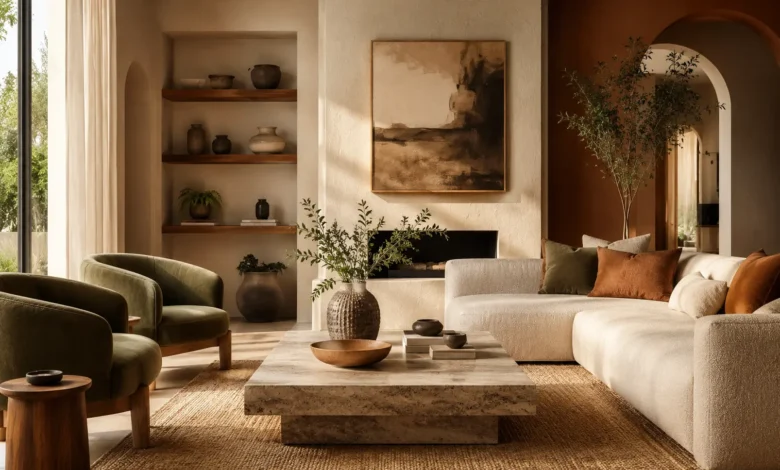
If there’s one theme tying together nearly every major trend this year, it’s a decisive move away from the stark, coolly minimal interiors that defined much of the past decade, and toward spaces that feel warmer, more tactile, and more personally collected over time.
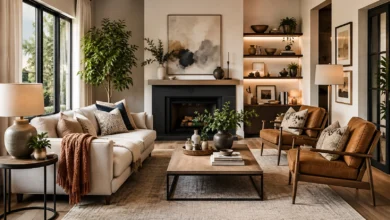
For years, interiors leaned heavily on cool grays, flat matte finishes, and a “less is more” approach that, at its worst, could feel more like a hotel lobby than a home. 2026 interior design trends represent a clear correction — not a rejection of simplicity altogether, but a rejection of coldness. The industry is calling this shift “warm minimalism”: the same clean-lined, uncluttered philosophy, softened with natural materials, richer color, and visible craftsmanship.
This shift is also being shaped by broader consumer values. Designers report growing interest in sustainability, quality over quantity, and vintage or antique pieces — a reaction against the era of “fast furniture,” ordered online and replaced within a few years. Homeowners increasingly want their spaces to feel intentional and personal rather than assembled all at once from a single shopping spree.
What’s In: The Interior Design Trends Defining 2026
1. Warm, Earthy Color Palettes Are Replacing Cool Gray
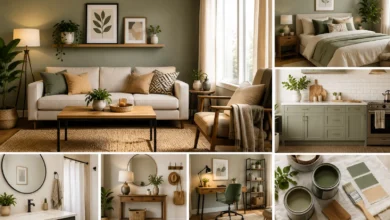
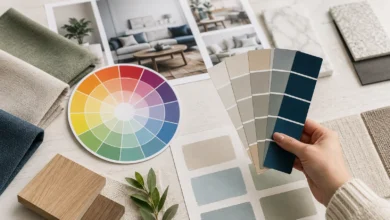
The cool gray and “greige” palette that dominated interiors for the better part of a decade is fading fast, replaced by warmer neutrals — sand, clay, terracotta, warm taupe, caramel, and olive. These tones read as more welcoming and less clinical than the flatter grays that came before them, and they pair naturally with the wood tones and organic materials also trending this year.
Chocolate brown, in particular, has emerged as one of the standout colors of the year, continuing a shift that began building momentum in 2025 and has now firmly taken hold across both furniture and paint choices.
2. Color Drenching Continues to Grow
Color drenching — painting walls, trim, ceiling, and sometimes even built-in furniture all in a single, saturated color — remains one of the boldest and most enduring trends carrying into 2026. It creates a cocoon-like, immersive feeling that a single accent wall never could, and it’s part of a broader move away from the safe, single-wall approach to color that dominated for years.
This trend directly reflects the shift toward more intentional, expressive interiors covered in our guide to color theory for interior design — rather than treating color as an accessory, color drenching treats it as architecture.
3. Natural, Tactile Materials Take Center Stage
Natural wood, stone, linen, wool, and other tactile, imperfect materials are having a significant moment in 2026, replacing the smoother, more uniform surfaces that defined the previous minimalist era. This ties closely into biophilic design — incorporating natural materials and organic forms to strengthen a home’s connection to the outdoors — which continues to grow rather than fade as a defining interior design trend.
Expect to see more exposed wood grain, hand-finished ceramics, and richly textured fabrics, and fewer perfectly smooth, uniform surfaces that can feel impersonal in comparison.
4. Soft, Curved Furniture Shapes
Sharp, rigid geometry is giving way to softer, more organic silhouettes — rounded sofa arms, curved dining chairs, and sculptural coffee tables with fluid lines rather than hard right angles. This shift softens a room both visually and physically, and it pairs naturally with the warmer, more tactile materials also defining the year.
5. Statement and “Emotional” Lighting
Lighting in 2026 has moved decisively beyond pure function into what many designers are calling “emotional luxury” — prioritizing atmosphere over flat, even illumination. Oversized dome pendants, sculptural table lamps, and artistic floor fixtures are replacing the understated, purely functional fixtures of the minimalist era, serving as focal points and conversation pieces in their own right.
Color temperature is shifting too. The cool white light that defined the LED era is giving way to warmer tones and more dramatic layering, echoing the layered lighting approach covered in our complete interior design guide — ambient, task, and accent lighting working together rather than a single flat source.
6. Maximalism Matures Into “Collected” Layering
Maximalism hasn’t faded, but it has matured. Rather than filling every surface for maximum visual density, 2026’s version of maximalism favors collected layers — meaningful, personal pieces gathered over time rather than a fully styled room assembled in a single purchase. It’s less about quantity and more about intention: a room can be visually rich without feeling cluttered, as long as every piece earns its place.
7. Vintage and Antique Pieces Are Back in a Meaningful Way
Design industry surveys consistently point to vintage and antique furniture as one of the strongest trends shaping 2026, driven partly by a broader rejection of disposable, mass-produced “fast furniture.” Homeowners and designers alike are prioritizing pieces with history, craftsmanship, and durability — a shift that dovetails with the budget-conscious strategies covered in our guide to budget interior design, since secondhand and vintage sourcing is often more affordable than comparable new furniture.
8. Bold, Colorful Kitchens Replace the All-White Kitchen
After years of predictions, 2026 appears to be the year the all-white kitchen genuinely starts losing ground. Designers report growing client interest in colorful cabinetry, unique backsplashes, and mixed materials that turn the kitchen into a focal point of personality rather than a neutral backdrop.
9. Softer, More Refined Paint Finishes
Flat, matte paint is giving way to softer, more luxurious finishes like limewash and polished plaster, which add subtle texture and depth to walls in a way flat paint can’t. This shift reflects the broader move toward tactility running through nearly every other trend on this list — even paint is being asked to feel more textured and less uniform.
10. Multi-Functional and Wellness-Oriented Spaces
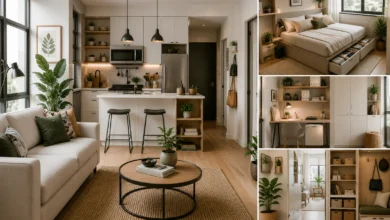
As remote and hybrid work remain common, homes continue to be designed around flexibility — home offices that double as guest rooms, and dedicated spaces for rest and recovery rather than pure productivity. This isn’t a brand-new trend for 2026, but it has continued to deepen, with more homeowners specifically carving out space for slower, more restorative daily rituals rather than treating the home purely as a place to sleep and store belongings between errands.
What’s Out: Interior Design Trends Fading in 2026
1. Stark, Cold Minimalism
While minimalism as a broader philosophy isn’t disappearing, its coldest, starkest expression — all-white, all-gray rooms with almost no texture or warmth — is clearly fading. Designers increasingly describe this look as feeling more like an office than a home, and the shift toward warm minimalism reflects a desire to keep the simplicity while losing the sterility.
2. All-Gray and “Greige Everything” Palettes
The cool gray and greige palette that dominated for the better part of a decade is giving way to warmer neutrals, as covered above. A home painted entirely in one flat gray tone throughout is increasingly read as dated rather than timeless — a shift worth knowing if you’re planning a whole-home paint refresh this year.
3. Single Accent Walls
The once-popular strategy of painting just one wall a bold color while leaving the rest neutral is losing favor to more committed, dramatic approaches like color drenching. A single accent wall can now read as a half-measure rather than an intentional design choice.
4. Fast Furniture and Cheap Design Dupes
Inexpensive, trend-chasing furniture designed to be replaced within a few years is losing appeal as more homeowners prioritize sustainability, quality, and longevity. This shift is part of a broader rejection of overconsumption in home design, favoring fewer, better-made pieces — even if it means buying less at once.
5. Perfectly Matched, “Instant House” Furniture Sets
The look of a home entirely furnished in a single online shopping spree — matching furniture sets with no variation in era, material, or source — is fading in favor of more collected, personal interiors that clearly evolved over time rather than arriving all at once.
6. Cool, Flat LED Lighting
The harsh, even, cool-white lighting associated with the earlier LED era is giving way to warmer color temperatures and more dramatic, layered lighting design, as covered above. A room lit entirely by flat, cool overhead light increasingly reads as unfinished rather than efficient.
7. Overly Matchy Neutral Rugs
Plain, purely neutral rugs chosen only to blend into the background are losing ground to rugs with more visible pattern, texture, or vintage character — pieces that contribute to a room’s personality rather than simply filling floor space.
8. Ornate, Overly Complex Furniture Silhouettes
In bedrooms particularly, heavily ornate, architecturally complex furniture — elaborately carved bed frames, for instance — is fading in favor of softer, simpler, more calming silhouettes that support rest rather than compete for visual attention.
How to Use Interior Design Trends Without Dating Your Home
Trends can be a genuinely useful source of inspiration, but chasing every one of them — especially in a single room — is a fast way to create a space that feels dated within a year or two. A more sustainable approach treats trends as seasoning, not the entire dish.
Invest in timeless structure, experiment with trends in the details. Big-ticket, hard-to-change items — a sofa frame, kitchen cabinetry, flooring — are worth choosing for long-term appeal rather than this year’s trend. Trend-driven experimentation belongs in lower-cost, easier-to-swap elements: paint, textiles, art, and accessories.
Choose trends that reflect a genuine shift in how you want to live, not just how a room looks in a photo. As covered earlier, the trends with real staying power tend to be the ones rooted in a lasting cultural shift — like a preference for warmth and tactility over sterile minimalism — rather than a single product moment.
Blend, rather than fully commit. A room doesn’t need to be 100% “on trend” to feel current. Incorporating one or two of this year’s biggest ideas — a warmer color palette, one statement lighting fixture, a vintage accent piece — often reads as more sophisticated than an entire room built strictly around a single trend list.
Revisit our style guide for context. If a specific 2026 trend catches your eye, it’s worth checking how it maps onto the broader interior design styles it’s drawing from — warm minimalism, for instance, borrows heavily from both Scandinavian and Japandi principles, which can help you apply the trend more thoughtfully rather than chasing it in isolation.
Frequently Asked Questions About Interior Design Trends 2026
What are interior design trends, and why do they change?
Interior design trends are shifts in popular color, material, and layout preferences that reflect broader cultural changes in how people want their homes to feel and function. They change as reactions to previous trends — often swinging from one extreme (like stark minimalism) toward its opposite (warmth and texture) as tastes and values evolve.
What are the biggest 2026 interior design trends?
The most significant 2026 interior design trends include a shift toward warm, earthy color palettes over cool gray, natural and tactile materials, statement and warmer-toned lighting, softer curved furniture shapes, and a growing preference for vintage and quality-made furniture over inexpensive, disposable pieces.
Is minimalism completely out of style in 2026?
Not entirely — but its starkest, coldest expression is fading in favor of “warm minimalism,” which keeps the clean lines and uncluttered philosophy of minimalism while adding natural materials, texture, and warmer color to avoid feeling sterile.
Are gray and greige color palettes really going out of style?
The dominant, all-encompassing use of cool gray and greige throughout an entire home is fading in favor of warmer neutrals like sand, clay, and warm taupe. Gray itself isn’t disappearing, but it’s increasingly used as one note in a warmer palette rather than the entire foundation.
Should I follow interior design trends when decorating my home?
Trends are most useful as inspiration for lower-cost, easily changed elements — paint, textiles, accessories — rather than for major, expensive purchases like a sofa or kitchen cabinetry, which are worth choosing for long-term appeal instead of a single year’s trend cycle.
Where can I find reliable interior design trends 2026 news throughout the year?
Trend reports from design markets, industry surveys, and working designers tend to be more reliable than single social media moments, since they reflect patterns showing up repeatedly across many projects rather than one viral post. Trends that are still shaping purchasing decisions well past the start of the year are generally the ones worth paying attention to.
Final Thoughts
The interior design trends 2026 has delivered point in a clear direction: away from cold, uniform minimalism and toward interiors that feel warm, tactile, and personally collected over time. Whether that shows up in your home as a color-drenched living room, a warmer neutral palette, or a single well-chosen vintage piece, the underlying idea is the same — homes that feel intentional and lived-in are outperforming homes that simply look styled.
Use this list as a starting point, not a checklist. For guidance on translating any of these trends into a real room, see our companion guides on interior design styles and choosing a color palette to build a space that feels current now — and holds up well past this year.