Introduction
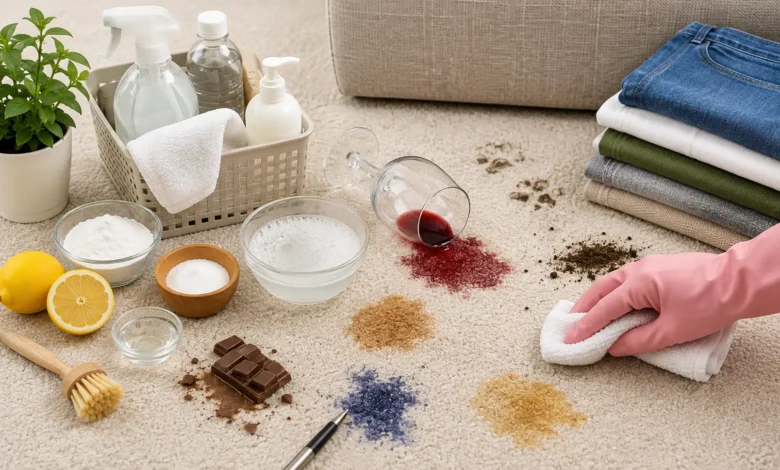
A spilled glass of wine, a muddy paw print on the sofa, or a coffee mishap on the carpet can turn a good day sour in seconds. Knowing how to remove stains quickly and correctly is one of the most practical skills for keeping a home looking its best, and it matters more than most people realize — the difference between a stain that disappears completely and one that sets in permanently often comes down to what you do in the first five minutes.
This stain removal guide walks through how to remove carpet stains, how to remove fabric stains, and upholstery stain removal for the most common culprits found in nearly every household: wine, blood, coffee, grease, ink, pet accidents, chocolate, sweat, and mud. You’ll also find general principles that apply across almost any type of stain, a homemade stain remover recipe you can make from ingredients already in your kitchen, and clear guidance on how to get stains out of carpet and clothes without damaging the material underneath.
Whether you’re dealing with a fresh spill or trying to figure out how to remove old stains that have been there for weeks, this guide covers the techniques that actually work — whether you need a natural stain remover from your pantry or a more targeted approach for a specific fabric.
This is essentially a full fabric stain guide, built specifically to cover the surfaces where stains show up most: carpet, clothing, and upholstered furniture.
The General Rules of Stain Removal
Before jumping into specific stain types, a few core principles apply across nearly every situation. Understanding these first makes every technique below more effective.
1. Act Fast
The longer a stain sits, the more time it has to bond with fibers, especially in carpet and upholstery where the material tends to be more absorbent. Treating a stain within the first few minutes dramatically increases your chances of full removal.
2. Blot, Don’t Rub
Rubbing a stain pushes it deeper into the fibers and can spread it across a wider area. Always blot from the outside of the stain inward, using a clean cloth or paper towel, and switch to a clean section of cloth as it picks up the stain.
3. Test Any Cleaner First
Before applying any stain remover — homemade or store-bought — test it on a hidden section of the carpet, fabric, or upholstery to check for discoloration or damage, particularly on delicate or dyed materials.
4. Work From the Outside In
When treating a stain, apply cleaner or blot starting at the outer edge and moving toward the center. This prevents the stain from spreading further outward as you work.
5. Avoid Heat Until the Stain Is Fully Gone
Heat can permanently set many stains, particularly protein-based ones like blood and dairy. Always use cool or lukewarm water rather than hot water on an unidentified or fresh stain, and never put a stained item in the dryer until you’ve confirmed the stain is completely removed.
6. Know Your Material
Carpet, upholstery, and clothing fabrics all respond differently to cleaning agents. Delicate fabrics like silk or wool may need a gentler approach than durable synthetic carpet fibers, so always check care labels or manufacturer guidance where available.
Also Read: Natural Cleaning Recipes: DIY Solutions for a Chemical-Free Home
Building a Basic Stain Removal Kit
Having the right supplies on hand means you can act the moment a spill happens, rather than scrambling to find something that works.
- Clean white cloths or paper towels (colored cloths can transfer dye onto the stain)
- A soft-bristled brush
- Dish soap
- White vinegar
- Baking soda
- Hydrogen peroxide (3%)
- Rubbing alcohol
- An enzyme cleaner (particularly useful for pet stains and other protein-based stains)
- A spray bottle for diluted solutions
- Cold water
A Simple Homemade Stain Remover
For general, fresh stains on carpet or fabric, this homemade stain remover works well as a first response:
Ingredients:
- 1 tablespoon dish soap
- 1 tablespoon white vinegar
- 2 cups warm water
Instructions: Mix in a spray bottle or bowl. Apply to the stain, let sit for 5 minutes, then blot with a clean cloth. Rinse the area with plain water and blot dry.
Does the Method Change for Clothes, Carpet, and Upholstery?
The core principles — act fast, blot rather than rub, test first — apply to all three, but a few practical differences are worth knowing:
- How to remove stains from clothes is generally the most forgiving of the three, since clothing can usually be soaked, agitated, and machine washed, giving cleaning agents more contact time and mechanical action than carpet or upholstery allow.
- Carpet can’t be soaked or agitated the same way, so treatments rely more heavily on blotting, absorption (baking soda, cornstarch), and controlled rinsing with a damp cloth.
- Upholstery sits between the two — it can tolerate light scrubbing with a soft brush but not soaking, since excess moisture can seep into cushion padding and take a long time to dry, encouraging mold if left damp.
What Makes the Best Stain Remover for Carpet
Not every cleaning agent performs equally well on carpet fibers. The best stain remover for carpet typically has a few qualities in common: it’s effective without oversaturating the fibers, it doesn’t leave a residue that attracts more dirt after drying, and it’s suited to the specific stain type rather than being a single “cure-all” product. This is why the stain-specific methods below outperform a single generic carpet cleaner across the board — grease, protein-based stains, and organic spills each respond best to a different active ingredient.
How to Remove Carpet Stains: Room-by-Room Approach
Carpet is one of the most stain-prone surfaces in a home simply because of how much foot traffic, food, and pet activity it absorbs. The general process for how to get stains out of carpet follows a consistent pattern:
- Remove any solid residue first, scraping gently with a spoon or dull knife
- Blot excess liquid with a clean cloth, working from the outside in
- Apply an appropriate cleaning solution based on the stain type (see specific stains below)
- Blot again with a clean, damp cloth to rinse
- Blot dry with a fresh towel, then allow to air dry completely
- Vacuum once fully dry to restore the carpet’s texture
How to Remove Specific Stains From Carpet, Fabric, and Upholstery
This section functions as a carpet stain remover reference and upholstery stain removal guide in one — each stain type below includes the specific approach for both surfaces, since the active ingredients that lift a stain don’t change based on where it landed, only the method of application does.
How to Remove Red Wine Stains From Carpet
- Blot up as much wine as possible immediately, without rubbing
- Sprinkle salt or baking soda over the stain to help absorb the remaining liquid
- Mix a solution of one tablespoon dish soap, one tablespoon hydrogen peroxide, and warm water
- Apply and blot gently, working from the outside in
- Rinse with cool water and blot dry
Older, dried red wine stains may need a repeated application, and stubborn cases benefit from a store-bought oxygen-based stain remover applied before repeating the vinegar-based method.
How to Remove Blood Stains From Fabric
- Use cold water only — hot water sets protein-based stains like blood
- Rinse or soak the fabric in cold water immediately
- Apply a small amount of dish soap or an enzyme cleaner directly to the stain and gently rub the fabric together
- Rinse again with cold water
- For dried blood stains, a paste of baking soda and cold water applied and left for 30 minutes before rinsing often lifts the remaining discoloration
For carpet or upholstery, blot instead of soaking, using the same cold water and dish soap approach, followed by a hydrogen peroxide application if the stain persists (test on a hidden area first, since peroxide can lighten some dyed fabrics).
How to Remove Grease Stains From Upholstery
- Blot excess grease immediately with a paper towel, avoiding rubbing, which spreads the oil further
- Sprinkle a generous layer of baking soda or cornstarch over the stain to absorb oil, and let sit for 15–20 minutes
- Brush or vacuum away the powder
- Apply a small amount of dish soap directly to the remaining stain, since dish soap is specifically formulated to break down grease
- Blot with a damp cloth to rinse, then blot dry
Repeat as needed for older or more concentrated grease stains, since a single application often only partially lifts heavier oil-based residue. If you prefer not to mix your own solution, a store-bought upholstery cleaner formulated for oil-based stains works as a reliable substitute for the dish soap step.
How to Remove Coffee Stains From Carpet
- Blot up excess coffee immediately
- Mix one tablespoon dish soap, one tablespoon white vinegar, and two cups of warm water
- Apply to the stain and let sit for a few minutes
- Blot with a clean cloth, working from the outside in
- Rinse with cool water and blot dry
If the stain has already dried, a hydrogen peroxide and dish soap mixture applied and left for 10 minutes before blotting tends to be more effective on set-in coffee residue.
How to Remove Pet Urine Stains From Carpet
Pet stains require a slightly different approach because of the ammonia and protein content in urine, which ordinary cleaners often don’t fully break down.
- Blot up as much moisture as possible immediately
- Rinse the area with cool water and blot again
- Apply an enzyme cleaner specifically designed for pet stains, which breaks down the proteins responsible for both the stain and the lingering odor
- Let the enzyme cleaner sit according to the product’s instructions, typically 10–15 minutes, then blot dry
- Avoid using ammonia-based cleaners on pet stains, since the scent can actually encourage pets to remark the same spot
For older, set-in pet stains, a baking soda application after the enzyme treatment helps absorb any remaining odor.
How to Remove Ink Stains From Fabric
- Place the stained area face-down on a clean paper towel
- Apply rubbing alcohol to the back of the stain with a cotton ball or cloth, working from the outside in
- Replace the paper towel underneath as it absorbs the ink, continuing until no more ink transfers
- Rinse with cool water
- Wash as usual, checking that the stain is fully gone before drying, since heat will set any remaining ink permanently
For carpet and upholstery, blot (never rub) with rubbing alcohol on a cloth, working carefully to avoid spreading the ink further outward.
How to Remove Chocolate Stains
- Scrape off any solid chocolate residue gently with a spoon
- Rinse the back of the fabric with cool water to flush out as much as possible
- Apply a small amount of dish soap directly to the stain and gently work it in
- Rinse and repeat if needed
- For carpet or upholstery, blot with a dish soap and warm water solution instead of rinsing directly
How to Remove Sweat Stains
- Mix equal parts white vinegar and water and apply directly to the stained area
- Let sit for 15–30 minutes
- Sprinkle baking soda over the vinegar-treated area and gently scrub with a soft brush
- Rinse or launder as usual
For yellowed sweat stains on white fabric, a paste of baking soda and hydrogen peroxide left on the stain for an hour before washing often lightens discoloration significantly.
How to Remove Mud Stains From Carpet
- Let the mud dry completely rather than trying to clean it wet, since wet mud tends to spread and press further into carpet fibers
- Once dry, vacuum or brush off as much as possible
- Mix a solution of dish soap and warm water
- Apply and blot gently, working from the outside in
- Rinse with a clean, damp cloth and blot dry
Does Vinegar Remove Stains? What the Research on Common Home Remedies Shows
Vinegar is one of the most frequently recommended home stain removers, and for good reason — its mild acidity helps break down certain organic stains, dissolve some mineral deposits, and neutralize odors. It performs particularly well on stains like coffee, sweat, and some food-based spills. However, vinegar is not a universal solution: it’s less effective on protein-based stains like blood, where cold water and enzyme cleaners perform better, and it should be avoided on natural stone flooring or delicate silk fabrics, where its acidity can cause damage.
Combining vinegar with dish soap, as in several recipes above, tends to outperform vinegar alone, since the soap helps lift oils and residue that vinegar’s acidity doesn’t fully address on its own.
How to Remove Stains Without Bleach
Many households prefer to avoid bleach, whether for fabric safety, health sensitivities, or general preference for gentler cleaning methods. Fortunately, most common stains respond well to bleach-free alternatives:
- Hydrogen peroxide works as a gentler alternative for lightening stains on white and light-colored fabrics
- Baking soda and vinegar combinations handle a wide range of organic stains without the harshness of bleach
- Enzyme cleaners are specifically effective on protein-based stains like blood, sweat, and pet accidents, often outperforming bleach on these stain types
- Dish soap remains one of the most versatile bleach-free options for grease and oil-based stains
Bleach also carries the risk of discoloring colored fabrics and carpets, so bleach-free methods are often the safer default even when bleach use isn’t a specific concern.
How to Remove Old, Set-In Stains
Set-in stains are more stubborn because the staining material has had time to fully bond with the fibers, but that doesn’t always mean they’re impossible to remove.
- Re-wet the stain first. A dry stain often needs to be moistened with cool water or your chosen cleaning solution before it will respond to treatment.
- Apply cleaner and let it sit longer than you would for a fresh stain. Where a fresh stain might need five minutes, a set-in stain often benefits from 20–30 minutes of contact time.
- Repeat the process rather than increasing product strength. Multiple gentle applications are generally safer for the material than one aggressive treatment.
- Consider an oxygen-based stain remover for stubborn set-in stains on fabric, following the product’s specific instructions for soak time.
- Know when to call a professional. For valuable rugs, upholstery, or delicate fabrics with old, deeply set stains, a professional cleaning service has access to stronger, safer treatment methods than most home remedies can offer.
Checking Fabric Care Labels Before You Treat a Stain
Upholstery and some clothing items come with a care code that tells you which cleaning methods are safe to use — worth checking before you start any stain treatment:
- W — water-based cleaning agents are safe to use
- S — solvent-based cleaners only; water can cause staining or shrinkage on these fabrics
- WS — either water-based or solvent-based cleaners can be used
- X — vacuum only; no liquid cleaning agents of any kind, professional cleaning recommended
Using a water-based method on an “S”-coded fabric is a common mistake that can leave permanent water rings or cause shrinkage, so it’s worth the extra minute to check before treating any upholstery stain.
Also Read: How to Deep Clean Your Kitchen: A Step-by-Step Guide
How Deep Clean Carpet Stains Fit Into Your Regular Cleaning Routine
Spot-treating stains as they happen is only part of the picture. A full seasonal deep clean — including a proper carpet shampoo or steam clean — helps lift ground-in dirt and residual staining that spot treatment alone can’t fully reach, especially in high-traffic areas. If your carpet has several stains that have resisted spot treatment, or general discoloration across a wide area, a full deep clean (either with a rented carpet cleaner or a professional service) is usually more effective than repeated small-scale treatments.
Common Mistakes That Make Stains Worse
- Rubbing instead of blotting, which spreads the stain and pushes it deeper into fibers
- Using hot water on protein-based stains like blood or dairy, which sets the stain rather than lifting it
- Skipping the patch test, especially with hydrogen peroxide or vinegar on colored or delicate materials
- Applying too much product at once, which can leave behind its own residue that attracts dirt over time
- Drying before confirming the stain is gone, since heat from a dryer can permanently set a stain that would have otherwise come out with another treatment
- Mixing cleaning chemicals, particularly bleach with ammonia or vinegar, which produces hazardous fumes
Frequently Asked Questions
What removes stains best from carpet?
It depends on the stain type. Dish soap and warm water handle grease and oil-based stains well, while enzyme cleaners are more effective on protein-based stains like blood and pet accidents. A vinegar and dish soap combination works well for coffee, wine, and general food stains.
Does vinegar remove stains from carpet effectively?
Vinegar works well on many organic stains, including coffee and some food spills, but performs less effectively on protein-based stains like blood, where enzyme cleaners are the better choice. Vinegar should also be avoided on natural fiber carpets that may be sensitive to acidity.
How do you get set-in stains out of carpet or fabric?
Re-wet the stain first, apply your chosen cleaning solution, and let it sit significantly longer than you would for a fresh stain — often 20–30 minutes. Repeat the process rather than using a stronger product, and consider an oxygen-based stain remover for particularly stubborn cases.
How to remove stains without bleach?
Hydrogen peroxide, baking soda and vinegar combinations, enzyme cleaners, and dish soap handle the vast majority of household stains effectively without needing bleach, and they carry a lower risk of discoloring colored fabrics and carpets.
Can you remove old carpet stains that have been there for months?
In many cases, yes, though older stains typically require more patience and repeated treatment than fresh ones. Re-wetting the area and allowing the cleaning solution longer contact time significantly improves results on old stains, and professional cleaning is worth considering for particularly stubborn or valuable carpets.
Is it better to use a store-bought stain remover or a homemade one?
Both can be effective. Store-bought oxygen-based stain removers are often formulated for a broader range of stubborn stains and can be more convenient, while homemade solutions using dish soap, vinegar, and baking soda are cost-effective and work well for most everyday spills. Many households use a combination of both, depending on the stain.
How quickly do I need to treat a stain for it to come out completely?
Ideally within the first few minutes. The longer a stain sits, especially on absorbent surfaces like carpet and upholstery, the more time it has to bond with the fibers, which makes complete removal progressively harder the longer you wait.
What’s different about how to clean upholstery stains compared to carpet?
Upholstery generally requires more caution around moisture, since excess liquid can seep into cushion padding and take a long time to dry. Checking the fabric’s care code (W, S, WS, or X) before treating a stain is also more relevant for upholstery than for carpet, since some upholstery fabrics can’t tolerate water-based cleaners at all.
Is the process for how to remove stains from clothes different from carpet or upholstery?
Clothing generally allows for more aggressive treatment, since it can be soaked, agitated, and machine washed — options that aren’t practical for carpet or most upholstered furniture. This means clothing stains are often easier to fully remove, provided they’re treated before the item goes through a hot dryer cycle.
Final Thoughts
Most household stains, from a spilled glass of wine to a muddy paw print, respond well to prompt action and the right technique. Blotting instead of rubbing, working from the outside in, and matching the cleaning method to the specific stain type — rather than reaching for the same all-purpose spray for everything — makes the difference between a stain that disappears completely and one that leaves a lasting mark.
Keep a basic stain removal kit on hand so you’re never caught without the right supplies when a spill happens, and refer back to this guide the next time carpet, fabric, or upholstery needs rescuing. Over time, you’ll likely find that a small handful of methods — the dish soap and vinegar combination, an enzyme cleaner for pet accidents, and cold water for anything protein-based — cover the vast majority of spills that come up in everyday life, making stain removal far less intimidating than it might feel the first time.
For the complete room-by-room cleaning routine this guide fits into, see The Complete House Cleaning Guide for schedules and techniques across your entire home.