
Introduction
A clean home does more than look good in photos. It affects how well you sleep, how often you get sick, how much stress you carry through the day, and even how long your furniture and appliances last. Yet for most people, cleaning feels like a chore that never quite gets finished — you scrub the kitchen, and by the next morning the bathroom sink is already a mess again.
The truth is that cleaning doesn’t have to be overwhelming. Once you understand which tasks matter most, how often to do them, and the right techniques for each surface in your home, cleaning becomes a routine rather than a recurring crisis. This guide walks through everything you need to build that routine: the supplies worth buying, a realistic cleaning schedule, room-by-room instructions, natural alternatives to harsh chemicals, and answers to the questions people ask most often.
Whether you’re setting up a cleaning routine for the first time, trying to get your home guest-ready, or simply tired of feeling like you’re always behind, this guide is built to be your single reference point. Bookmark it, come back to it, and use the linked articles at the end for deeper dives into specific rooms and tasks.
What makes a cleaning routine actually work isn’t knowing how to clean a bathroom — most people already know that. It’s knowing how often each task genuinely needs doing. Scrubbing grout every single week is unnecessary effort; ignoring it for a year turns a five-minute task into a stubborn, hours-long project. This guide draws that line clearly for every room in a typical home, so your limited time and energy go where they actually matter most, rather than being spread thin across tasks that don’t need weekly attention.
This guide reflects tested, real-world cleaning routines rather than one-size-fits-all advice — the schedules and product recommendations here are based on what actually keeps a home consistently clean without demanding hours of daily effort.
Why a Consistent Cleaning Routine Matters
Before getting into the how, it helps to understand the why. A consistent cleaning routine isn’t about perfectionism — it’s about protecting your health, your home, and your peace of mind.
1. Health and Air Quality
Dust, pet dander, mold spores, and bacteria accumulate quickly in homes that aren’t cleaned regularly. These particles can trigger allergies, worsen asthma, and contribute to respiratory irritation. Kitchens and bathrooms in particular are breeding grounds for bacteria like E. coli and salmonella if surfaces aren’t disinfected after food prep or bathroom use.
2. Mental Clarity
Clutter and mess have a measurable effect on stress levels. A disorganized environment keeps your brain subtly “on alert,” processing visual chaos even when you’re trying to relax. Many people report feeling calmer and more focused simply after tidying a single room.
3. Protecting Your Investment
Grime, moisture, and neglect shorten the lifespan of flooring, countertops, appliances, and fabric furniture. Regular cleaning is one of the cheapest forms of home maintenance you can do — far cheaper than replacing a stained carpet or a stove damaged by built-up grease.
4. Pest Prevention
Crumbs, standing water, and cluttered storage areas invite ants, roaches, and rodents. A clean home is one of the most effective, chemical-free ways to keep pests out.
5. A Better Home for Guests — and for You
You don’t need a spotless house to have people over, but a baseline level of cleanliness makes your home more welcoming, both to visitors and to yourself at the end of a long day.
6. Fewer Emergencies, Less Money Spent
A large share of “surprise” home repairs are really the end result of small, ignored cleaning tasks. A dryer vent that’s never cleaned isn’t just a lint problem — clogged vents are a leading cause of house fires. A bathroom exhaust fan left dusty for years works harder and wears out sooner, and the trapped moisture it should be removing ends up feeding mold behind tile and drywall instead. Looked at this way, a cleaning routine isn’t just about appearances; it’s a form of preventive maintenance that happens to also make your home look better.
7. Better Sleep
Dust mites thrive in unwashed bedding, pillows, and mattresses, and their waste particles are one of the most common indoor allergens. People with allergies or mild asthma often notice a real difference in sleep quality after switching to a weekly linen-washing habit and a monthly pillow wash, simply because they’re no longer breathing in allergens for eight hours a night.
Building Your Cleaning Toolkit: Essential Supplies
You don’t need forty different products to clean a home well. A well-chosen toolkit covers nearly every surface you’ll encounter. Here’s what’s genuinely worth having on hand.
Core Cleaning Tools
- Microfiber cloths (a dozen or more — they trap dust better than paper towels and are reusable)
- A good vacuum with attachments for upholstery, crevices, and hard floors
- A microfiber mop or flat mop system for hard flooring
- A long-handled duster for ceiling fans, vents, and high shelves
- Rubber gloves
- A bucket
- Scrub brushes (a stiff one for grout, a soft one for surfaces)
- A squeegee for glass and shower doors
Core Cleaning Products
- All-purpose cleaner (for counters, appliances, and general surfaces)
- Glass cleaner
- Bathroom cleaner or disinfectant spray
- Degreaser (for stovetops and range hoods)
- Toilet bowl cleaner
- Dish soap (useful for far more than dishes — it cuts grease well)
- Baking soda
- White vinegar
- A disinfecting product registered to kill common household bacteria and viruses
Optional but Useful
- A steam cleaner or steam mop
- An enzyme cleaner for pet stains and odors
- Wood polish (if you have hardwood furniture or floors)
- Stainless steel cleaner
A good rule of thumb: buy fewer, better products rather than a specialty spray for every single surface. Vinegar, baking soda, dish soap, and a solid all-purpose cleaner can handle the vast majority of cleaning tasks in a typical home.
How to Choose Cleaning Products Without Overspending
Store shelves are stocked with dozens of near-identical products, each marketed for one specific surface. In practice, most homes only need three or four categories of cleaner:
- A degreasing all-purpose cleaner for kitchens and general surfaces
- An acidic bathroom cleaner for soap scum, hard water spots, and mineral buildup
- A disinfectant for surfaces that come into contact with raw food, illness, or pets
- A gentle, non-abrasive cleaner for glass, mirrors, and delicate finishes
Beyond those four, most “specialty” products are really just one of the above categories with different scent, packaging, or marketing. Reading the active ingredients on the label is a more reliable way to compare products than reading the marketing claims on the front of the bottle.
If you have pets, children, or family members with respiratory sensitivities, look for fragrance-free formulas and avoid aerosol sprays where possible, since fine airborne particles can trigger coughing or irritation in sensitive individuals.
Understanding the Different Types of Cleaning
Not all cleaning tasks are created equal, and treating them the same way is one of the biggest reasons people burn out on cleaning routines. It helps to separate tasks into four categories.
Daily Maintenance (5–15 minutes)
Small tasks done every day that prevent buildup: wiping counters, doing dishes, making the bed, wiping down the stovetop after cooking, a quick sweep of high-traffic areas.
Weekly Cleaning (1–2 hours)
Tasks that keep a home consistently presentable: vacuuming, mopping, bathroom cleaning, dusting, changing bed linens, and taking out recycling.
Monthly Deep Tasks (a few hours, spread out)
Tasks that don’t need weekly attention but shouldn’t be ignored for months: wiping baseboards, cleaning inside the microwave and oven, washing windows, vacuuming under furniture, cleaning light fixtures.
Seasonal Deep Cleaning (a dedicated day or weekend)
The big reset: washing walls, cleaning behind and under appliances, deep-cleaning carpets or rugs, washing curtains, cleaning out the refrigerator, decluttering closets, and cleaning gutters or exterior areas if applicable.
Separating tasks this way is the single biggest shift that makes cleaning sustainable. You’re not trying to deep-clean your oven every week — you’re doing the right task at the right frequency.
The Room-by-Room Cleaning Guide
Kitchen
The kitchen sees the most daily use and the most bacteria exposure, so it deserves the most consistent attention.
Daily:
- Wipe counters and the stovetop after cooking
- Wash or load dishes rather than letting them sit
- Wipe down the sink and dry it (a damp sink encourages bacterial growth)
- Take out food trash
Weekly:
- Clean the microwave interior (a bowl of water with lemon slices, microwaved for a few minutes, loosens grime for easy wiping)
- Wipe down cabinet fronts and handles, which accumulate grease and fingerprints
- Sanitize the sponge or replace it — sponges are one of the most bacteria-dense objects in most homes
- Sweep and mop the floor
Monthly:
- Clean inside the refrigerator, checking for expired items
- Wipe down small appliances (toaster, coffee maker, blender)
- Clean the range hood filter
Seasonal:
- Deep clean the oven
- Pull out the refrigerator and stove to clean behind and underneath
- Descale the coffee maker and kettle
- Wipe down cabinet interiors
A quick step-by-step for a full kitchen reset:
- Clear counters completely and put away or discard anything that doesn’t belong
- Load or wash all dishes so the sink is empty
- Spray and wipe down appliance exteriors, working top to bottom
- Clean the inside of the microwave using the lemon-steam method above
- Wipe cabinet fronts and handles with a degreasing all-purpose cleaner
- Scrub the sink and faucet, then dry it fully to prevent water spots and bacterial growth
- Sweep the floor, then mop with a floor cleaner suited to your flooring type
- Take out the trash and reline the bin
This sequence takes roughly 30–45 minutes for an already-tidy kitchen, or closer to 90 minutes if clutter has built up first. For a more detailed walkthrough, see our full guide: How to Deep Clean Your Kitchen: A Step-by-Step Guide.
Bathroom
Bathrooms combine moisture, soap residue, and bacteria, which is why mold and mildew show up here faster than anywhere else in the home.
Daily:
- Wipe the sink and counter after use
- Squeegee the shower glass or wipe down the tub to prevent water spots and soap scum buildup
Weekly:
- Scrub the toilet, inside and out
- Clean the shower and tub, including grout lines
- Wipe mirrors and glass
- Mop the floor
- Wash bath mats and hand towels
Monthly:
- Deep clean grout with a stiff brush and a baking soda paste
- Clean the exhaust fan cover, which collects dust and reduces ventilation efficiency
- Descale the showerhead by soaking it in vinegar
Seasonal:
- Wash the shower curtain or liner
- Check for and address any mold around caulking
- Clean behind the toilet and around fixtures
Preventing mold and mildew between deep cleans:
Mold needs moisture to grow, so the single most effective habit is reducing standing water and humidity. Run the exhaust fan during and for 15–20 minutes after every shower, wipe down glass and tile after use if you have time, and leave the shower curtain or door slightly open so surfaces can air-dry rather than staying damp and sealed in.
A quick step-by-step for a full bathroom reset:
- Clear counters of toiletries and wipe the surface underneath
- Spray the toilet bowl, tub, and shower with cleaner and let it sit for a few minutes to break down grime before scrubbing
- Scrub the toilet, tub, and shower, working from cleanest to dirtiest (sink first, toilet last) to avoid spreading bacteria
- Wipe mirrors and glass with a streak-free glass cleaner
- Wipe down the counter and reorganize toiletries
- Sweep and mop the floor
- Replace hand towels and empty the trash
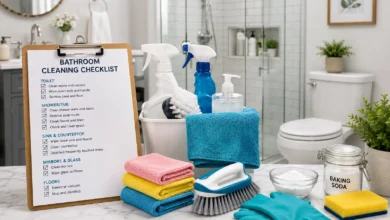
For a printable, room-by-room walkthrough, check out: The Ultimate Bathroom Cleaning Checklist for a Sparkling Space.
Bedroom
Daily:
- Make the bed
- Put away clothes rather than leaving them on chairs or floors
Weekly:
- Vacuum the floor and under the bed
- Dust surfaces, including nightstands and dressers
- Change and wash bed linens
Monthly:
- Rotate or flip the mattress if applicable
- Wash pillows (many can be machine washed)
- Wipe down light switches and door handles
Seasonal:
- Wash curtains or blinds
- Vacuum and rotate the mattress
- Clean out and organize the closet
Living Room
Daily:
- Fluff cushions and fold blankets
- Clear clutter such as mail, dishes, or stray items
Weekly:
- Vacuum upholstery and floors
- Dust shelves, electronics, and picture frames
- Wipe down remote controls and light switches (frequently touched, rarely cleaned)
Monthly:
- Vacuum under furniture cushions
- Clean windows and window sills
- Dust ceiling fans and light fixtures
Seasonal:
- Deep clean or steam-clean upholstery and rugs
- Wash curtains
- Move furniture to vacuum and clean the floor underneath
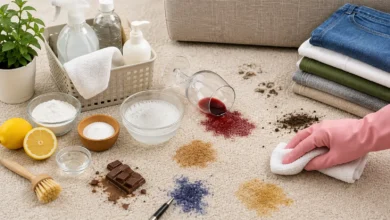
If spills or pet accidents leave marks on carpet or upholstery, act quickly and see our dedicated guide: How to Remove Common Household Stains From Carpet, Fabric, and Upholstery.
Laundry Room
Daily/Weekly (as used):
- Wipe the washer door seal to prevent mildew buildup
- Clean the lint trap after every dryer load
Monthly:
- Run an empty hot cycle with a washing machine cleaner or vinegar to remove detergent buildup and odor
- Wipe down the exterior of appliances
Seasonal:
- Clean the dryer vent duct, which is also a fire-safety task, not just a cleanliness one
- Deep clean behind and under the washer and dryer
Home Office or Workspace
Daily:
- Clear the desk of clutter at the end of the day
- Wipe down the keyboard and mouse periodically
Weekly:
- Dust surfaces and electronics
- Vacuum the floor and chair
Monthly:
- Clean the monitor screen with an appropriate cloth
- Organize cables and cords
- Empty the trash and recycling bin thoroughly
Natural and Eco-Friendly Cleaning Alternatives
Many households are moving away from harsh chemical cleaners, either for health reasons, environmental concerns, or simply because natural alternatives are often cheaper and just as effective for everyday cleaning.
- White vinegar cuts through grease, removes mineral deposits, and works well diluted with water as a glass and surface cleaner. Avoid using it on natural stone like marble or granite, as the acidity can etch the surface.
- Baking soda is a mild abrasive, useful for scrubbing sinks, tubs, and grout without scratching most surfaces.
- Lemon juice has natural antibacterial properties and cuts through grease, making it useful in the kitchen.
- Castile soap is a plant-based soap that works as a gentle all-purpose cleaner when diluted with water.
- Hydrogen peroxide is a safer alternative to bleach for disinfecting certain surfaces, though it should never be mixed with vinegar, as the combination creates a corrosive acid.
A simple all-purpose natural cleaner can be made with equal parts water and white vinegar, a few drops of dish soap, and an optional splash of lemon juice for scent and extra grease-cutting power. Store it in a labeled spray bottle and avoid using it on stone countertops.
A Few More Natural Recipes Worth Keeping on Hand
- Grout scrub: Mix baking soda with a small amount of water into a paste, apply with an old toothbrush, let sit for 10 minutes, then scrub and rinse.
- Garbage disposal freshener: Freeze vinegar in an ice cube tray and run a few cubes through the disposal to clean the blades and neutralize odor.
- Wood furniture polish: Combine olive oil with a small amount of lemon juice, apply sparingly with a soft cloth, and buff to a shine.
- Carpet deodorizer: Sprinkle baking soda over carpet, let it sit for at least 15 minutes, then vacuum thoroughly.
A Safety Note on Mixing Cleaning Products
Natural doesn’t automatically mean risk-free. Never mix vinegar with hydrogen peroxide, as the combination produces peracetic acid, which is corrosive and irritating to skin, eyes, and lungs. Similarly, never combine any ammonia-based product (including many glass cleaners) with bleach, as the reaction produces toxic chloramine gas. When in doubt, clean with one product at a time and rinse a surface with water before applying a different cleaner to it. For a full collection of tested recipes, see Natural Cleaning Recipes: DIY Solutions for a Chemical-Free Home.
Cleaning for Allergies, Pets, and Kids
A standard cleaning routine may not go far enough for households with allergy sufferers, pets, or young children. A few adjustments make a meaningful difference.
For Allergy Sufferers
- Vacuum with a machine that has a HEPA filter, which traps fine particles instead of recirculating them into the air
- Wash bedding weekly in hot water to kill dust mites
- Reduce fabric surfaces where possible, since carpets, heavy curtains, and upholstered furniture trap allergens more than hard flooring and blinds
- Dust with a damp microfiber cloth rather than a dry duster, which tends to scatter particles into the air instead of capturing them
For Households With Pets
- Vacuum at least twice a week, focusing on pet bedding, rugs, and furniture where they rest
- Use an enzyme-based cleaner for accidents, since standard cleaners often don’t fully break down the proteins in pet urine, leaving an odor that attracts repeat marking
- Wash pet bedding weekly, on the same schedule as your own linens
- Wipe paws or keep a mat at entry points to reduce tracked-in dirt
For Households With Young Children
- Keep all cleaning products, including natural ones like concentrated vinegar, stored well out of reach
- Choose fragrance-free, non-toxic cleaners for surfaces children touch frequently, such as high chairs, changing tables, and toys
- Disinfect frequently touched surfaces like door handles and light switches more often during cold and flu season
- Wash soft toys according to their care label on a regular rotation
Building a Cleaning Schedule That Actually Works
The biggest reason cleaning routines fail isn’t laziness — it’s an unrealistic schedule. Trying to deep-clean the entire house every weekend leads to burnout within a month. Instead, spread tasks across the week and month so no single day feels overwhelming.
A sample weekly structure:
- Monday: Kitchen focus — wipe appliances, clean the microwave, sanitize counters
- Tuesday: Bathroom focus — scrub toilet, tub, and sink
- Wednesday: Dusting day — all rooms, including shelves, electronics, and blinds
- Thursday: Floors — vacuum and mop throughout the home
- Friday: Laundry and linens — wash sheets, towels, and any laundry backlog
- Saturday: Catch-up and one monthly task (rotate through the monthly list above)
- Sunday: Rest, or a light 15-minute tidy-up
This structure spreads roughly 30–45 minutes of cleaning across most weekdays rather than concentrating hours of work into a single day. Adjust the days to match your own schedule — the order matters less than the consistency. For a more customizable, printable version of this schedule, see How to Build a Weekly and Monthly Cleaning Schedule That Actually Sticks.
Common Cleaning Mistakes to Avoid
- Cleaning with a dirty tool. A grimy sponge or mop head spreads bacteria rather than removing it. Replace or sanitize cleaning tools regularly.
- Mixing chemicals. Never combine bleach with ammonia or vinegar — both combinations produce toxic gases.
- Skipping “invisible” surfaces. Light switches, door handles, remote controls, and cabinet handles are touched constantly but cleaned rarely.
- Using too much product. Excess cleaner often leaves residue that attracts more dust and grime.
- Cleaning top to bottom incorrectly. Always dust and clean from the top of a room downward, so debris that falls lands on surfaces you’ll clean next, not ones you’ve already finished.
- Ignoring ventilation. Cleaning bathrooms and kitchens without adequate airflow can trap fumes and slow drying, which encourages mold.
- Waiting for visible dirt. Bacteria and allergens build up long before a surface looks dirty. Frequency matters more than visible mess.
DIY Cleaning vs. Hiring a Professional
Not every household has the time or physical ability to keep up with a full cleaning schedule, and that’s a completely reasonable reason to consider professional help.
DIY cleaning makes sense when:
- You have the time to dedicate to a regular routine
- You want full control over the products used in your home
- Budget is a primary concern
Hiring professional cleaners makes sense when:
- You’re preparing for a move-in or move-out and need a thorough deep clean
- You have limited mobility or a demanding schedule
- You want a periodic deep clean (monthly or quarterly) to supplement your own routine
- Specialized tasks like carpet steam cleaning or upholstery cleaning require equipment you don’t own
A hybrid approach works well for many households: handling daily and weekly maintenance yourself, while bringing in professionals a few times a year for deep cleaning tasks like carpets, upholstery, and windows.
Frequently Asked Questions
How often should I deep clean my house? A full seasonal deep clean, covering tasks like behind-appliance cleaning, window washing, and carpet cleaning, is typically enough four times a year. Monthly deep tasks should be spread throughout the month rather than saved for a single deep-clean day.
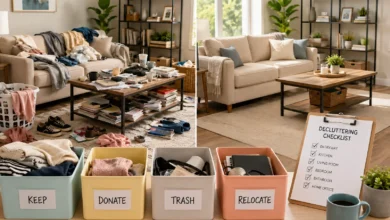
What is the fastest way to clean a messy house? Start with clutter first — clear surfaces, put away stray items, and take out trash. Once clutter is gone, the actual cleaning (wiping, vacuuming) goes much faster because you’re not working around obstacles. See our full guide: Decluttering Before Cleaning: A Beginner’s Guide to a Tidier Home.
Is vinegar safe to use on all surfaces?
No. Avoid vinegar on natural stone (marble, granite, limestone) because its acidity can etch the surface over time. It’s also not recommended on hardwood floors with a wax finish, as it can dull the finish.
How often should bed sheets be washed?
Once a week is the general recommendation, or more often for people with allergies, pets that sleep on the bed, or in hot climates where sweat accumulates faster.
What household items are cleaned the least but touched the most?
Light switches, door handles, remote controls, and refrigerator door handles. These should be added to a weekly cleaning routine even though they’re easy to forget.
How do I keep a cleaning routine consistent when I’m busy?
Break tasks into small daily habits (5–15 minutes) rather than saving everything for one long session. Consistency in small doses is more sustainable than occasional deep cleaning marathons.
Can I use the same cloth for the kitchen and bathroom?
It’s best to use separate cloths for each, or wash and fully dry cloths between uses, to avoid cross-contaminating bacteria between food-prep areas and bathroom surfaces.
How long should a full house cleaning take?
For an average-sized home that’s already reasonably tidy, a full weekly clean (kitchen, bathrooms, dusting, floors) typically takes 2–3 hours. A first-time deep clean of a neglected home can take a full day or longer, which is why breaking tasks into the daily and weekly rhythm described in this guide is far more sustainable long-term.
What order should I clean a house in?
Work top to bottom and back to front within each room, then move through the house from the areas that get dirtiest (kitchen, bathrooms) to the areas that need lighter maintenance (bedrooms, living areas). Save floors for last in every room, since sweeping and mopping should happen after dust and debris from other surfaces has already settled.
Do I need to disinfect every surface every time I clean?
No. Disinfecting is necessary for surfaces that contact raw food, bodily fluids, or illness, and for high-touch points like door handles and light switches. Most other surfaces just need regular cleaning to remove dust and grime; disinfecting them constantly is unnecessary and can be harsher on finishes than needed.
Why does my house get dusty so quickly?
Dust is made up of skin cells, fabric fibers, pet dander, and outdoor particles that enter through open windows, doors, and on shoes. Homes with pets, carpeting, or high foot traffic accumulate dust faster. Using a doormat, removing shoes at the door, and vacuuming with a HEPA filter all reduce how quickly dust builds back up.
Also Read: 8 HOME DECOR STYLES EXPLAINED
Final Thoughts
A clean home isn’t built in a single weekend — it’s built through small, repeated habits that prevent buildup before it starts. The households that stay consistently clean aren’t the ones who deep-clean the hardest; they’re the ones who’ve broken cleaning into manageable daily, weekly, monthly, and seasonal tasks, and simply stuck with the routine.
Start small. Pick one or two daily habits from this guide, add a weekly rhythm for the rooms that matter most to you, and build outward from there. Over time, cleaning stops feeling like a chore you’re constantly behind on and becomes just another part of how your home runs.
For deeper, task-specific guidance, explore the related articles below, each covering one part of this guide in more detail.