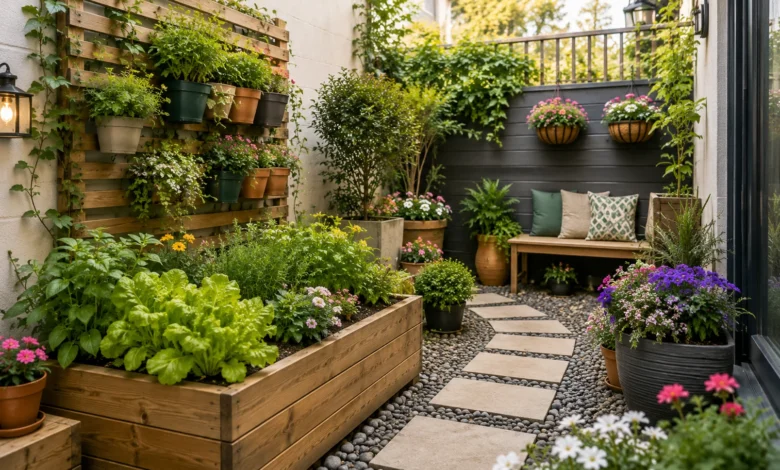
You don’t need a sprawling backyard to grow a garden you’re proud of. Some of the most productive, beautiful gardens exist in the smallest spaces — a narrow balcony, a sunny windowsill, a strip of concrete beside a front door. What matters far more than square footage is choosing the right approach for the space you actually have.
This guide collects 25 practical mini garden ideas for small homes, apartments, and tight urban lots, organized by the type of space you’re working with. Whether you have a balcony, a patio, a windowsill, or just a few square feet of yard, there’s a version of gardening here that fits. For the fundamentals of soil, watering, and plant care that apply no matter how small your space is, see our Complete Gardening Guide.
Why Small-Space Gardening Works So Well
Small gardens have real advantages over large ones that beginners often overlook. They’re easier to maintain consistently, since there’s simply less ground to cover. They concentrate your time and resources — water, compost, attention — into a smaller area, which often produces better results per square foot than a sprawling, under-tended plot. And because containers and small beds are easier to control, they’re forgiving of imperfect native soil, poor drainage, or a lease that doesn’t allow permanent changes to the yard.
The key to a successful mini garden is working with your space’s actual conditions — sunlight, wind exposure, and available structure — rather than trying to force a larger-garden approach into a small footprint.
Balcony and Patio Garden Ideas
1. Railing Planters
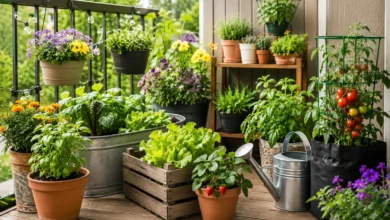
Railing-mounted planter boxes clip directly onto a balcony railing, adding growing space without taking up any floor area at all. They’re ideal for herbs, trailing flowers like petunias, or compact vegetables like cherry tomatoes and peppers. Look for planters with secure clips rated for your railing’s width and thickness before hanging anything above ground level.
2. Vertical Pallet Gardens
A reclaimed wooden pallet, stood on end and lined with landscape fabric, creates a series of planting pockets stacked vertically. This is one of the most space-efficient ways to grow shallow-rooted plants like lettuce, strawberries, and herbs, and it turns an otherwise wasted vertical wall into productive growing area.
3. Hanging Baskets
Hanging baskets suspended from a balcony ceiling or bracket free up floor space entirely while adding visual interest at eye level. Trailing plants like cherry tomatoes bred for hanging culture, strawberries, and cascading flowers like lobelia or verbena all perform well overhead.
4. A Tiered Plant Stand
Multi-tiered plant stands stack several pots vertically in a small footprint, making efficient use of a corner that would otherwise hold a single plant. They work particularly well for herb collections, since you can rotate the sunniest tier seasonally as the sun’s angle changes.
5. A Compact Salad Table
A raised, table-height planter box, often built at roughly waist height, creates an easy-to-tend bed for fast-growing greens like lettuce, spinach, and arugula. The elevated height also makes it accessible without bending, which is a meaningful advantage for gardeners with mobility considerations.
6. Stackable Container Towers
Purpose-built stacking planters, where each pot nests into the one below it in a spiral or tiered pattern, let you grow a surprising number of plants — strawberries are a particularly popular choice — in a footprint barely larger than a single large pot.
7. A Vertical Trellis for Climbing Vegetables
Even a small patio has room for a trellis against a wall or railing. Vining crops like cucumbers, pole beans, and small-fruited squash varieties can be trained upward instead of sprawling outward, multiplying your effective growing area without needing more ground space.
Also Read: Vegetable Gardening for Beginners: What to Plant and When
Window and Indoor Garden Ideas
8. A Kitchen Windowsill Herb Garden
A row of small pots on a sunny kitchen windowsill is one of the most practical mini gardens you can build, putting fresh basil, chives, and parsley within arm’s reach while cooking. South-facing windows generally provide the most consistent light for this setup.
9. A Window Box
Mounted just outside a window, a window box adds color and greenery visible from both inside and outside the home. Compact herbs, trailing flowers, and even small salad greens all do well in a window box with reliable drainage.
10. An Indoor Vertical Growing Wall
Modular wall-mounted planting systems, often designed specifically for indoor use, let you grow a genuine wall of herbs or small greens inside an apartment, entirely independent of outdoor space or weather.
11. A Hydroponic Countertop Garden
Self-contained hydroponic kits, which grow plants in nutrient-rich water rather than soil, are a low-mess option for apartments with limited natural light, since many include built-in grow lights. They’re particularly well suited to herbs and small leafy greens.
12. A Terrarium for Low-Light Corners
For spaces without much direct sun, a closed or open terrarium filled with moisture-loving, low-light plants like ferns and moss creates a self-contained miniature garden that thrives on ambient light alone.
Front Yard and Entryway Garden Ideas
13. A Container Garden by the Front Door
A pair of large, well-matched containers flanking a front entrance instantly adds curb appeal without requiring any yard space at all. Seasonal flowers, small evergreen shrubs, or even a compact herb combination all work well in this high-visibility spot.
14. A Narrow Side-Yard Bed
The strip of ground along a side yard, often overlooked entirely, can support a slim raised bed or a row of tall, narrow plants like ornamental grasses or climbing vines trained against the fence.
15. A Mini Rock Garden
For an entry area with poor soil or heavy sun exposure, a small rock garden combining drought-tolerant succulents, sedums, and ornamental stones creates low-maintenance visual interest that thrives on neglect rather than despite it.
16. A Doorstep Herb Trough
A single long, narrow planting trough placed along a doorstep or path edge is an easy way to combine several herbs in one compact, visually tidy strip, and it puts cooking herbs directly in the path you walk every day.
Small Backyard and Patio Ground Ideas
17. A Single Raised Bed
One well-built raised bed, even as small as 4×4 feet, is enough to grow a meaningful mix of vegetables through a season. Building up rather than relying on native soil also solves drainage and soil quality problems in one step, which is especially useful in small yards with compacted or poor-quality soil.
18. Square Foot Gardening
This method divides a small raised bed into a grid of one-foot squares, each planted with a specific crop at a set density. It’s an efficient, highly organized way to maximize output from a small bed and is particularly beginner-friendly because it removes the guesswork around spacing.
19. A Keyhole Garden
A compact, circular raised bed with a built-in composting basket at the center, a keyhole garden is designed to be highly self-sustaining, with nutrients from the central compost feeding the surrounding bed directly. It’s a space-efficient design that works well in a small backyard corner.
20. A Vertical A-Frame Trellis
A simple A-frame structure built from wood or cattle panel creates two sloped growing surfaces from a narrow footprint, ideal for vining crops like cucumbers, squash, and pole beans. The shaded space underneath can even double as a spot for shade-tolerant greens.
21. A Fire Pit or Patio Ring Garden
Repurposing the border around a patio or seating area with a ring of compact plantings — ornamental grasses, low-growing herbs, or drought-tolerant flowers — adds a garden element to a space primarily used for other purposes, without sacrificing usable patio area.
Creative and Repurposed Container Ideas
22. Repurposed Containers
Old buckets, wooden crates, galvanized tubs, and even large tin cans can all be converted into planters with drainage holes added at the bottom. This is a low-cost, sustainable way to expand your growing space using materials you may already have, and it adds character that matched, store-bought pots don’t.
23. A Shoe Organizer Garden
A fabric, over-the-door shoe organizer, hung against a sunny wall or fence, creates dozens of individual planting pockets in a single vertical footprint. It’s a genuinely space-efficient option for shallow-rooted herbs and small salad greens in an extremely limited area.
24. A Gutter Garden
Sections of vinyl or metal rain gutter, mounted horizontally against a fence or wall, make narrow, shallow planters well suited to lettuce, strawberries, and herbs. Multiple gutter sections can be stacked to multiply the growing area within a small vertical footprint.
25. A Bar Cart or Rolling Plant Stand
A small rolling cart, originally intended for drinks or kitchen storage, works just as well as a mobile plant stand. The advantage of wheels is real: you can chase sunlight around a small patio or balcony throughout the day or season, something a fixed bed can’t offer.
Tips for Making the Most of a Mini Garden
A few principles apply across nearly every idea on this list, regardless of which ones fit your space.
- Prioritize drainage in every container. Without adequate drainage holes, container plants are highly prone to root rot, which is one of the most common reasons small-space gardens fail. If a decorative container lacks drainage, use it as a cover for a properly draining pot inside rather than planting directly into it.
- Use a quality potting mix, not garden soil. Garden soil compacts and drains poorly in a container. A dedicated potting mix is formulated for proper aeration and drainage in a confined space.
- Match plant choice to available light. Track how much direct sun your specific space actually gets before choosing plants — a spot that looks bright can still fall short of the six-plus hours most fruiting vegetables need.
- Water more frequently than you’d expect. Containers, and vertical or hanging setups especially, dry out considerably faster than in-ground beds, sometimes needing daily watering in hot weather.
- Feed regularly. Frequent watering in containers flushes nutrients out faster than in garden soil, so container gardens generally need more consistent supplemental feeding than in-ground plantings.
- Choose compact or dwarf varieties where available. Many popular vegetables now come in patio or dwarf varieties specifically bred for container growing, offering a full harvest in a fraction of the space a standard variety would need.
Common Mistakes to Avoid in a Mini Garden
Small-space gardens fail for a fairly predictable set of reasons, most of which are easy to avoid once you know to look out for them.
- Overcrowding a small footprint. It’s tempting to pack in as many plants as physically possible, but crowded containers compete for light, water, and nutrients, and often produce less overall than a slightly sparser, better-spaced setup. Follow the spacing guidance on plant tags even in a small space.
- Choosing the wrong container size. A container that’s too small restricts root growth and dries out too quickly to keep up with a plant’s water needs, especially for anything fruiting, like tomatoes or peppers. As a general guideline, most vegetables need at least a five-gallon container, and larger, deeper-rooted plants need more.
- Underestimating wind exposure. Balconies and rooftop spaces are often windier than ground-level yards, which dries out soil faster and can physically damage tall or top-heavy plants. Choosing compact varieties and providing wind-blocking structure, like a trellis or screen, helps offset this.
- Ignoring weight limits. Soil, especially when wet, is heavy. Before filling a balcony with large containers or a rooftop with raised beds, check your building’s weight capacity or consult a structural professional if you’re planning anything beyond a handful of standard pots.
- Forgetting about drainage runoff. Elevated containers need somewhere for excess water to go. Using saucers, drainage trays, or positioning containers where runoff won’t damage flooring below is worth planning for before you start watering regularly.
- Choosing full-size varieties instead of compact ones. Standard vegetable varieties are often bred for in-ground garden conditions and can outgrow a small container’s capacity to support them. Seek out varieties specifically labeled as “patio,” “dwarf,” “bush,” or “container” for a better match to small-space conditions.
Getting Started: What You Actually Need
You don’t need much to begin a mini garden, which is part of its appeal. At minimum, most of the ideas above require just a handful of items:
- Containers or a structure appropriate to your chosen idea — pots, a trellis, a repurposed item, or a purpose-built vertical system
- A quality potting mix suited to containers rather than garden soil
- A watering can or a hose with an adjustable nozzle, since small-space gardens are typically watered more often and in smaller amounts than in-ground beds
- A basic slow-release or liquid organic fertilizer, since containers lose nutrients through drainage faster than garden soil
- Seeds or starter plants chosen for your available light and container size
Most beginners can start a functional mini garden — a few railing planters or a windowsill herb setup — for a relatively modest cost, and can always expand with additional containers or a more elaborate structure like a vertical wall or trellis system once the basics are working well.
What’s the easiest mini garden idea for a total beginner?
A simple kitchen windowsill herb garden or a few railing planters are the easiest starting points, since they require minimal setup, a small upfront investment, and forgiving, fast-growing plants like herbs and lettuce.
Can I really grow vegetables in a small container garden?
Yes. Compact and dwarf varieties of tomatoes, peppers, cucumbers, and beans are specifically bred for container growing and can produce a meaningful harvest in pots as small as five gallons, depending on the variety.
How much sunlight do most small-space gardens need?
Most fruiting vegetables and flowering plants need at least six hours of direct sunlight daily. Leafy greens and many herbs can tolerate a bit less, generally four to six hours, which makes them a better fit for partially shaded balconies or windows.
Do vertical and hanging gardens need more water than ground-level containers?
Generally yes. Elevated and hanging containers are more exposed to sun and wind, which accelerates evaporation, so they typically need more frequent watering than a comparable container sitting at ground level.
What’s the most space-efficient mini garden idea on this list?
Vertical options — pallet gardens, gutter gardens, and vertical trellises in particular — tend to produce the most growing area relative to floor space used, since they take advantage of unused wall and air space rather than competing for limited ground area.
Also Read: How to Test and Improve Your Garden Soil: A Complete Guide
Final Thoughts
A small home doesn’t have to mean a small garden experience. The ideas in this guide range from a single windowsill pot to a fully built vertical growing wall, and most can be combined — a few railing planters alongside a hanging basket and a small trellis, for instance — to make full use of whatever space you have. Start with one or two ideas that match your available sunlight and space, get comfortable with the basics of watering and feeding in containers, and expand from there as your confidence grows.
For more detail on the fundamentals that apply to any of these mini garden setups, including soil, watering, and plant selection, see our Complete Gardening Guide and our dedicated guide to container gardening for small spaces.