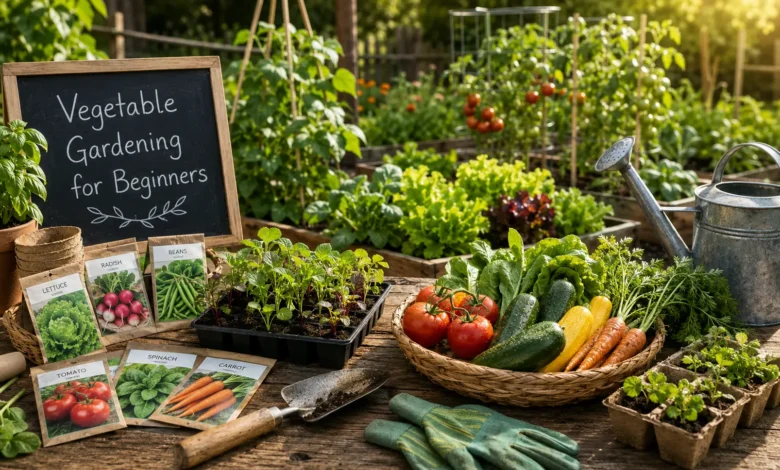
Starting a vegetable garden for the first time can feel overwhelming — seed packets full of unfamiliar terms, planting calendars that seem to contradict each other, and the very real fear of watching your hard work wilt within a week. The good news is that vegetable gardening is far more forgiving than it looks. With the right crops, correct timing, and a few core habits, most beginners can grow a genuinely productive garden in their very first season.
This guide walks through exactly what to plant, when to plant it, and how to set yourself up for a harvest rather than a disappointment. For the fundamentals of soil, watering, and general garden care that apply beyond vegetables specifically, see our Complete Gardening Guide and our guide on testing and improving your garden soil, which is worth reading before you plant your first seed.
Why Vegetable Gardening Is a Great Place to Start
Vegetables are one of the most rewarding categories for a new gardener, for a simple reason: the feedback loop is fast. Unlike a tree or a slow-growing perennial, many vegetables go from seed to harvest in a matter of weeks, which means you learn quickly what’s working and what isn’t, and you get to eat the results. That fast feedback builds confidence and skill far faster than working with plants that take a full year or more to show results.
Vegetable gardening also has a clear, tangible payoff beyond the learning experience: fresher, more flavorful produce than most of what’s available at a grocery store, meaningful savings over a full season, and more control over how your food is grown.
Step 1: Understand Your Growing Season
Before choosing what to plant, you need to understand your local growing season, which is defined by two key dates: your average last spring frost date and your average first fall frost date. Everything you plant outdoors is timed around these two dates.
You can find these dates through a quick search for “[your city or zip code] average frost dates” or through your local cooperative extension office, which typically maintains detailed, regionally specific planting calendars.
Cool-Season vs. Warm-Season Vegetables
Nearly every vegetable falls into one of two broad categories, and understanding the difference is the single most important concept in vegetable garden timing.
- Cool-season vegetables tolerate light frost and actually prefer cooler temperatures, generally growing best between 40-75°F. They’re planted in early spring, before your last frost date, and again in late summer for a fall harvest. Examples include lettuce, spinach, peas, broccoli, carrots, and radishes.
- Warm-season vegetables are frost-sensitive and need consistently warm soil and air temperatures to thrive, generally above 60-65°F. They’re planted after your last frost date, once the danger of frost has passed and soil has warmed. Examples include tomatoes, peppers, squash, cucumbers, and beans.
Planting a warm-season crop too early, before frost risk has passed, is one of the most common — and most disheartening — mistakes new gardeners make, since a single late frost can kill weeks of careful growth overnight.
Step 2: Choose Beginner-Friendly Vegetables
Not all vegetables are equally forgiving. Some tolerate inconsistent watering, imperfect soil, and beginner mistakes far better than others. Starting with resilient, fast-growing crops builds confidence before you tackle more demanding vegetables.
The Most Beginner-Friendly Vegetables
- Zucchini and summer squash. Extremely productive and fast-growing, often producing more than a single household can eat from just one or two plants. Direct-sow after your last frost.
- Green beans. Fast to germinate, tolerant of average soil, and productive over several weeks. Bush varieties don’t need staking, making them especially low-maintenance.
- Radishes. One of the fastest vegetables you can grow, often ready to harvest in three to four weeks. A great confidence-builder for impatient beginners.
- Lettuce and other leafy greens. Cool-season crops that grow quickly, tolerate partial shade, and can be harvested continuously by picking outer leaves rather than pulling the whole plant.
- Cherry tomatoes. More forgiving and faster to produce than large slicing tomato varieties, and generally more resistant to the common issues that affect tomatoes.
- Peas. An easy, productive cool-season crop, especially snap and snow pea varieties that can be eaten pod and all.
- Herbs like basil, chives, and cilantro grow quickly and reward even minimal effort, though they’re technically herbs rather than vegetables, they’re worth including in any beginner vegetable garden.
Vegetables to Approach With More Caution as a Beginner
Crops like celery, cauliflower, and large slicing tomatoes tend to be more particular about consistent watering, temperature, and soil fertility, and are more prone to disappointing results if conditions aren’t well managed. None of these are impossible for a beginner, but saving them for your second or third season, once you’ve built some experience with the fundamentals, often leads to a better first-year experience overall.
Step 3: Decide Between Seeds and Transplants
One of the first practical decisions in vegetable gardening is whether to start from seed or buy young plants (transplants) from a nursery or garden center. Each approach has clear advantages.
When to Direct-Sow Seeds
Some vegetables don’t transplant well because their root systems are sensitive to disturbance, and are best sown directly into garden soil:
- Carrots, beets, and other root vegetables
- Beans and peas
- Corn
- Radishes
- Most leafy greens, though these can also be started indoors if you want an earlier head start
When to Start Seeds Indoors or Buy Transplants
Slow-growing or heat-loving crops benefit from a head start, especially in regions with shorter growing seasons:
- Tomatoes, typically started indoors 6-8 weeks before your last frost
- Peppers, which are especially slow to germinate and benefit from an early indoor start
- Eggplant
- Broccoli and cabbage
For a first-time gardener, buying transplants for these slower crops is often the more forgiving choice, since it skips the indoor seed-starting learning curve (grow lights, hardening off, damping-off disease) while still leaving plenty of straightforward direct-sown crops to grow from seed.
Step 4: Build a Simple Planting Calendar
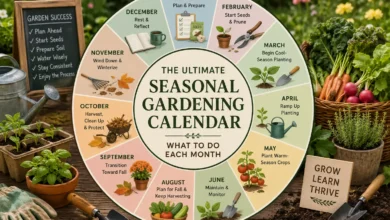
Rather than trying to memorize planting windows for dozens of vegetables, build a simple calendar around your two key frost dates. Here’s a general framework that applies across most temperate climates, adjusted for your specific frost dates.
6-8 Weeks Before Last Frost
Start slow-growing warm-season crops indoors under grow lights or in a sunny window: tomatoes, peppers, and eggplant.
4-6 Weeks Before Last Frost
Direct-sow the most cold-tolerant crops outdoors, since these can handle a light frost: peas, spinach, and radishes. This is also a good window to plant onion sets and start broccoli and cabbage transplants outdoors if they’ve been hardened off.
2-4 Weeks Before Last Frost
Direct-sow additional cool-season crops: lettuce, carrots, beets, and other leafy greens. Continue succession planting of fast crops like radishes every couple of weeks for a continuous harvest rather than one large batch all at once.
After Last Frost (Once Soil Has Warmed)
This is the big planting window for warm-season crops. Direct-sow beans, squash, cucumbers, and corn, and transplant your tomato, pepper, and eggplant seedlings outdoors after hardening them off over 7-10 days.
Mid-to-Late Summer
Start a second round of cool-season crops for a fall harvest, timed so they mature before your first fall frost date. Lettuce, spinach, and quick-maturing radishes are good candidates, along with fall broccoli and cabbage started from transplants.
After First Fall Frost
Many cool-season crops, like kale and Brussels sprouts, actually improve in flavor after a light frost and can often be left in the garden into early winter in milder climates.
Step 5: Plant Correctly
Timing gets a lot of attention, but planting technique also has a real impact on how well your vegetables establish and perform.
Read the Seed Packet or Plant Tag
Every seed packet includes planting depth, spacing, days to germination, and days to maturity — information specific to that exact variety. This is the single most reliable source of planting guidance you have, and skipping it is one of the most common reasons beginner plantings underperform.
Space Plants Properly
It’s tempting to plant vegetables closer together to maximize a small space, but overcrowded plants compete for light, water, and nutrients, and poor airflow between them significantly increases the risk of fungal disease. Follow the spacing guidance on the seed packet, even when it seems like it’s leaving unused space early in the season — most vegetables fill in quickly as they mature.
Water Thoroughly After Planting
Whether direct-sowing seeds or transplanting seedlings, water deeply immediately afterward. For seeds, this helps ensure good soil contact and consistent moisture for germination. For transplants, it settles soil around the roots and reduces transplant shock.
Harden Off Transplants Before Planting Outdoors
If you started seeds indoors or bought greenhouse-grown transplants, gradually acclimate them to outdoor conditions over 7-10 days before planting them in the garden permanently. Skipping this step — moving tender seedlings directly from a sheltered indoor environment to full outdoor sun and wind — often causes wilting, scorching, or stunted growth that can set plants back significantly.
Step 6: Water and Feed Consistently
Vegetables, especially fruiting crops like tomatoes and squash, need more consistent water than many ornamental plants to produce well. Inconsistent watering — letting soil dry out completely between waterings — is a common cause of issues like blossom end rot in tomatoes and bitter-tasting cucumbers.
A general guideline is about one to two inches of water per week, adjusted for rainfall, heat, and your specific soil type (sandy soil needs more frequent watering than clay). Watering at the base of the plant rather than overhead reduces the risk of fungal disease on leaves.
Most vegetables also benefit from supplemental feeding beyond what’s naturally in the soil, particularly heavy feeders like tomatoes, squash, and corn. A balanced organic fertilizer applied at planting, followed by a lighter feeding once plants begin flowering or fruiting, supports strong production through the season without the risk of over-fertilizing that comes with heavier synthetic applications.
Step 7: Use Succession Planting and Companion Planting
Two techniques can meaningfully increase what a small garden produces over a season.
Succession Planting
Rather than planting an entire crop of, say, lettuce or radishes all at once, stagger plantings every one to two weeks. This spreads your harvest out over a longer period instead of producing an overwhelming amount all at once followed by nothing, which is especially useful for fast-maturing crops.
Companion Planting
Certain plant combinations genuinely benefit each other, whether by improving pest resistance, making efficient use of space, or supporting pollination. Classic combinations include tomatoes with basil, which some gardeners believe helps repel pests, or the traditional “three sisters” planting of corn, beans, and squash, where corn provides a structure for beans to climb, beans fix nitrogen in the soil, and squash’s broad leaves shade out weeds. While not every companion planting claim is strongly backed by research, many combinations are at minimum a practical, space-efficient way to grow complementary crops together.
Common Beginner Mistakes in Vegetable Gardening
- Planting too early. Impatience is understandable in early spring, but planting warm-season crops before your last frost date risks losing them entirely to a late cold snap.
- Planting too much of one crop. A common rookie mistake is planting an entire packet of zucchini or radish seeds at once, resulting in an overwhelming glut followed by nothing. Stagger plantings instead.
- Ignoring spacing guidelines. Crowded plants underperform and are more prone to disease, even if the crowding looks manageable when plants are small.
- Inconsistent watering. Vegetables, particularly fruiting crops, are sensitive to irregular watering in ways that show up as specific problems like blossom end rot or split fruit.
- Skipping soil preparation. Vegetables are generally heavier feeders than ornamental plants and perform noticeably better in soil that’s been amended with compost beforehand.
- Not hardening off transplants. Moving seedlings directly from indoor conditions to the garden without a gradual transition often causes setback or plant loss.
- Giving up after one failure. Nearly every vegetable gardener loses a crop at some point to weather, pests, or a timing mistake. It’s a normal part of the learning curve, not a sign the hobby isn’t for you.
A Simple First-Season Vegetable Garden Plan
If you’re not sure where to start, here’s a practical, low-risk combination for a first vegetable garden, assuming a modest space of roughly 4×8 feet or a few large containers:
- 2-3 cherry tomato plants (transplants, planted after last frost)
- 1 zucchini or summer squash plant (direct-sown after last frost)
- A row of bush green beans (direct-sown after last frost)
- A row of lettuce or mixed greens (direct-sown in early spring and again in early fall)
- A row of radishes (direct-sown every two weeks in spring for continuous harvest)
- A few basil plants alongside the tomatoes
This combination covers both cool- and warm-season crops, includes some of the fastest, most forgiving vegetables available, and gives you harvests spread across most of the growing season rather than everything ripening at once.
Frequently Asked Questions
How much sun do vegetables need?
Most vegetables, especially fruiting crops like tomatoes, peppers, and squash, need at least six to eight hours of direct sunlight daily. Leafy greens and some root vegetables can tolerate a bit less, generally four to six hours, but overall yields drop noticeably in shadier conditions.
Can I grow vegetables without a yard?
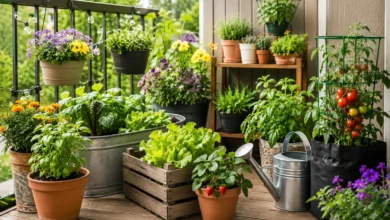
Yes. Many vegetables, particularly compact or bush varieties of tomatoes, peppers, lettuce, and herbs, grow well in containers on a balcony or patio, as long as the container is large enough and gets adequate sunlight. See our guide to container gardening for specifics on pot sizing and soil.
How long does it take to get a harvest?
This varies significantly by crop. Radishes can be ready in three to four weeks, lettuce in around six to eight weeks, and bush beans in around seven to eight weeks. Tomatoes and peppers take considerably longer, often two to three months from transplanting to first harvest.
Do I need to rotate my vegetable crops each year?
Yes, ideally. Planting the same crop family in the same spot repeatedly depletes specific nutrients and allows crop-specific pests and diseases to build up in the soil over time. Rotating crop families through different areas of the garden each season, even in a small space, helps maintain healthier soil and reduces disease pressure.
What’s the biggest mistake beginners make with vegetable gardens?
Planting too early and too much at once are probably the two most common issues. Waiting for the right timing based on your frost dates, and staggering plantings of fast-growing crops, solves both.
Final Thoughts
Vegetable gardening rewards a bit of planning far more than it rewards perfect execution. Understanding your frost dates, starting with forgiving crops, timing your plantings correctly, and staying consistent with water and soil care will get you a genuinely productive harvest even in your very first season. Mistakes are part of the process for every gardener, and each season builds the kind of practical knowledge that no guide can fully substitute for.
Once you’ve got the basics down, our guides on testing and improving your soil and organic pest control are great next steps for keeping your vegetable garden healthy and productive through the rest of the season.
Also Read: Kitchen Remodeling Guide: Everything You Need to Know