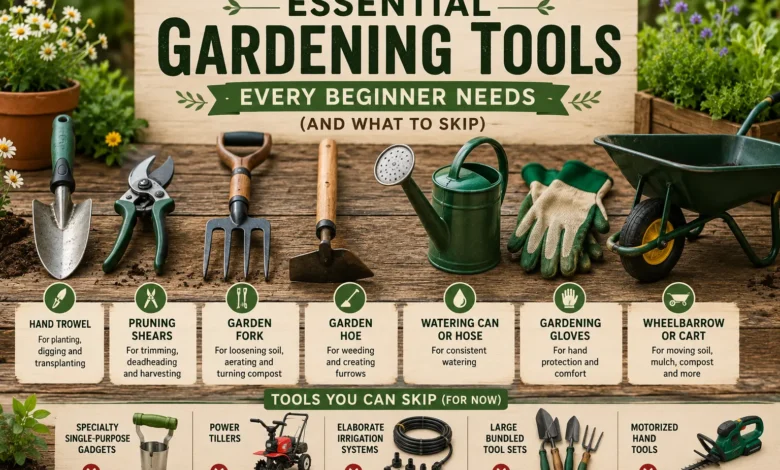
Walk into any garden center and you’ll find an entire aisle devoted to tools promising to make gardening easier — specialty diggers, gadget-laden multi-tools, and accessories for problems you may never actually have. For a beginner, this can turn a simple task into an overwhelming and expensive decision, especially when every product claims to be indispensable. The reality is that a genuinely productive garden can be built and maintained with a fairly short list of essential gardening tools, most of which are inexpensive and last for years with basic care, regardless of whether you’re tending a few containers or a full backyard plot.
This guide breaks down exactly which gardening tools names belong on a beginner’s shopping list, what to look for when choosing the best gardening tools for your budget, and which popular tools you can comfortably skip, at least until you know you actually need them. For the broader fundamentals these tools support, see our Complete Gardening Guide.
Why Tool Quality Matters More Than Tool Quantity
Before getting into the specific list, it’s worth addressing a common beginner instinct: buying a large, all-in-one tool set. These sets often bundle a wide variety of tools at a low per-piece price, but the individual tools are frequently made from thin, low-quality metal that bends, dulls, or breaks within a season or two of regular use.
A smaller collection of well-made tools, even if it costs a bit more upfront, tends to be the better investment. Quality tools cut more cleanly, require less physical effort to use, and hold up to years of regular use rather than needing replacement every season. If you’re only going to spend more on a handful of items, prioritize the tools you’ll use most often — typically a trowel, pruning shears, and a hose or watering can.
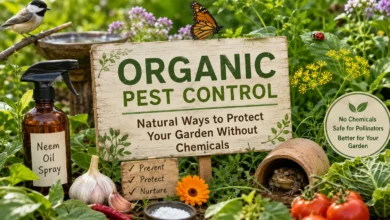
Also Read: Organic Pest Control: Natural Ways to Protect Your Garden Without Chemicals
The Essential Gardening Tools Every Beginner Needs
Hand Trowel
A hand trowel is arguably the single most-used tool in any garden, essential for digging planting holes, transplanting seedlings, mixing in soil amendments, and general small-scale digging. Look for one with a full metal shaft (rather than metal bonded to a separate plastic handle, which tends to loosen and break over time) and a comfortable grip suited to your hand size.
Pruning Shears (Secateurs)
Pruning shears handle deadheading spent flowers, harvesting vegetables and herbs, and light pruning of shrubs and small branches. Bypass pruners, which cut with a scissor-like action, give a cleaner cut than anvil-style pruners and are generally the better choice for live plant material. A pair with replaceable blades will last considerably longer than one where the entire tool needs replacing once the blade dulls beyond sharpening.
Garden Fork
A garden fork, with its sturdy tines, is essential for loosening and aerating compacted soil, working compost into beds, and dividing perennials without slicing through as many roots as a spade would. It’s a particularly important tool for anyone dealing with heavy clay soil, where a fork can break up dense ground far more effectively than a trowel alone.
Garden Hoe
A hoe is the primary tool for weeding larger areas efficiently and for creating furrows when direct-sowing seeds. A stirrup or “scuffle” hoe, which cuts weeds just below the soil surface with a push-pull motion, is a popular, back-friendly option that many gardeners find faster and easier than a traditional chopping hoe for routine weeding.
Watering Can or Hose With an Adjustable Nozzle
Consistent watering is one of the most important habits in gardening, and having the right tool for it matters. A watering can with a fine rose (the perforated head) is ideal for seedlings and container plants, since it delivers a gentle flow that won’t disturb delicate roots or wash away soil. For larger areas, a hose with an adjustable nozzle lets you switch between a gentle shower for seedlings and a stronger stream for established plants or cleaning tools.
Gardening Gloves
A sturdy pair of gloves protects your hands from thorns, splinters, and prolonged soil contact, and makes tasks like handling compost or pruning thorny plants considerably more comfortable. Look for gloves with some breathability and dexterity in the fingers, since overly stiff gloves make precise tasks, like handling small seeds, frustrating.
Wheelbarrow or Garden Cart
Once your garden grows beyond a single small bed, moving soil, mulch, compost, and harvested produce by hand becomes impractical quickly. A wheelbarrow or garden cart saves considerable physical effort and time, and is worth the investment as soon as you’re managing more than a container or two.
Hand Rake
A small hand rake or cultivator is useful for smoothing soil before planting seeds, lightly working in surface amendments, and clearing small debris from garden beds without disturbing deeper roots the way a full-sized rake might.
Garden Kneeler or Knee Pads
Not strictly essential, but genuinely useful — a padded kneeler or a pair of knee pads makes extended time spent weeding, planting, and harvesting significantly more comfortable, and many kneelers double as a low seat when flipped over.
Choosing the Best Gardening Tools for Your Budget
When comparing the best gardening tools within a given category, a few features are worth prioritizing over price alone.
- Material. Stainless steel resists rust and holds an edge longer than carbon steel, though it typically costs more. Carbon steel tools are often more affordable and perform well with regular cleaning and occasional oiling to prevent rust.
- Handle construction. Wooden handles (ash is a common, durable choice) offer good shock absorption for tools like forks and hoes, while fiberglass handles are lighter and more resistant to splintering or breaking under stress.
- Ergonomics. Tools with cushioned grips and a design that reduces wrist strain matter more than they might seem to at first, especially for anyone gardening regularly over a full season.
- Warranty and repairability. Some higher-end tool brands offer lifetime warranties or sell replacement parts, like new blades for pruning shears, which extends the tool’s usable life well beyond a cheaper, non-repairable alternative.
Buying tools individually, rather than in a bundled set, generally lets you invest a bit more in the pieces you’ll use constantly (a trowel and pruning shears) while spending less on tools you’ll use only occasionally.
Gardening Tools for Kids
Getting children involved in the garden is a great way to build an early interest in growing things, and kids gardening tools, scaled down to a child’s size and grip strength, make that participation both safer and more enjoyable for younger gardeners.
- Child-sized hand tools, including a smaller trowel, rake, and cultivator, are easier for small hands to grip and control than adult-sized versions.
- Rounded or blunt-tipped tools reduce the risk of injury for younger children, while still allowing them to dig, plant, and help with basic garden tasks.
- A child-sized watering can, lighter and easier to fill and carry than an adult version, gives kids a sense of ownership over a specific, manageable task.
- Durable, brightly colored designs are often more appealing to children and also easier to spot (and therefore less likely to get lost) around the yard.
- Simple, sturdy gloves sized for smaller hands protect kids’ hands during hands-on tasks like handling soil or harvesting.
Involving children with age-appropriate tasks — planting large seeds, watering with their own can, or harvesting easy crops like cherry tomatoes and snap peas — builds genuine hands-on experience without requiring supervision-heavy tasks like pruning or handling sharp tools.
Gardening Tools You Can Skip (At Least at First)
Not every tool marketed to gardeners earns a place on a beginner’s shopping list. A few common purchases are worth holding off on until you have a specific, confirmed need for them.
- Specialty single-purpose gadgets, like tools designed for one extremely narrow task (a specific bulb-planting tool, for instance), often duplicate what a trowel can already do for most home gardeners.
- Power tillers, for anyone gardening in a small to medium space. Tilling is increasingly considered less beneficial for long-term soil health than a no-till or low-till approach using compost, and a garden fork handles occasional soil loosening in most home gardens without the cost or maintenance of powered equipment.
- Elaborate irrigation systems, before you’ve gardened through at least one full season and understand your actual watering needs and patterns. A simple hose and watering can are often sufficient for a beginner-sized garden.
- A large, bundled tool set, for the reasons discussed earlier — these often prioritize quantity over the quality that makes individual tools genuinely pleasant and durable to use.
- Motorized or battery-powered hand tools, for small garden beds where a manual tool accomplishes the same task with less cost, maintenance, and noise.
You can always add specialized tools later, once you’ve gardened for a season or two and have a clear, specific sense of what would genuinely save you time or effort, rather than guessing upfront at needs you may not actually have.
More Gardening Tools Names Worth Knowing
Beyond the core essentials, you’ll come across a range of other gardening tools names as you spend more time in the garden or browse a garden center. Here’s a quick reference for some of the most useful ones, in case you’re trying to figure out what a specific tool is called or whether it’s worth adding to your collection.
- Hori-hori knife: A versatile, narrow-bladed digging knife originally from Japan, useful for everything from weeding and transplanting to dividing perennials. Many gardeners who own one describe it as a genuine trowel replacement once they get used to it.
- Loppers: Essentially long-handled pruning shears, loppers handle branches too thick for standard pruning shears but too small to require a saw, typically up to about two inches in diameter.
- Hand cultivator: A small, claw-like tool with three or four curved tines, used for loosening surface soil and working in amendments around established plants without disturbing deeper roots.
- Dibber (or dibble): A pointed tool used to create planting holes of a consistent depth for bulbs, seedlings, and transplants, particularly useful when planting a large number of the same item at once.
- Soil knife (or hori knife): A sturdy, serrated knife useful for cutting through roots, dividing plants, and general digging in tight spaces where a full-sized trowel or spade won’t fit.
- Garden edger: A flat, sharp-bladed tool used to create a clean, defined border between lawn and garden beds, which helps keep grass from creeping into planted areas.
- Bypass loppers vs. anvil loppers: Similar to pruning shears, bypass versions give a cleaner cut on live wood, while anvil versions crush slightly but handle thicker, dead wood more easily.
- Plant labels and garden twine: Not tools in the traditional sense, but genuinely useful supplies — labels help you remember what’s planted where, especially with multiple varieties of the same crop, and twine is essential for tying up vining or floppy plants to stakes and trellises.
Knowing these names isn’t essential for a beginner’s first season, but it makes shopping for tools, reading gardening guides, and asking for help at a garden center considerably easier once you’re ready to expand beyond the basics.
Buying quality tools is only half the equation — proper care significantly extends how long they last and how well they perform.
- Clean tools after each use, removing soil and plant debris before it dries and hardens onto blades and moving parts.
- Sharpen cutting tools regularly. Dull pruning shears crush stems rather than cutting cleanly, which stresses plants and creates a less clean wound that’s more vulnerable to disease.
- Oil metal parts periodically, particularly for carbon steel tools, to prevent rust, and apply a light coat of oil to wooden handles occasionally to prevent them from drying out and cracking.
- Store tools somewhere dry, ideally hung rather than left on the ground, where consistent moisture contact accelerates rust and rot.
- Disinfect pruning tools between plants when dealing with a known disease issue, using rubbing alcohol or a diluted bleach solution, to avoid spreading disease from an infected plant to a healthy one.
Frequently Asked Questions
What are the most essential gardening tools for a total beginner?
A hand trowel, pruning shears, a watering can or hose, and a pair of gardening gloves cover the vast majority of tasks a new gardener will encounter in a first season, and are worth prioritizing over anything more specialized.
How much should I expect to spend on basic gardening tools?
A functional starter set of quality individual tools can be assembled for a modest cost, especially compared to bundled sets, which often seem cheaper upfront but need replacing sooner due to lower-quality materials.
Are kids gardening tools just smaller versions of adult tools?
Largely yes, though quality kids’ tools are also designed with safety in mind, often featuring rounded or blunted tips and lighter-weight materials suited to a child’s grip strength and coordination level.
Do I need different tools for container gardening versus in-ground gardening?
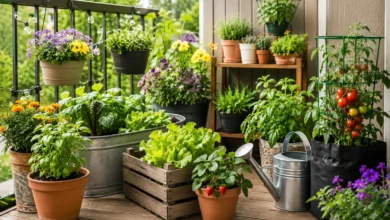
Not fundamentally, though a smaller hand trowel and a watering can with a gentle rose attachment are especially useful for the more frequent, precise watering and planting that containers typically require. See our container gardening guide for more specifics.
How do I know when it’s time to upgrade from basic tools to something more specialized?
A good general rule is to wait until you have a specific, recurring task that your current tools handle poorly or inefficiently, rather than buying specialized tools speculatively. If you find yourself wishing for something more than once across a season, that’s a reasonable signal it’s worth the investment.
Is it worth buying an expensive brand-name tool over a cheaper alternative?
For tools you’ll use constantly, like a trowel or pruning shears, a moderately priced, well-reviewed tool from a reputable brand is usually a better long-term value than the cheapest option available, since it will hold an edge longer, resist rust better, and generally need replacing far less often. For occasional-use tools, a budget option is often perfectly reasonable.
Final Thoughts
A well-chosen, relatively small set of essential gardening tools will carry you through the vast majority of tasks in a home garden, from planting and weeding to harvesting and basic maintenance. Prioritize quality over quantity, especially for the tools you’ll reach for most often, and hold off on specialized or powered equipment until you have a clear, confirmed need for it. With the right basic tools in hand and a bit of regular maintenance, you’ll be well equipped for whatever the growing season brings.
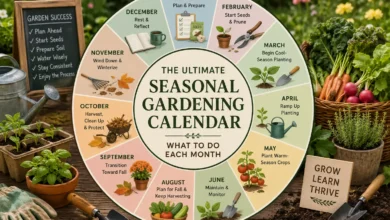
For more on putting these tools to use throughout the year, see our Complete Gardening Guide and our seasonal gardening calendar for a month-by-month breakdown of what to tackle when.
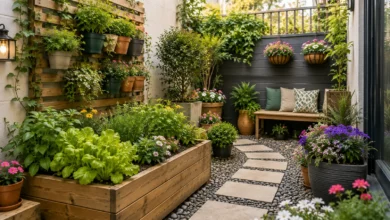
Also Read: 25 Mini Garden Ideas for Small Homes