Flooring is one of the most consequential decisions in any bathroom project. It has to withstand daily water exposure, humidity, and heavy foot traffic while still looking good for years, all without becoming slippery or difficult to maintain. Unlike a living room or bedroom, where flooring choice is largely about aesthetics, bathroom flooring has to perform under conditions that would damage many otherwise popular materials.
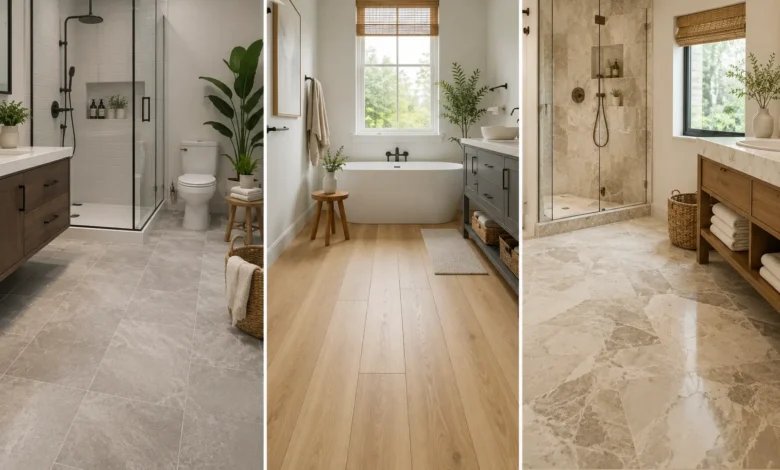
This guide compares the three most common bathroom flooring options — tile, vinyl, and natural stone — along with the specific product types within each category, so you can weigh cost, durability, maintenance, and style against what actually matters for your household and budget.
What Makes a Material Good Bathroom Flooring
Before comparing specific products, it helps to understand the baseline requirements any bathroom flooring needs to meet, since these requirements rule out plenty of materials that work well elsewhere in the home.
Water resistance is the most obvious requirement, but it’s worth distinguishing between water-resistant and fully waterproof, since the two terms aren’t interchangeable and manufacturers don’t always use them consistently. A bathroom floor should be able to handle standing water from a shower splash or an overflowing tub without warping, staining, or allowing moisture to seep through to the subfloor below.
Slip resistance matters more in a bathroom than almost any other room, given how often the floor gets wet. This is measured by a material’s coefficient of friction, and textured or matte finishes generally perform better here than high-gloss surfaces, which can become dangerously slippery when wet.
Durability under humidity is a separate consideration from simple water exposure, since bathrooms maintain elevated humidity levels even when the floor itself isn’t directly wet. Materials that can warp, swell, or degrade under sustained humidity, like most solid hardwood, are generally poor bathroom flooring choices regardless of how they perform against direct water contact.
Ease of cleaning rounds out the list, since a bathroom floor needs to be simple to keep hygienic given how frequently it’s used and how much moisture, soap residue, and general grime it’s exposed to.
Tile Flooring: Ceramic and Porcelain Compared
Tile remains the most popular and most traditional bathroom flooring option, and for good reason — it checks every box above when installed correctly. Within tile, the two dominant categories are ceramic and porcelain, and while they’re often discussed together, there are meaningful differences between them.
Ceramic tile is made from a clay-based mixture fired at lower temperatures than porcelain, which makes it somewhat more porous and generally less expensive. It’s a reliable, budget-friendly bathroom flooring option and comes in an enormous range of colors, patterns, and finishes, from classic subway-style wall tile to large-format floor tile designed to mimic stone or wood.
Porcelain tile is made from a denser, more refined clay and fired at higher temperatures, which makes it less porous, more resistant to water absorption, and generally more durable than standard ceramic. Porcelain is typically the better choice for bathroom floors specifically, since floors see more foot traffic and moisture exposure than walls, and porcelain’s lower porosity makes it more resistant to staining and water damage over time.
Both ceramic and porcelain are considered genuinely waterproof at the tile level once properly sealed and grouted, though the grout lines between tiles remain a point of vulnerability if not maintained, since grout itself is more porous than the tile and can absorb water and staining if not periodically resealed.
Large-format tile, generally defined as tile 15 inches or larger on at least one side, has become increasingly popular in bathroom flooring, since fewer grout lines mean less maintenance and a cleaner, more expansive look — a detail that matters even more among small bathroom flooring ideas, where reducing visual clutter helps the room feel larger.
Vinyl Bathroom Flooring: LVP and LVT Explained
Vinyl bathroom flooring has grown enormously in popularity over the past decade, largely because modern versions bear little resemblance to the thin, budget vinyl sheet flooring of decades past. Today’s vinyl options are thicker, more realistic in appearance, and in most cases genuinely waterproof, making them a strong competitor to tile for many households.
LVP bathroom flooring, which stands for luxury vinyl plank, is designed to mimic the look of hardwood flooring, with long, narrow planks and realistic wood-grain textures and finishes. It’s a popular choice for homeowners who want the visual warmth of wood without the water vulnerability that comes with actual hardwood in a bathroom setting.
LVT bathroom flooring, or luxury vinyl tile, is designed to mimic the look of ceramic or stone tile, typically in square or rectangular formats with grout-line detailing printed or embossed into the surface. It offers a similar aesthetic to real tile at a lower material and installation cost.
Both LVP and LVT are constructed in layers, typically including a rigid core, a printed design layer, and a protective wear layer on top. This layered construction is what makes modern vinyl bathroom flooring both waterproof and durable, since the design and protective layers sit above a core that’s engineered specifically to resist moisture, unlike older vinyl sheet products.
Rigid core vinyl, sometimes labeled as SPC (stone plastic composite) or WPC (wood plastic composite), has become the standard for higher-quality vinyl bathroom flooring, offering better dimensional stability and a more substantial feel underfoot compared to older flexible vinyl products.
Also Read: The Complete Guide to Bathroom Lighting: Layers, Placement, and Bulb Types
Natural Stone Flooring: Beauty With Trade-Offs
Natural stone offers a level of visual richness that manufactured materials struggle to fully replicate, since every slab or tile carries unique natural variation. That said, natural stone bathroom flooring comes with meaningful trade-offs that are worth understanding before committing to it.
Marble delivers a classic, high-end look with distinctive veining, but it’s also one of the more porous and higher-maintenance natural stone options. It requires periodic sealing to resist water absorption and staining, and it can etch when exposed to acidic products, which makes it a material that demands more ongoing care than tile or vinyl.
Travertine offers a warmer, more textured appearance than marble and is a popular choice for bathrooms leaning toward a spa-inspired or Mediterranean aesthetic. Like marble, it’s porous and requires sealing, and its natural pitted texture, while attractive, can also collect grime if not cleaned regularly.
Slate brings a more rustic, textured look and tends to offer better natural slip resistance than polished marble or travertine, making it a reasonable choice for shower floors specifically, though it still benefits from periodic sealing to maintain its water resistance over time.
Granite is denser and less porous than marble or travertine, which makes it more resistant to staining and water damage with less frequent sealing required, though it’s generally less common as a full bathroom floor material and more often seen as a countertop choice.
Across all natural stone options, the shared trade-off is maintenance: none of them are inherently waterproof in the way that porcelain tile or modern vinyl is, and all require an ongoing sealing schedule to maintain their water resistance, typically every one to two years depending on the specific stone and how much foot traffic the floor sees.
Also Read: Bathroom Storage Solutions for Every Layout and Budget
Waterproof Bathroom Flooring: What the Term Actually Means
The term waterproof bathroom flooring gets used loosely in marketing, so it’s worth understanding what it actually guarantees before making a purchasing decision based on the label alone.
A genuinely waterproof floor prevents water from penetrating through to the subfloor beneath it, even if water sits on the surface for an extended period. Rigid-core LVP and LVT are generally marketed accurately as waterproof, since their layered construction is specifically engineered to block moisture from reaching the subfloor, even at the seams between planks or tiles when installed correctly.
Porcelain and ceramic tile are waterproof at the tile level, but the overall floor system is only as waterproof as its weakest point, which is typically the grout lines and any transitions or edges. This is why proper installation, including correctly sealed grout and adequate waterproofing membrane beneath the tile in wet areas, matters as much as the tile itself.
Natural stone is generally water-resistant rather than fully waterproof, since its porous structure allows some moisture absorption even after sealing, which is why ongoing maintenance is a bigger factor with stone than with tile or vinyl.
Understanding this distinction matters most for areas of the bathroom with the highest water exposure, like directly in front of the shower or around the tub, where a fully waterproof material offers a meaningful practical advantage over one that’s simply water-resistant.
Cost Comparison Across Flooring Types
Cost varies significantly across bathroom flooring options, both in material price and installation labor, and it’s worth considering both together when budgeting for a project.
Vinyl bathroom flooring, including both LVP and LVT, is generally the most budget-friendly option among the three categories, both in material cost and installation labor, since it’s often easier and faster to install than tile, and in some cases suitable for a confident DIYer.
Ceramic tile sits in the middle of the cost range, with standard sizes and finishes remaining relatively affordable, though costs rise with larger formats, more intricate patterns, or higher-end finishes.
Porcelain tile typically costs somewhat more than ceramic due to its denser composition and more involved manufacturing process, though the price gap has narrowed in recent years as porcelain has become more widely available at a range of price points.
Natural stone is generally the most expensive of the three categories, both in material cost and in installation labor, since natural stone often requires more specialized cutting and setting techniques, along with the ongoing cost of periodic sealing that isn’t a factor with tile or vinyl.
Durability and Longevity by Material
Longevity is an important factor to weigh alongside upfront cost, since a more expensive material that lasts significantly longer can offer better value over the life of the floor.
Porcelain tile is widely considered the most durable option among common bathroom flooring choices, with a lifespan that can extend well beyond 25 years when properly installed and maintained, thanks to its dense, low-porosity composition.
Ceramic tile, while slightly less durable than porcelain due to its higher porosity, still offers a long functional lifespan, typically 15 to 20 years or more, provided the grout is maintained and the tile isn’t subjected to significant impact damage.
Vinyl bathroom flooring, particularly rigid-core LVP and LVT, has improved significantly in durability over older vinyl products, with a typical lifespan in the range of 10 to 20 years depending on quality and foot traffic, though it’s generally less impact- and scratch-resistant than tile over the very long term.
Natural stone can last for decades or even longer if properly maintained, since stone itself is an inherently durable material, but its longevity depends heavily on consistent sealing and care, and it’s more prone to staining or etching damage than tile if maintenance is neglected.
Maintenance Requirements Compared
Ongoing maintenance is often the deciding factor for homeowners choosing between these bathroom flooring options, since the day-to-day and year-to-year upkeep varies considerably.
Vinyl bathroom flooring requires the least ongoing maintenance of the three categories. Regular sweeping and occasional damp mopping is generally sufficient, and there’s no sealing required, since the material itself is engineered to be waterproof throughout its wear layer.
Tile flooring, both ceramic and porcelain, requires similarly straightforward day-to-day cleaning, but the grout lines need periodic attention — typically resealing every one to two years — to maintain their water and stain resistance, along with occasional deeper cleaning to prevent grime buildup in the grout itself.
Natural stone requires the most consistent maintenance among the three, including regular sealing on a schedule that varies by stone type, along with more careful product selection for daily cleaning, since acidic or abrasive cleaners can damage certain stone surfaces over time in a way they wouldn’t affect tile or vinyl.
Slip Resistance and Safety Considerations
Given how often bathroom floors are exposed to water, slip resistance deserves specific attention regardless of which material you choose.
Textured or matte-finish tile, whether ceramic or porcelain, generally offers better slip resistance than a high-gloss polished finish, which can become notably slippery when wet. Many manufacturers now offer specific bathroom or shower-rated tile lines designed with slip resistance as a priority.
Vinyl bathroom flooring typically offers decent slip resistance in its standard textured finishes, and some products are specifically designed with enhanced traction for wet areas, making vinyl a reasonably safe choice without requiring special selection.
Natural stone varies considerably by type and finish. Honed or textured stone finishes generally perform better underfoot when wet than polished stone, which can become quite slippery, so it’s worth specifically requesting a honed or textured finish if safety is a priority, particularly in a household with young children or older adults.
Regardless of material, adding textured bath mats in the highest-traffic wet areas — directly in front of the shower and beside the tub — provides an extra layer of slip protection that complements whatever flooring material you choose.
Small Bathroom Flooring Ideas by Material
Flooring choice has a particularly outsized visual impact in a small bathroom, where the floor makes up a larger proportion of what’s visible in the room at any given time. These small bathroom flooring ideas apply across all three material categories.
Light-colored, large-format tile — whether porcelain or ceramic — is one of the most effective small bathroom flooring ideas, since fewer grout lines and a lighter tone both contribute to a more expansive, open feeling underfoot.
Vinyl plank installed in a continuous run, without transition strips breaking up the visual flow between rooms or into the shower area, helps a small bathroom feel like a more seamless extension of adjoining spaces rather than a visually separate, boxed-in room.
Light-toned natural stone, such as a pale travertine or light gray marble, can work well in a small bathroom for those drawn to natural stone’s aesthetic, though it’s worth pairing with a honed rather than highly reflective polished finish to avoid an overly busy, glare-heavy look in a compact space.
Diagonal tile installation, particularly with a square-format tile, can visually stretch a narrow bathroom by drawing the eye along the room’s longer diagonal dimension rather than its shorter straight lines.
Also Read: Small Bathroom Design Ideas: How to Make a Compact Space Feel Bigger
Bathroom Flooring Ideas by Design Style
Different bathroom flooring options naturally suit different design directions, and matching material to style helps create a more cohesive final result.
Modern and minimalist bathrooms tend to favor large-format porcelain tile or vinyl plank in neutral tones, with minimal pattern and a focus on clean, continuous lines rather than intricate detail.
Farmhouse and traditional bathrooms often incorporate classic patterns like hexagon or penny tile, or wood-look vinyl plank that echoes the warmth of hardwood flooring found elsewhere in the home.
Spa-inspired bathrooms frequently lean on natural stone or stone-look large-format tile in soft, neutral tones, paired with a honed rather than polished finish to reinforce the calm, organic feel the style is going for.
Eclectic or maximalist bathrooms are often where patterned encaustic-style tile or bold geometric vinyl designs make the biggest impact, since flooring is one of the more contained ways to introduce a bold pattern without overwhelming the entire room.
Installation Considerations and DIY Feasibility
Installation complexity varies significantly across these bathroom flooring options, and it’s worth factoring labor into your overall budget and timeline expectations.
Vinyl bathroom flooring, particularly click-lock LVP and LVT products, is generally the most DIY-friendly of the three categories, since many products are designed for floating installation without adhesive or grout, making it accessible to a reasonably confident homeowner with basic tools.
Tile installation has a steeper learning curve, since it involves substrate preparation, waterproofing membrane installation in wet areas, precise cutting around fixtures, and correct grouting. While some homeowners do take this on as a DIY project, mistakes in the waterproofing layer beneath the tile can lead to hidden water damage, which makes professional installation a safer choice for anyone without prior tile experience.
Natural stone installation is generally the most specialized of the three, often requiring professional-grade cutting tools and techniques specific to the type of stone, along with the same substrate and waterproofing considerations as tile. This is typically not a recommended DIY project for anyone without prior stone-setting experience.
Making the Right Choice for Your Household
With all three categories offering genuinely good options, the right choice often comes down to a few practical questions specific to your household and priorities.
If budget and low maintenance are the top priorities, vinyl bathroom flooring, particularly a quality rigid-core LVP or LVT product, offers the best combination of affordability, waterproofing, and ease of care. If long-term durability and resale value matter most, porcelain tile offers an excellent balance of performance and broad buyer appeal, since tile remains the material most homebuyers expect to see in a bathroom. If a high-end, one-of-a-kind aesthetic is the priority and you’re comfortable with the added maintenance, natural stone delivers a look that manufactured materials can approximate but not fully replicate.
It’s also worth considering the specific bathroom’s usage level. A powder room, which doesn’t have a shower or tub and sees only occasional guest use, is a reasonable place to consider a higher-maintenance material like natural stone, since it won’t face the same daily water exposure as a primary bathroom. A busy family bathroom used multiple times a day, on the other hand, generally benefits most from a low-maintenance, highly durable option like porcelain tile or quality vinyl.
Frequently Asked Questions
What is the best bathroom flooring overall?
There’s no single best material for every situation — porcelain tile offers the strongest overall balance of durability and water resistance, vinyl bathroom flooring offers the best combination of affordability and low maintenance, and natural stone offers the most distinctive high-end look for those willing to maintain it.
Is vinyl bathroom flooring actually waterproof?
Quality rigid-core LVP and LVT products are genuinely waterproof throughout their construction, which sets them apart from older, thinner vinyl sheet flooring that was only water-resistant.
What’s the difference between LVP and LVT bathroom flooring?
LVP, or luxury vinyl plank, is designed to mimic hardwood in long plank shapes, while LVT, or luxury vinyl tile, is designed to mimic ceramic or stone tile in square or rectangular formats. Both share the same waterproof, layered construction.
Is natural stone a good choice for a bathroom floor?
Natural stone can be a beautiful bathroom flooring option, but it requires more ongoing maintenance than tile or vinyl, including periodic sealing, and it’s generally more prone to staining and etching if not properly cared for.
What’s the best flooring for a small bathroom?
Light-colored, large-format porcelain tile or a light-toned vinyl plank installed with minimal transitions are among the most effective small bathroom flooring ideas, since both minimize visual breaks that can make a small room feel more closed in.
Final Thoughts
Choosing bathroom flooring ultimately comes down to balancing budget, maintenance tolerance, and the specific look you want for the room. Vinyl bathroom flooring offers the most accessible entry point with genuinely strong waterproof performance, porcelain and ceramic tile remain the most trusted long-term choice for durability and resale value, and natural stone delivers an elevated look for those willing to keep up with its care requirements. Whichever material you choose, prioritizing proper installation and waterproofing at the seams and edges matters just as much as the material itself in keeping your bathroom floor performing well for years to come.
For more guidance on the rest of your bathroom project, explore these related guides: