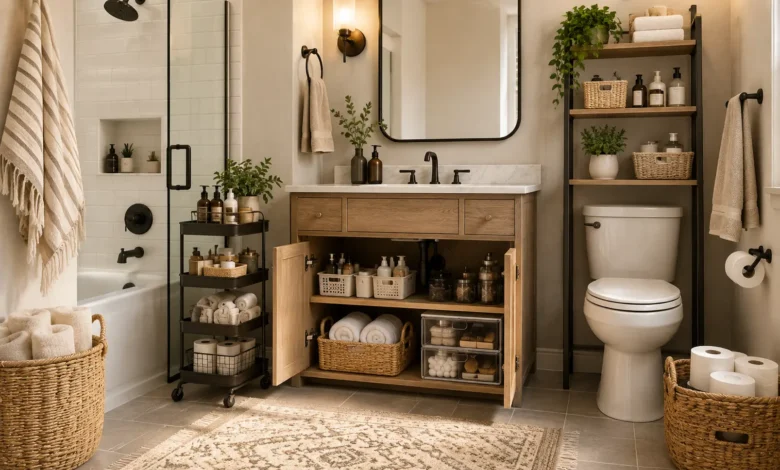
Every bathroom, no matter how well designed, eventually runs into the same problem: too many small items and not enough obvious places to put them. Towels, toiletries, cleaning supplies, medications, hair tools, and backup products all need a home, and without a plan, they tend to pile up on the counter or spill out of an overstuffed cabinet under the sink.
The good news is that effective bathroom storage isn’t really about having a large room — it’s about matching the right storage solution to how you actually use the space. This guide walks through practical, tested bathroom storage solutions for layouts of every size and budgets of every range, from simple organizers you can add this weekend to built-in storage worth planning into a full renovation.
Why Bathroom Storage Fails (and How to Fix It)
Most bathroom storage problems aren’t really about a lack of space — they’re about a mismatch between how items are stored and how often they’re actually used. A bathroom that feels cluttered usually has frequently used items buried in hard-to-reach spots, while rarely used items take up prime real estate on the counter or in the most accessible cabinet.
The fix starts with a simple mental shift: sort what you store by frequency of use, not by category. Daily-use items — toothbrush, daily skincare, everyday hair products — belong at counter height or in the most accessible drawer. Weekly-use items, like extra towels or cleaning supplies, can live in a cabinet or closet just outside the immediate reach zone. Rarely used items, like seasonal products, backup supplies, or first-aid items, can go in higher, harder-to-reach storage, since you won’t need quick access to them.
This single principle underlies almost every effective bathroom storage solution covered in this guide, whether you’re working with a large primary bathroom or a tiny half-bath.
Start With a System, Not Just Containers
It’s tempting to solve bathroom clutter by buying baskets, bins, and organizers, but containers alone don’t fix a storage problem if there’s no underlying system behind them. Before adding any new storage products, it helps to do a quick audit.
Start by removing everything from the bathroom’s storage areas — drawers, cabinets, and any shelving — and sorting items into three groups: things used daily, things used occasionally, and things that don’t need to be in the bathroom at all. It’s common to find expired products, duplicate items, or things that would be better stored elsewhere, like extra bulk toiletries that belong in a hall closet rather than taking up bathroom space.
Once you know what you’re actually storing and how often you reach for it, choosing the right bathroom storage solutions becomes much easier, since you’re solving for real usage patterns rather than guessing at what containers might look nice.
Small Bathroom Storage Solutions for Tight Layouts
Small bathrooms present the most common storage challenge, since there’s simply less physical space to work with. The good news is that a compact layout doesn’t mean limited storage — it just requires more intentional choices. These small bathroom storage solutions consistently deliver the most impact relative to the space they require.
Over-the-toilet storage units take advantage of one of the most commonly wasted areas in a small bathroom. A slim shelving unit or cabinet positioned above the toilet tank adds meaningful storage without using any additional floor space, making it one of the most efficient small bathroom storage solutions available.
Door-mounted organizers, hung on the back of the bathroom door, provide extra storage for towels, hair tools, or toiletries without requiring any wall space or floor footprint at all. This is a particularly good option for renters, since it typically requires no drilling or permanent installation.
Corner shelving, whether freestanding or wall-mounted, makes use of corner space that often sits empty in a small bathroom, especially near the shower or above the toilet.
Under-sink stacking organizers maximize the awkward, pipe-obstructed space beneath a pedestal or vanity sink, which is often one of the most disorganized areas in a small bathroom if left unaddressed.
Slim rolling carts, sized to fit in narrow gaps between the toilet and the wall or beside the vanity, offer flexible, movable storage that can be tucked away or repositioned as needed — a practical option in bathrooms too small for fixed shelving.
Vanity and Under-Sink Storage Ideas
The vanity is usually the primary storage zone in any bathroom, and how well it’s organized has an outsized effect on how tidy the whole room feels.
Drawer dividers and organizers prevent a vanity drawer from becoming a jumbled catch-all, keeping smaller items like makeup, dental care products, and hair accessories visibly separated and easy to find.
Stackable bins under the sink work around the plumbing that typically limits how this space can be used, allowing you to organize cleaning supplies, backup toiletries, or hair tools into distinct, labeled sections rather than one disorganized pile.
Pull-out trays or baskets installed inside vanity cabinets bring items stored toward the back within easy reach, which is especially useful in a deep cabinet where items can otherwise get lost or forgotten.
Tension rods installed horizontally under the sink create a simple, low-cost way to hang spray bottles by their trigger handles, keeping the cabinet floor clear for bins or baskets.
Repurposed kitchen organizers, like a turntable or lazy Susan, work just as well under a bathroom sink as they do in a kitchen cabinet, making it easy to spin and access items stored toward the back of a deep cabinet.
Vertical Storage: The Most Underused Space in Any Bathroom
Most bathrooms are organized around counter and cabinet-level storage, but the vertical space above eye level is frequently left completely empty, even though it’s often the easiest place to add meaningful storage capacity.
Tall, narrow shelving units make efficient use of vertical wall space, particularly in bathrooms too small for wide furniture. A slim ladder shelf or floor-to-ceiling unit can hold towels, baskets, and decorative storage without expanding the room’s footprint.
Wall-mounted cabinets installed above eye level work well for items that don’t need daily access, like seasonal products or backup supplies, freeing up more accessible storage for items used every day.
Floating shelves, installed in a stack above the toilet or beside the vanity, add flexible storage that can be styled with baskets or bins for a cleaner look than open, mismatched items.
Recessed medicine cabinets, built into the wall cavity rather than mounted on top of it, take advantage of space between wall studs that would otherwise go completely unused, adding storage capacity without occupying any visible floor or counter space.
Shower and Tub Storage Solutions
The shower and tub area often becomes one of the most cluttered zones in a bathroom, since bottles of shampoo, conditioner, body wash, and razors accumulate quickly in a space with limited built-in storage.
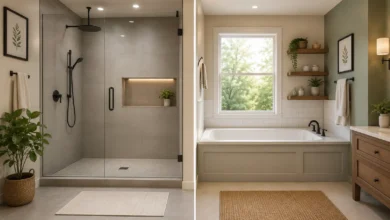
Built-in shower niches, recessed into the wall during a renovation, are widely considered the best long-term shower storage solution, since they eliminate the need for a hanging caddy entirely and keep bottles fully out of the way of water flow, which also reduces rust and mildew buildup over time.
Corner shower caddies, which hang from the shower head or mount with suction cups, are a practical option for bathrooms without a built-in niche, though it’s worth choosing a rust-resistant material, since standard metal caddies tend to corrode quickly in a wet environment.
Tension-pole caddies, which extend from floor to ceiling in the shower or beside the tub, offer multiple shelves without requiring any wall drilling, making them a solid option for renters or anyone hesitant to make permanent changes.
Built-in tub caddies, which rest across the width of a bathtub, keep bath products and accessories within reach during a bath without needing any additional wall or floor storage, and many double as a small shelf for a book, candle, or phone.
Storage Ideas for the “Toilet Zone”
The wall space above and around the toilet is one of the most consistently underused areas in bathroom storage planning, despite being one of the easiest to fill.
Etagere-style shelving units, which straddle the toilet tank with a tall, multi-shelf frame, are a popular and effective option, since they require no wall mounting and can be moved if you rearrange the room later.
Wall-mounted shelves installed directly above the toilet offer a more built-in look and can hold baskets, folded towels, or decorative storage, though they do require drilling and should account for the toilet tank’s height when planning placement.
Toilet paper storage with a built-in shelf solves two problems at once — keeping extra rolls accessible while adding a small amount of additional storage or display space above them.
Linen and Towel Storage
Towels and linens take up more physical space than almost any other bathroom item, which makes their storage solution particularly important for keeping the room from feeling cramped.
A dedicated linen closet, if the bathroom or an adjacent hallway has room for one, remains the most effective solution for towel and linen storage, keeping bulk items out of the bathroom itself while still being close at hand.
Rolled towel storage, using open shelving or a woven basket, is both a practical and a visually appealing option, since rolled towels take up less shelf space than folded stacks and tend to look more intentional as a display element.
Ladder-style towel racks, which lean against the wall rather than requiring mounting, offer flexible hanging storage for a few towels without any installation, making them a good renter-friendly option.
Hooks instead of bars, for at least some of the bathroom’s towel storage, allow towels to dry more quickly between uses, since a hook lets more surface area of the towel remain exposed to air compared to a folded towel over a bar.
Storage for Renters and Non-Permanent Solutions
Renters face a specific storage challenge, since drilling into walls or installing built-in cabinetry usually isn’t an option. Fortunately, several effective bathroom storage solutions require no permanent changes at all.
Tension-based shelving and caddies, which rely on pressure between the floor and ceiling rather than screws, provide sturdy storage without any wall damage, making them one of the most reliable renter-friendly options available.
Adhesive hooks and organizers, designed specifically for bathroom humidity, can hold lightweight items like small baskets, loofahs, or hand towels without leaving marks when removed, provided you follow the manufacturer’s weight limits.
Freestanding furniture, like a small rolling cart or a slim console table, adds storage capacity that moves with you when you relocate, which makes it a practical long-term investment for renters who move frequently.
Over-the-door organizers, as mentioned earlier, remain one of the most versatile renter-friendly options, since they add substantial storage capacity using only the door itself.
Also Read: The Complete Guide to Bathroom Lighting: Layers, Placement, and Bulb Types
Built-In Storage Worth Planning Into a Renovation
If you’re planning a full bathroom renovation, it’s worth thinking about storage at the layout stage rather than retrofitting it in afterward, since built-in solutions are far easier and less expensive to install before walls and tile are finished.
Recessed shower niches should be planned during the framing stage, since retrofitting one into an already-tiled shower is a significantly more disruptive and expensive project.
Custom vanity storage, designed around your specific daily items, can include built-in dividers, pull-out drawers, or a designated spot for an outlet-adjacent hair tool drawer, all of which are easier to plan into custom cabinetry than to add to an off-the-shelf vanity later.
A linen tower or built-in cabinet flanking the vanity makes efficient use of vertical wall space that’s often left blank in a standard renovation, and it’s considerably easier to frame in during construction than to add afterward.
Toe-kick drawers, a shallow drawer built into the space beneath vanity cabinets that’s normally wasted, are a clever addition for storing flat items like hair tools or a bathroom scale, and they add storage without requiring any additional floor footprint.
Budget-Friendly vs. High-End Storage Upgrades
Bathroom storage solutions span a wide range of budgets, and it helps to think in tiers so you can prioritize the changes that deliver the most benefit for your specific layout.
Budget-friendly upgrades include drawer organizers, over-the-door hooks, a tension-pole shower caddy, and stackable under-sink bins. These solutions typically cost very little, require no tools or installation, and can be added in an afternoon.
Mid-range upgrades include a wall-mounted cabinet, an over-the-toilet etagere, or a set of floating shelves. These usually require some minor installation — a few screws into drywall or studs — but remain accessible to most homeowners without professional help.
High-end upgrades include a recessed medicine cabinet, a built-in shower niche, or custom vanity storage designed around your specific needs. These typically require professional installation and are most cost-effective when planned as part of a broader renovation rather than added as a standalone project.
Storage Ideas by Bathroom Type
Different bathroom types tend to have different storage priorities, based on who uses them and how often.
Primary or en-suite bathrooms, used daily by one or two people, benefit most from a well-organized vanity with clear zones for each person’s daily items, plus a dedicated shower niche or caddy for daily-use bath products.
Guest and hall bathrooms, used occasionally by different people, benefit from simple, clearly labeled storage — a stocked linen shelf and an accessible spot for spare toiletries — since the goal is making the room easy for a guest to navigate without assistance.
Powder rooms, which don’t include a shower or tub, generally need far less storage than other bathroom types, though a small cabinet or shelf for hand towels and guest soap is still worth including.
Basement or secondary bathrooms often have less natural storage built in and benefit particularly from freestanding or vertical solutions, like a tall shelving unit or an over-the-toilet cabinet, to compensate for limited built-in cabinetry.
Also Read: Small Bathroom Design Ideas: How to Make a Compact Space Feel Bigger
Common Bathroom Storage Mistakes to Avoid
A few storage mistakes come up repeatedly, and avoiding them is often just a matter of rethinking how existing space is used.
Storing rarely used items in the most accessible spots pushes daily-use items into harder-to-reach areas, which tends to create clutter on the counter as those daily items get left out for convenience instead.
Ignoring vertical space is one of the most common missed opportunities, particularly in small bathrooms where floor and counter space is already limited but wall space above eye level often sits completely empty.
Choosing non-rust-resistant materials for shower storage, like a standard metal caddy not designed for constant water exposure, leads to rust stains and a shorter lifespan than a purpose-built, rust-resistant option.
Overbuying decorative bins and baskets without first sorting what actually needs to be stored can create the appearance of organization while doing little to solve the underlying clutter problem.
Skipping a regular declutter allows expired products, duplicates, and items that no longer serve a purpose to quietly take up storage space that would be better used for items you actually reach for.
Frequently Asked Questions
What are the best small bathroom storage solutions for a rental?
Tension-pole shelving, over-the-door organizers, and adhesive hooks rated for bathroom humidity are among the most effective renter-friendly options, since none require drilling or permanent installation.
How do I store bathroom items without a linen closet?
A freestanding shelving unit, an over-the-toilet etagere, or a rolling cart can substitute for a dedicated linen closet, particularly when paired with rolled towel storage to maximize the space available.
What’s the most efficient use of space above the toilet?
An etagere-style shelf or a wall-mounted cabinet above the toilet tank is one of the most efficient small bathroom storage solutions, since it adds meaningful capacity without using any floor space.
How can I organize a small vanity with limited drawers?
Drawer dividers, stackable under-sink bins, and pull-out trays make the most of limited vanity space by keeping items visibly separated rather than piled together in a single space.
Is it worth adding a built-in shower niche during a renovation?
Yes, in most cases. A recessed niche is far more cost-effective to add during a renovation, while walls are already open, than to retrofit afterward, and it eliminates the ongoing maintenance issues that come with hanging caddies.
Final Thoughts
Effective bathroom storage isn’t about buying more containers — it’s about matching the right solution to how frequently you actually use each item and making full use of the vertical and often-overlooked spaces most bathrooms have available. Whether you’re working with a compact rental bathroom or planning built-in storage into a full renovation, the same underlying principle applies: keep daily-use items accessible, tuck away the rest, and use every layer of the room, not just the counter and cabinet.
For more guidance on the rest of your bathroom project, explore these related guides: