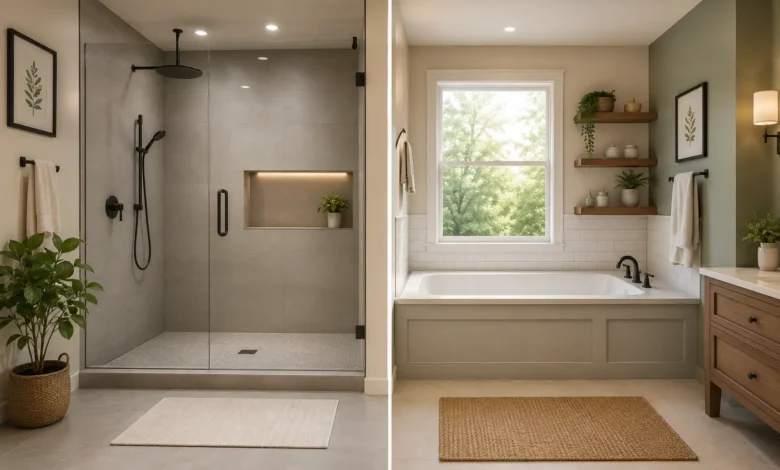
Few bathroom decisions spark as much debate as whether to install a walk-in shower or keep a bathtub. It’s one of the first questions that comes up in almost any bathroom renovation, and it’s also one of the decisions homeowners are most likely to second-guess after the fact, since it affects both daily function and long-term resale value in ways that aren’t always obvious upfront.
This guide breaks down the real trade-offs between a walk-in shower and a bathtub, covering everything from cost and space requirements to accessibility, resale considerations, and how to decide which option actually fits your household. There’s no universally correct answer here — the right choice depends heavily on who uses the bathroom, how the rest of the home is set up, and what you’re planning to do with the space long term.
Understanding the Core Trade-Off
At its heart, this decision comes down to a simple trade-off: a bathtub offers versatility and broad appeal, while a walk-in shower offers space efficiency, accessibility, and, for many households, a more enjoyable daily experience. Neither option is objectively better — the right choice depends on factors specific to your household, your home’s layout, and how you plan to use the bathroom in question.
It’s also worth noting that this decision doesn’t have to be all-or-nothing across your entire home. Many homeowners choose a walk-in shower for their primary or en-suite bathroom, where they have the most control over daily convenience, while keeping a tub in a secondary or guest bathroom, where broader appeal and resale value matter more. This hybrid approach is one of the most common solutions among renovation professionals, since it captures the benefits of both options without forcing an either-or decision across the whole house.
The Case for a Walk-In Shower
A walk-in shower, particularly a curbless design without a raised threshold, has become one of the most requested features in modern bathroom renovations, and for good reason. It offers several practical advantages that go beyond simple aesthetics.
Space efficiency is one of the biggest draws. A well-designed walk-in shower can often fit into a footprint similar to or even smaller than a standard bathtub-shower combination, while feeling significantly more open due to the absence of a tub wall or curtain blocking sightlines across the room. This makes a walk-in shower a particularly strong choice for smaller bathrooms, where every square foot of visual openness matters.
Accessibility is another major advantage, and one that’s driving much of the current demand for walk-in showers. A curbless entry removes the trip hazard of stepping over a tub wall, which matters not just for anyone currently using a wheelchair or walker, but as a proactive choice for aging in place. Many homeowners now install a curbless walk-in shower in their primary bathroom specifically so they won’t need to renovate again later if mobility becomes a concern down the road.
Daily convenience is a less quantifiable but very real benefit for many households. Most adults shower far more often than they bathe, and a well-designed walk-in shower — particularly one with a rainfall showerhead, a bench, and good lighting — can offer a more comfortable, spa-like daily experience than a standard tub-shower combination ever could.
Easier cleaning is a practical upside that’s often overlooked in the initial decision-making process. A glass-enclosed or open walk-in shower generally has fewer hard-to-reach corners than a tub-shower combination, and there’s no tub basin to scrub, which some homeowners find meaningfully reduces ongoing bathroom cleaning time.
Modern resale appeal in certain markets has grown alongside the broader design trend toward walk-in showers, particularly in primary bathrooms in areas with an older or more design-forward buyer pool. That said, this benefit comes with an important caveat covered in the next section.
The Case for a Bathtub
Despite the growing popularity of walk-in showers, there are strong, practical reasons a significant number of homeowners choose to keep or install a bathtub, and these reasons matter most in specific household situations.
Resale value protection is the single most commonly cited reason real estate professionals recommend keeping at least one bathtub in a home, even if every other bathroom is converted to a walk-in shower. Many buyers, particularly families with young children, specifically look for at least one bathtub, and a home with zero tubs can be a genuine drawback for a segment of the buyer pool, even in markets where walk-in showers are otherwise popular. As a general guideline, most agents suggest keeping at least one full bathtub if a home has more than one bathroom, even if the primary bathroom is converted to a walk-in shower.
Practicality for young children is a major factor for households currently raising kids. Bathing infants and toddlers is significantly easier and safer in a tub than in a walk-in shower, and this single factor often outweighs every other consideration for families with young children at home.
Relaxation and soaking remain a genuine draw for many adults, and this is one advantage a walk-in shower simply can’t replicate. A soaking tub, whether a standard built-in model or a freestanding statement tub, offers a different kind of daily or weekly ritual that some households value highly enough to prioritize over the space and accessibility benefits of a shower-only bathroom.
Lower upfront cost in some cases can favor keeping an existing tub-shower combination rather than converting to a walk-in shower, particularly if the conversion would require moving plumbing, reinforcing the floor for a curbless entry, or extensive waterproofing work. A straightforward tub replacement is often less invasive and less expensive than a full shower conversion.
Bathing pets is a smaller but genuinely practical consideration for some households, since a tub offers an easy, contained space for washing a dog or cat that a walk-in shower generally doesn’t replicate as conveniently.
Space and Layout Requirements
The physical space available in your bathroom often narrows the decision considerably before other factors even come into play.
A standard bathtub typically requires a footprint of roughly 60 inches by 30 to 32 inches, which is a fairly fixed, well-standardized size across most manufacturers. A walk-in shower, by contrast, has more flexibility in its dimensions, but building codes generally require a minimum interior shower size, commonly around 36 by 36 inches, with many designers recommending a more comfortable minimum closer to 36 by 48 inches or larger for genuine day-to-day comfort rather than a cramped, code-minimum stall.
In a very small bathroom, a walk-in shower can sometimes be configured into an oddly shaped or narrow area that wouldn’t accommodate a standard rectangular tub, which is one reason walk-in showers have become especially popular in smaller primary bathrooms and bathrooms with awkward layouts. Corner shower configurations, in particular, can make use of space that a standard tub’s rectangular footprint simply can’t accommodate.
If your bathroom is large enough to comfortably fit both a tub and a separate shower, this space constraint disappears, and the decision shifts entirely to the lifestyle and resale factors discussed elsewhere in this guide.
Cost Comparison
Cost is rarely the deciding factor on its own, but it’s worth understanding where the real expenses lie in each option.
A standard tub-shower combination is often the most budget-friendly option if you’re simply replacing an existing unit in the same location, since it typically doesn’t require moving plumbing or significantly altering the surrounding structure.
A basic walk-in shower conversion, replacing an existing tub-shower combination with a shower-only stall in the same footprint, is a moderate-cost project, and is one of the more common bathroom renovation requests specifically because it doesn’t require relocating plumbing.
A curbless walk-in shower typically costs more than a standard shower stall, since achieving a truly flush, no-threshold entry often requires lowering or reinforcing a section of subfloor, along with more careful waterproofing membrane work around the drain to prevent water intrusion into the surrounding floor.
A freestanding or high-end soaking tub sits at the higher end of the tub category, both in material cost and in the added labor of properly supporting its weight, particularly for larger cast iron or stone-resin models.
Across all of these options, labor tends to make up a larger share of the total cost than materials, particularly for any project involving plumbing changes, waterproofing membrane work, or structural modifications to support a curbless entry.
Accessibility and Aging in Place
For households planning to stay in their home long term, accessibility deserves specific attention beyond the general points already covered.
A curbless, walk-in shower with a bench, a handheld showerhead, and strategically placed grab bars is widely considered one of the most effective single upgrades for aging in place, since it removes the trip hazard of a tub wall while still allowing for later additions, like a shower chair, without requiring further renovation.
Grab bars, whether installed at the time of renovation or added later, are far easier to plan into a walk-in shower’s wall structure during construction than to retrofit afterward, since proper installation requires reinforced blocking behind the wall material. If you’re renovating now but not yet ready to fully commit to an accessibility-focused design, it’s worth asking your contractor to add blocking behind the shower walls anyway, so grab bars can be added later without opening up the wall again.
For households with a family member currently using a wheelchair or walker, a zero-threshold walk-in shower isn’t just a preference but often a functional necessity, and this consideration alone can outweigh the resale or family-bathing arguments in favor of keeping a tub.
Also Read: Bathroom Storage Solutions for Every Layout and Budget
Resale Value Considerations
The resale question deserves its own dedicated discussion, since it’s one of the most commonly cited factors in this decision and one of the most frequently misunderstood.
The general guidance from real estate professionals is straightforward: if your home has only one bathroom, keeping a bathtub in that bathroom is almost always the safer choice for resale, since removing the only tub in the home can meaningfully narrow the pool of interested buyers, particularly families with young children. If your home has multiple bathrooms, converting one bathroom — often the primary or en-suite — to a walk-in shower while keeping at least one tub elsewhere in the home is generally considered a safe middle ground that captures the appeal of a modern walk-in shower without eliminating tub access entirely.
It’s also worth noting that resale preferences vary somewhat by region and by the local buyer demographic, so it can be worth a quick conversation with a local real estate agent if resale value is a significant factor in your decision, since they’ll have a more specific read on buyer expectations in your particular market than general national guidance can provide.
Design and Aesthetic Considerations
Beyond function, the visual impact of each option is worth factoring into the decision, particularly if the bathroom in question is a design-focused primary or en-suite space.
A walk-in shower, especially one with a frameless glass enclosure or no enclosure at all, tends to create a more open, contemporary feel, and it pairs particularly well with modern, minimalist, and spa-inspired design styles. The absence of a bulky tub wall also makes the rest of the room’s design elements, like flooring and tile, more visible and continuous throughout the space.
A freestanding soaking tub, by contrast, can serve as a genuine design centerpiece, particularly in a larger primary bathroom, and pairs well with more traditional, classic, or luxury-focused design styles. A statement tub positioned near a window or as the focal point of the room can carry as much visual weight as a well-designed shower, just through a different design language.
For households drawn to both aesthetics, a bathroom large enough to accommodate a separate walk-in shower and a freestanding tub offers the best of both design directions, though this obviously requires more available square footage than most bathrooms have to work with.
Maintenance Differences
Ongoing maintenance differs meaningfully between the two options, and it’s worth factoring this into the decision alongside upfront cost and space requirements.
A walk-in shower with a glass enclosure requires regular squeegeeing or wiping down to prevent hard water spots and soap scum buildup on the glass, which is a maintenance task most tub-shower combinations with a curtain don’t require in the same way. That said, a walk-in shower has no tub basin to scrub, which many homeowners find offsets the glass maintenance over time.
A bathtub, particularly one used regularly for bathing rather than just showering, requires periodic scrubbing of the basin itself, along with attention to the caulk line around the tub’s edge, which tends to accumulate mildew more readily in a tub-shower combination than in a shower-only enclosure, simply due to standing water and the additional surface area involved.
Also Read: Bathroom Flooring Options Compared: Tile, Vinyl, and Natural Stone
Walk-In Tubs: A Middle-Ground Option
For households torn between the two options, it’s worth knowing that a third category exists: the walk-in tub. This is a specialized bathtub with a watertight door built into the side, allowing entry without stepping over a high tub wall, combining some of the accessibility benefits of a shower with the soaking function of a traditional tub.
Walk-in tubs are most commonly chosen by households prioritizing accessibility for an older family member who still wants the option to soak rather than shower exclusively. They do come with trade-offs worth understanding before committing to one. Because the door needs to seal watertight, you typically have to enter the tub, close the door, and then wait for it to fill before bathing, and drain it before exiting, which adds time compared to a standard tub or shower. Walk-in tubs also tend to have a narrower resale appeal than either a standard tub or a walk-in shower, since they’re a specialized product most commonly associated with accessibility needs rather than general household use, which is worth factoring in if resale value is a significant consideration.
For households where accessibility is the primary concern but a full walk-in shower conversion isn’t in the budget or isn’t feasible due to the bathroom’s layout, a walk-in tub can serve as a reasonable middle-ground solution, though a curbless walk-in shower generally remains the more broadly recommended option where it’s feasible.
Water and Energy Usage Considerations
An often-overlooked factor in this decision is water usage, which can meaningfully affect utility costs depending on your household’s habits.
A full bathtub typically uses more water for a single soak than an average shower does for a typical shower duration, particularly when paired with a low-flow showerhead. Households that shower quickly and only bathe occasionally will generally use less water overall with a shower-focused bathroom, while households that bathe regularly, particularly those with young children who are bathed nightly, may not see the same water savings from a shower-focused setup.
Modern low-flow showerheads, many of which carry a WaterSense certification from the U.S. Environmental Protection Agency, have narrowed this gap considerably compared to older shower fixtures, since they maintain strong water pressure while using meaningfully less water per minute than older, non-low-flow models. If reducing water usage is a priority alongside your walk-in shower versus bathtub decision, pairing a walk-in shower with a certified low-flow showerhead is one of the more effective ways to minimize water use without sacrificing daily comfort.
Common Mistakes to Avoid
A few mistakes come up repeatedly in this decision, and being aware of them ahead of time can help avoid regret after the renovation is complete.
Removing every tub in the home without considering resale value is one of the most common regrets homeowners report, particularly if they later decide to sell and find the lack of any bathtub is a sticking point for prospective buyers with young children.
Choosing a walk-in shower size that’s too small to feel genuinely comfortable is another frequent issue. Building to the minimum code-required shower size can result in a stall that feels cramped in daily use, even though it technically meets requirements — it’s generally worth prioritizing a larger shower footprint over other renovation elements if space allows.
Underestimating waterproofing requirements for a curbless shower entry is a costly mistake to make, since a curbless design depends entirely on correct slope and waterproofing membrane installation to prevent water from migrating onto the surrounding bathroom floor. This isn’t a place to cut corners or hire based on the lowest bid alone.
Not planning for future accessibility needs, even if they’re not an immediate concern, can mean a second renovation down the road. Adding wall blocking for future grab bars during initial construction, even for households not currently prioritizing accessibility, is a low-cost way to avoid this.
Making the Final Decision
If you’re still weighing this decision, a few direct questions can help clarify the right choice for your specific household.
Does your home have more than one bathroom, and if so, is a tub available elsewhere? If yes, converting your primary bathroom to a walk-in shower carries relatively low resale risk. Do you have young children currently at home, or plan to in the near future? If so, keeping at least one tub accessible is worth prioritizing regardless of other preferences. Are you or a family member planning to age in place in this home long term? If so, a curbless walk-in shower is one of the most valuable accessibility investments you can make now. Is your bathroom on the smaller side, with limited room for a full tub-shower combination? If so, a well-designed walk-in shower may actually offer a more comfortable daily experience than a cramped standard tub would in the same footprint.
There’s rarely a single objectively correct answer here — the right choice comes down to weighing your household’s current needs against your long-term plans for the home, both in terms of daily living and eventual resale.
Also Read: The Complete Guide to Bathroom Lighting: Layers, Placement, and Bulb Types
Frequently Asked Questions
Does removing a bathtub hurt resale value?
It can, particularly if it’s the only bathtub in the home. Most real estate professionals recommend keeping at least one tub if a home has multiple bathrooms, even if other bathrooms are converted to walk-in showers.
Is a curbless walk-in shower worth the extra cost?
For most households prioritizing accessibility or long-term aging in place, yes — the extra cost of a curbless entry is generally considered a worthwhile investment given how much it improves both current comfort and future usability without requiring a second renovation.
Can a walk-in shower fit in a small bathroom?
Often, yes. A well-planned walk-in shower can sometimes fit into a footprint similar to or smaller than a standard tub, particularly in a corner configuration, making it a practical option for smaller bathrooms with awkward layouts.
Should I keep a bathtub if I have young children?
Generally, yes. Bathing infants and toddlers is significantly easier and safer in a tub, and this is one of the most commonly cited reasons families choose to keep at least one tub in the home even when converting other bathrooms to walk-in showers.
How much does it cost to convert a bathtub to a walk-in shower?
Costs vary widely depending on whether the conversion stays within the existing footprint or requires a curbless entry with subfloor modifications, so it’s best to get quotes from a few local contractors for an accurate estimate specific to your bathroom.
Do walk-in showers add value to a home?
In many markets, a well-designed walk-in shower in a primary bathroom is viewed positively by buyers, particularly in homes where at least one other bathroom retains a bathtub. The value impact tends to be more neutral to negative if it results in a home with no bathtub at all.
Is a walk-in tub a good alternative to a walk-in shower?
A walk-in tub can be a reasonable middle-ground option for households prioritizing accessibility while still wanting the option to soak, though it generally has narrower resale appeal than either a standard bathtub or a walk-in shower, since it’s most closely associated with accessibility needs.
Final Thoughts
Choosing between a walk-in shower and a bathtub ultimately comes down to matching the decision to your household’s real, current needs — not just current design trends. A walk-in shower offers space efficiency, accessibility, and daily convenience that many households genuinely prefer, while a bathtub protects resale value and remains a practical necessity for families with young children. For many homeowners, the best solution isn’t choosing one universally, but thoughtfully deciding where each option makes the most sense across the bathrooms in their home.
For more guidance on the rest of your bathroom project, explore these related guides: